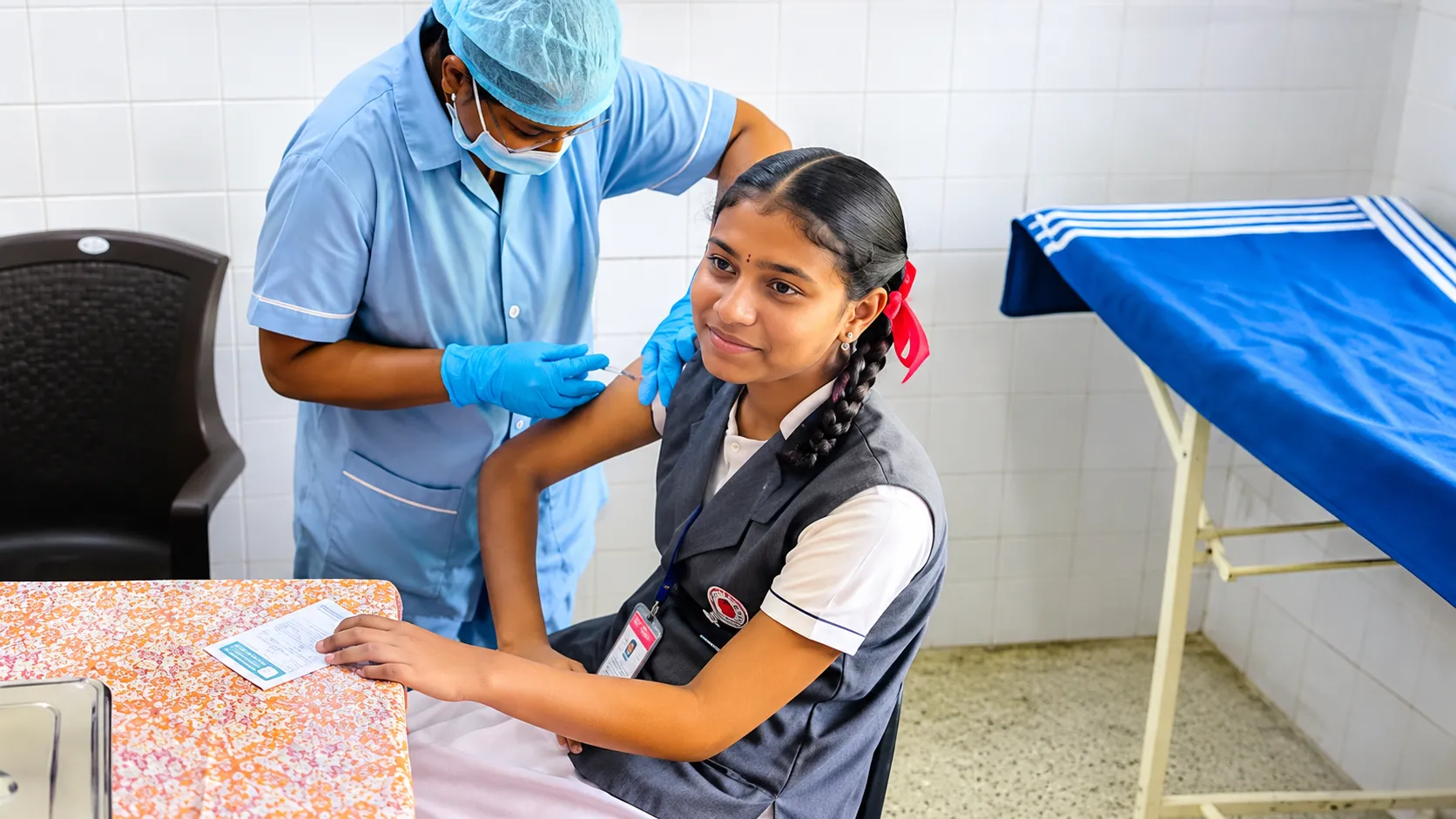
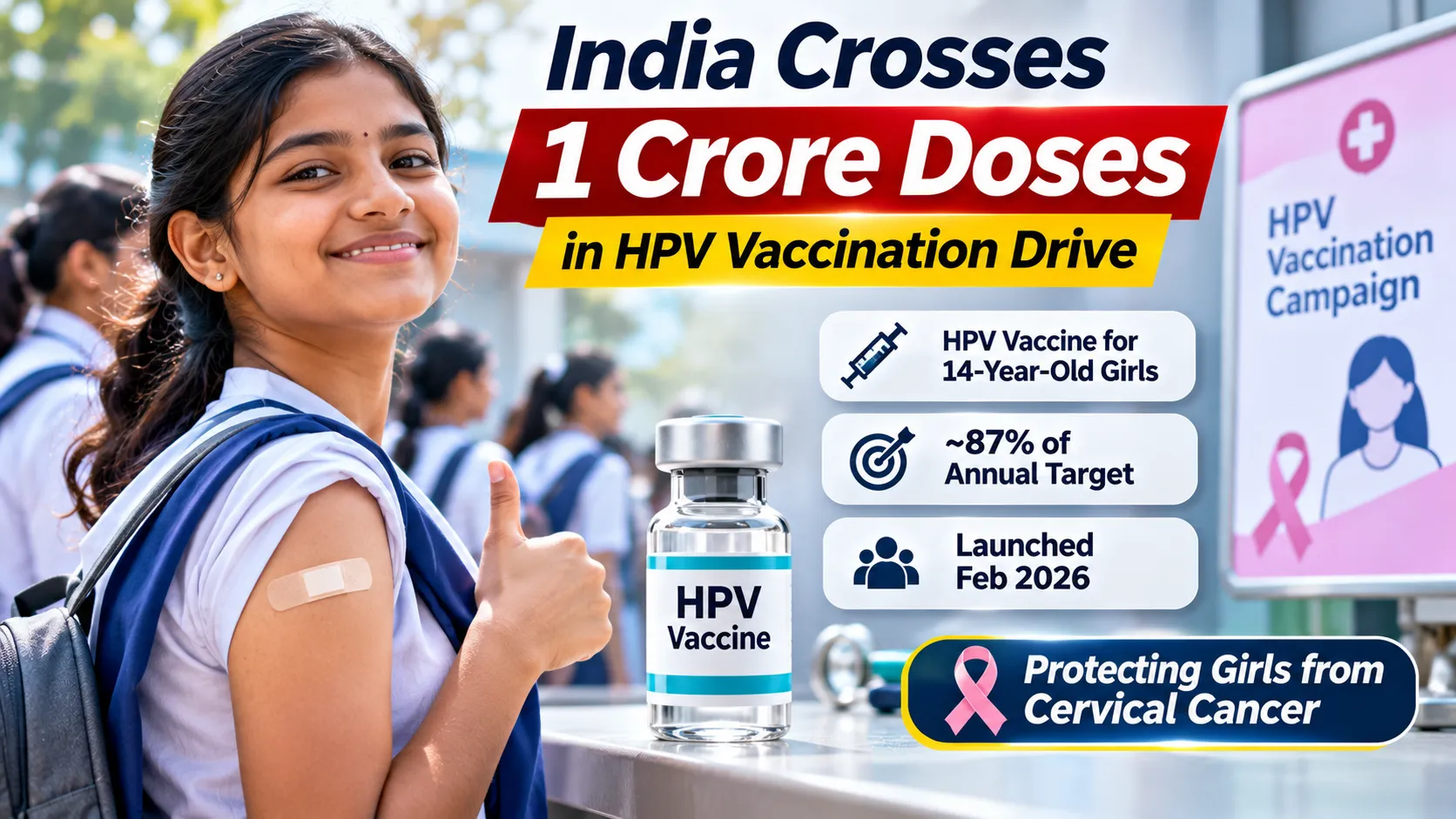
India's national campaign to protect girls against cervical cancer has passed a major milestone. More than one crore doses of the human papillomavirus (HPV) vaccine have been administered in less than nine months, the Ministry of Health and Family Welfare announced on November 21.
The National HPV Vaccination Campaign was launched in February 2026. It offers a free, single dose of the vaccine to 14-year-old girls at government health facilities, with parental consent.
The one crore doses represent nearly 87% of the campaign's annual target cohort of about 1.2 crore girls. That level of coverage within the first year puts India's programme among the largest and fastest HPV vaccination drives in the world.
States leading the way
Coverage has been strong across much of the country, though progress varies by state. Gujarat, Uttar Pradesh, Andhra Pradesh, Mizoram, Madhya Pradesh and Bihar have reached 100% of their target populations. Assam, Telangana, Karnataka and Uttarakhand have each crossed 90%.
The inclusion of large and populous states such as Uttar Pradesh and Bihar among those reaching full coverage is particularly significant. These states have historically faced challenges in public health delivery, and their success suggests that the campaign's design and implementation have worked at scale.
The campaign has relied on India's extensive network of government health facilities, schools and community health workers. These channels have previously supported large-scale immunisation drives, including routine childhood vaccination and the COVID-19 vaccination programme.
Why HPV vaccination matters
Cervical cancer is one of the most common cancers among women in India and a leading cause of cancer deaths among Indian women. The vast majority of cervical cancer cases are caused by persistent infection with certain types of HPV, a common virus.
Vaccination before exposure to the virus offers strong protection. That is why health authorities around the world recommend vaccinating girls in early adolescence. The World Health Organization has made the elimination of cervical cancer as a public health problem a global goal, with HPV vaccination at the centre of its strategy alongside screening and treatment.
Research in recent years has shown that a single dose of the HPV vaccine can provide strong protection. That finding has made large-scale vaccination programmes more affordable and easier to deliver, because they no longer require two or three visits per girl. India's decision to use a single-dose schedule has been a key factor in enabling rapid coverage.
A long road to a national programme
India's path to a national HPV vaccination campaign has been long. Some states and pilot projects introduced HPV vaccination years ago, but a nationwide programme faced obstacles, including cost, supply and public concerns about vaccine safety.
The development of domestically produced HPV vaccines changed the economics. The Serum Institute of India developed an indigenous quadrivalent HPV vaccine, which was launched in 2022 and made large-scale vaccination significantly more affordable. Domestic production also improved supply security.
The government announced plans for HPV vaccination in its budget statements, and the formal national campaign followed in February 2026. Its rapid scale-up reflects both the availability of vaccines and the strength of India's public health infrastructure.
Parental consent and public trust
The campaign requires parental consent, which makes public trust and communication essential. Health authorities have worked through schools, community health workers and public awareness efforts to explain the benefits of vaccination and address concerns.
Vaccine hesitancy has been a challenge for HPV programmes in many countries. Misinformation about safety and confusion about why adolescent girls need vaccination against a sexually transmitted virus have slowed uptake in some places. India's high coverage suggests that communication efforts have been effective in many states.
Sustaining that trust will be important as the programme continues. Each year, a new cohort of girls will become eligible, and coverage will need to be maintained over time to achieve long-term reductions in cervical cancer.
The economic and social impact
Preventing cervical cancer has significant economic as well as health benefits. Cancer treatment is expensive, and in India many families pay a large share of medical costs out of pocket. A cancer diagnosis can push households into financial hardship.
Cervical cancer often affects women in their prime working and caregiving years. Its impact extends beyond the patient to families and communities. By preventing future cases, the vaccination campaign is expected to reduce both the human and economic toll of the disease over the coming decades.
For The Impactful Global Indian's readers, the campaign is an example of how public investment in preventive health can deliver large-scale social impact. It also highlights the role of Indian manufacturing in making essential health products affordable at scale.
Lessons for other countries
India's progress is likely to attract international attention. Many low- and middle-income countries have struggled to introduce or scale HPV vaccination due to cost, supply and delivery challenges. India's use of a single-dose schedule, domestically produced vaccines and existing health infrastructure could offer lessons for others.
Global health organisations have been working to increase HPV vaccine coverage worldwide, and India's large population means its progress contributes significantly to global coverage figures.
What comes next
The immediate priority is to close the remaining gap in states that have not yet reached full coverage. Officials will also need to ensure that each new annual cohort of 14-year-old girls is reached in the years ahead.
Vaccination alone will not eliminate cervical cancer in the near term. Women who are already past the target age will continue to need regular screening and access to treatment. Strengthening screening programmes, particularly in rural areas, remains an important part of the strategy.
Experts may also debate whether to expand vaccination to other age groups or to boys, as some countries have done. Such decisions will depend on resources, evidence and public health priorities.
For now, the milestone of one crore doses in under nine months marks a significant achievement. It represents a major investment in the health of a generation of Indian girls, and a step towards the long-term goal of making cervical cancer a rare disease in India.