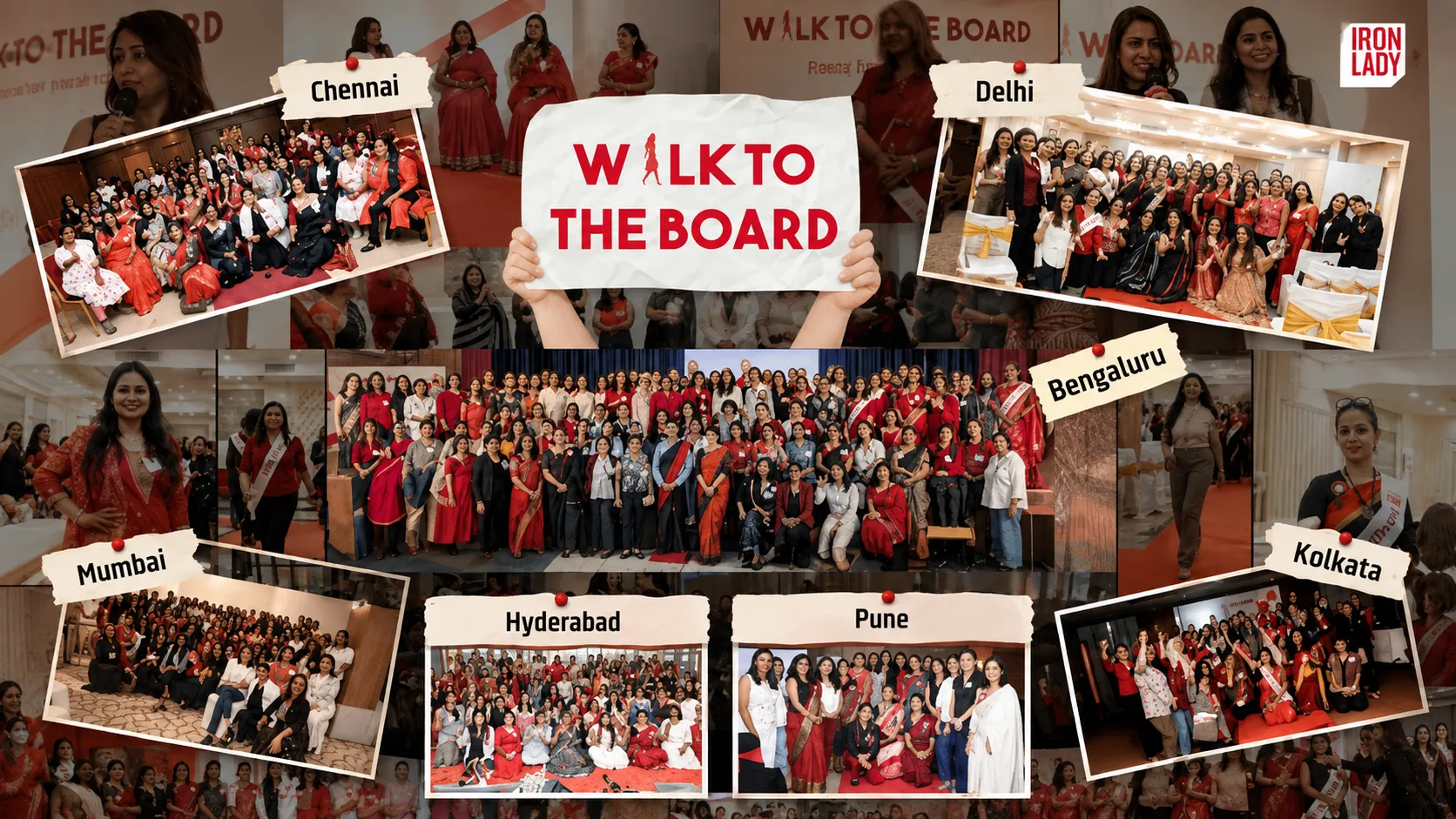
Iron Lady Community hosted Walk to the Board 2026 in early August, bringing together more than 1,000 women leaders, professionals, entrepreneurs and aspiring C-suite executives across six Indian cities — Bengaluru, Mumbai, Pune, Hyderabad, Chennai and Delhi NCR — in what organisers describe as one of the country's largest coordinated women's leadership movements to date.
Built around the theme “Bold Steps. Big Stories. Bigger Leaders,” the initiative combined simultaneous city-level events with a shared national narrative, aiming to function as more than a single leadership conference: organisers positioned it as a movement demonstrating how capability, visibility and community can collectively accelerate more women into boardroom and executive leadership positions across Indian industry. The choice to run identical, coordinated programming across six cities simultaneously — rather than a single flagship event in one metro — was itself a deliberate design decision, intended to signal that the push for boardroom representation is a distributed, national effort rather than a Mumbai- or Delhi-centric one.
The event lands against a backdrop of persistently slow progress on gender representation at senior levels of Indian business: while regulatory requirements have mandated at least one woman director on the boards of listed Indian companies for nearly a decade, representation in genuinely powerful board roles — audit committee chairs, independent director positions with real influence, and progression into CEO and managing director roles — has moved far more slowly than headline compliance statistics suggest.
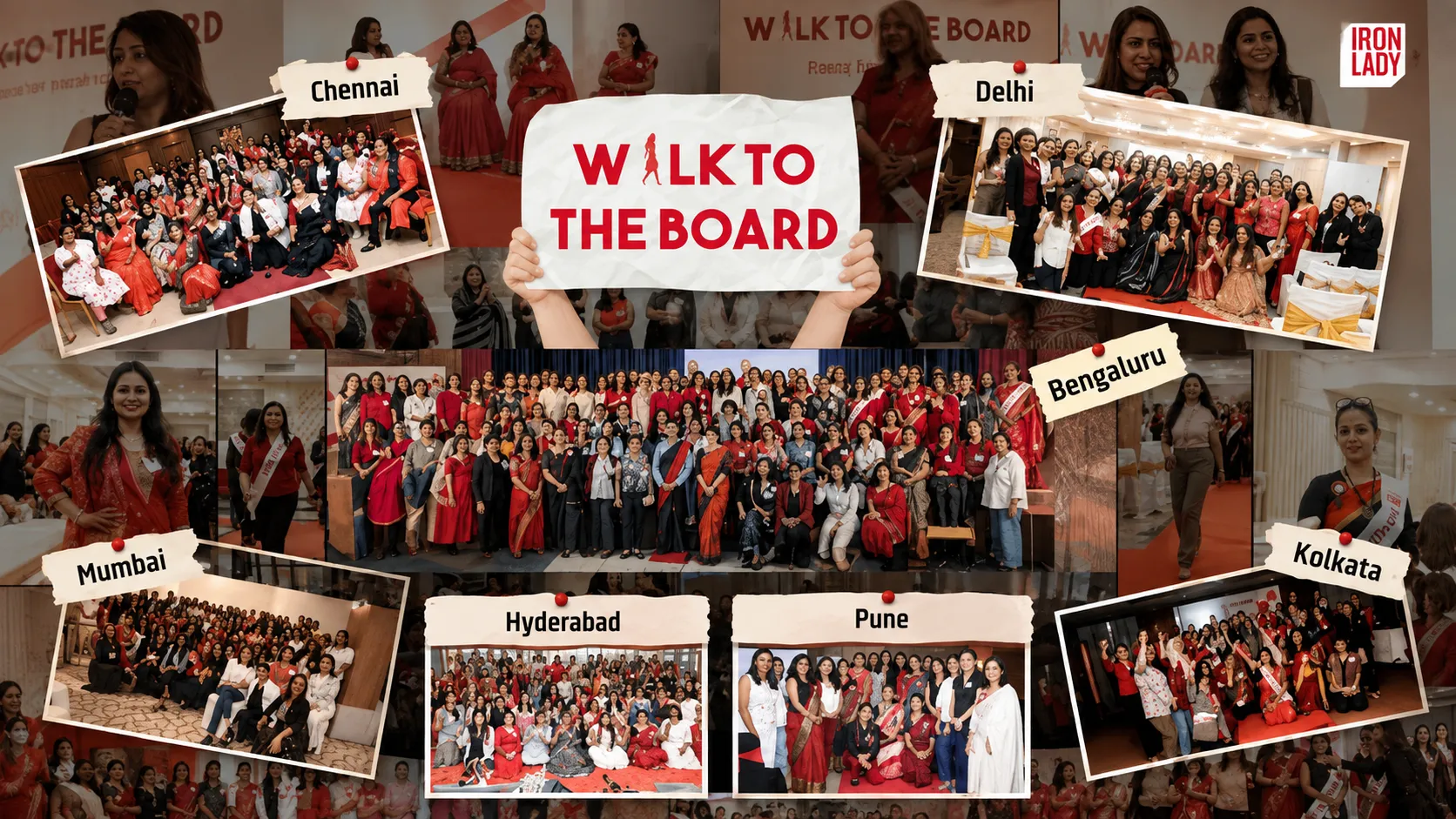
Iron Lady, which positions itself as a leadership development and networking community specifically for women professionals and entrepreneurs, has built Walk to the Board as a recurring flagship initiative that combines networking, mentorship access and visibility-building programming, on the premise that boardroom pipelines are constrained as much by limited visibility and sponsorship networks as by any shortage of qualified women executives. The six-city, single-day format allowed participants to engage locally while remaining part of a shared national cohort — a structure organisers say is designed to build lasting peer networks among women executives across different industries and geographies, rather than a one-off networking event that dissolves once attendees return to their individual companies.
The scale of participation — more than 1,000 attendees across a single coordinated day — places Walk to the Board among the larger dedicated women's professional leadership events held in India, at a moment when corporate India faces increasing external pressure, from institutional investors and proxy advisory firms alike, to demonstrate genuine progress on board diversity rather than minimum regulatory compliance.
Whether events of this scale translate into measurably faster boardroom progression for Indian women executives will likely take several more years to assess. But for a leadership community built specifically around accelerating that pipeline, the sheer size and geographic spread of this year's Walk to the Board offers an early signal that demand for structured, peer-driven leadership development among Indian women professionals remains strong — and that organisers are betting scale and coordination, rather than a single high-profile event, is the more durable path to shifting boardroom composition over time.


