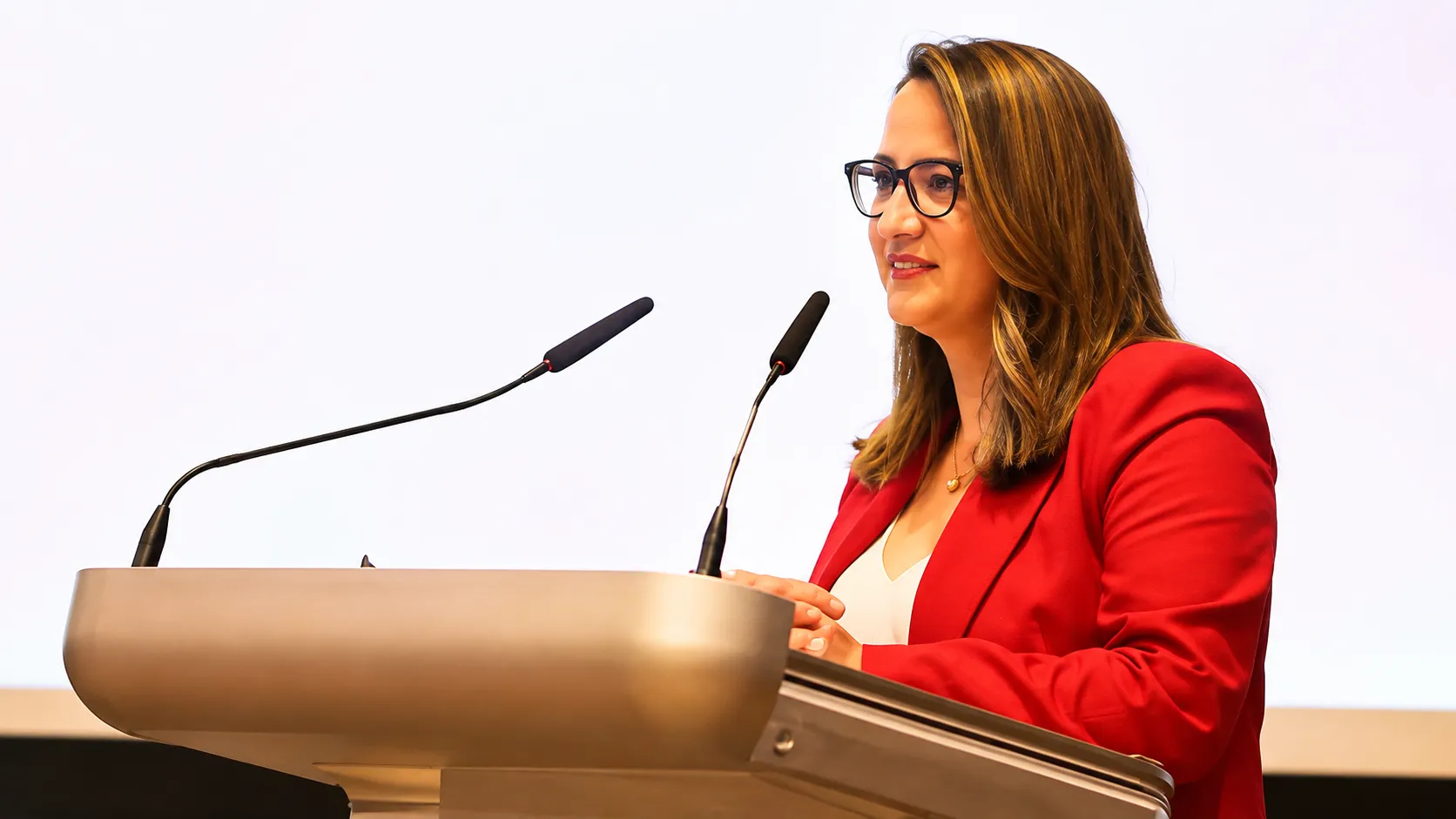
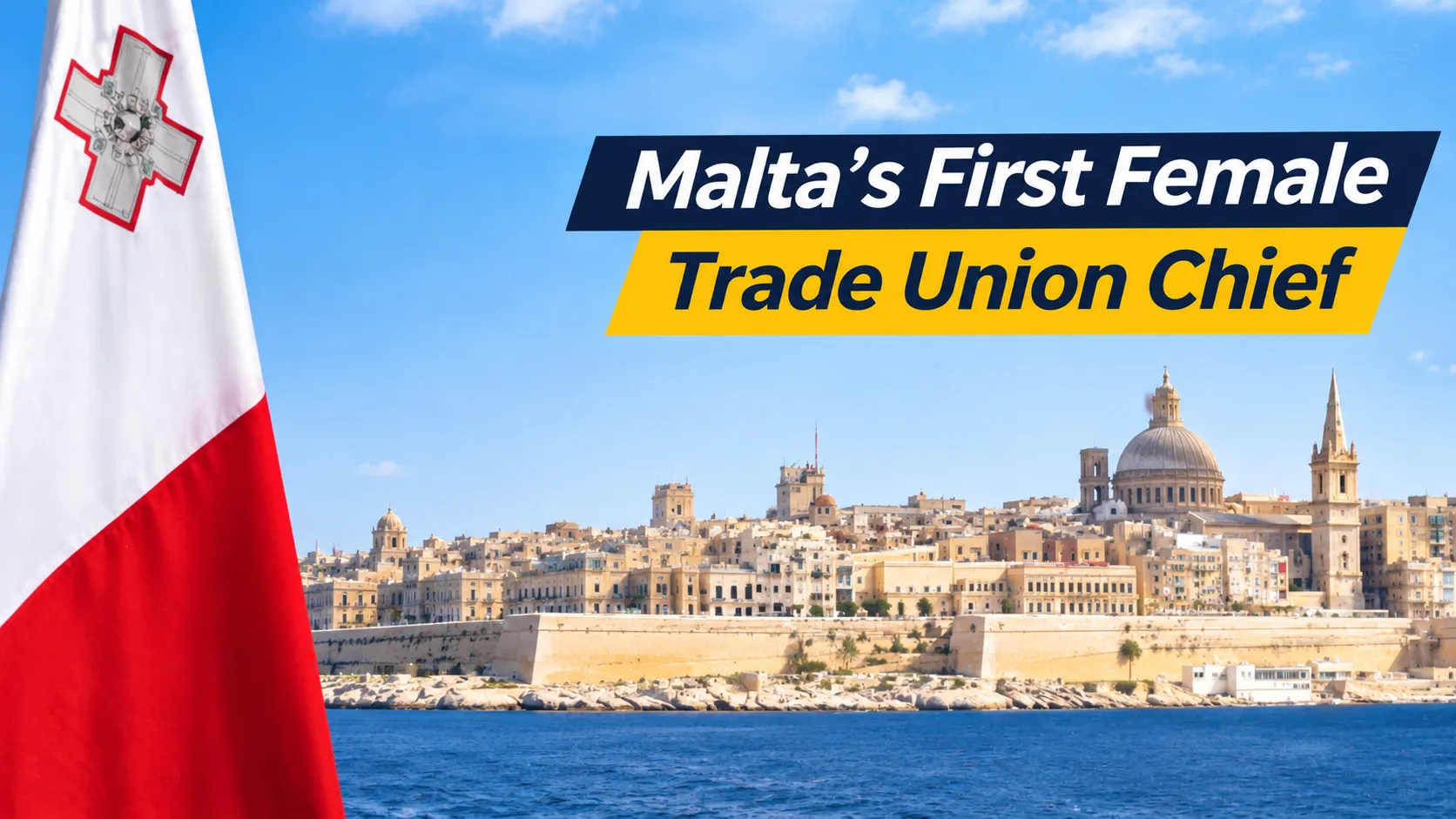
Isabelle Farrugia has been appointed the first female chief executive of UHM Voice of the Workers, one of Malta's main trade unions. Her appointment, reported on the front page of the Times of Malta on November 21, marks a milestone for women's leadership in the island nation's labour movement.
It has also sparked discussion because of Farrugia's own views on gender and leadership. She described herself as the "opposite of a feminist" and said she believes women should succeed on merit rather than through quotas.
Those comments have brought renewed attention to one of the most contested debates in workplace equality: whether quotas and targets are the right way to increase women's representation in leadership, or whether progress should rest solely on merit.
A first for UHM
UHM Voice of the Workers is one of Malta's largest trade unions, representing workers across the public and private sectors. Malta's labour movement has historically played a significant role in the country's politics and economy, and unions have been influential in negotiations on wages, working conditions and labour law.
Trade union leadership in Malta, as in many countries, has traditionally been dominated by men. Farrugia's appointment as the first woman to lead UHM breaks that pattern and adds to a growing number of women in senior roles in European labour organisations.
The merit versus quotas debate
Farrugia's remarks touch on a long-running debate. Supporters of quotas argue that structural barriers, including bias in hiring and promotion, unequal caregiving responsibilities and limited professional networks, prevent qualified women from reaching leadership roles. They say quotas or targets are necessary to break these patterns, and that greater representation eventually changes workplace cultures.
Critics of quotas, including some prominent women leaders, argue that quotas can undermine the credibility of women who reach senior positions, by suggesting they were appointed because of their gender rather than their abilities. They argue that the focus should be on removing barriers and ensuring fair processes, so that women can compete on equal terms.
Many organisations take a middle path, using voluntary targets, transparent recruitment processes, mentoring programmes and flexible working arrangements to improve gender balance without strict quotas.
Europe's approach
The European Union has moved towards binding measures in some areas. A directive adopted in 2022 requires large listed companies in EU member states to meet targets for women's representation on their boards. Member states, including Malta, have been required to transpose the rules into national law.
Several European countries, including France, Norway, Germany and Italy, introduced board quotas earlier. Research has shown that quotas significantly increased the number of women on boards in these countries, although their effects on women in executive roles below board level have been more mixed.
India's experience
India has also used mandates to increase women's representation in corporate leadership. The Companies Act of 2013 requires certain classes of companies, including listed companies, to appoint at least one woman director to their boards. The Securities and Exchange Board of India later required the top listed companies to have at least one independent woman director.
These rules led to a sharp rise in the number of women on Indian boards. However, critics noted that some companies initially met the requirement by appointing family members, and that the share of women in executive leadership remains low. Women still make up a small proportion of chief executives at India's largest companies.
India has also used reservations, a form of quota, in local government. Since the 1990s, a share of seats in village councils and municipal bodies has been reserved for women, and many states have increased that share to 50%. Research suggests these reservations have brought more women into public life and influenced local policy priorities. The Women's Reservation Act, passed in 2023, will reserve one-third of seats in the Lok Sabha and state legislative assemblies for women once implemented.
Women in the labour movement
Women's representation in trade union leadership matters because unions negotiate on issues that affect women workers directly, including equal pay, maternity benefits, childcare, harassment and flexible working. Studies have found that unions with more women in leadership are more likely to prioritise these issues.
In India, women have historically been under-represented in union leadership, although organisations such as the Self-Employed Women's Association (SEWA), founded by Ela Bhatt, have shown how women-led labour organisations can transform the lives of informal workers.
A leadership test
For Farrugia, the immediate challenges will be those facing any union leader: negotiating fair wages and conditions for members in a context of rising living costs, responding to changes in the labour market, and representing workers in policy discussions.
Malta's economy has grown strongly in recent years, driven by sectors such as financial services, gaming, tourism and technology. Rapid growth has brought challenges, including rising housing costs and a growing reliance on foreign workers, issues that unions have increasingly sought to address.
Her approach to gender issues will also be watched closely. As the first woman in her role, she will be seen by many as a symbol of progress, regardless of her personal views on quotas.
Why it matters
For The Impactful Global Indian's readers, particularly women leaders and professionals, Farrugia's appointment and her comments are a reminder that women leaders hold a range of views on how best to achieve equality. The debate over merit and quotas is not settled, and different countries and organisations continue to experiment with different approaches.
What is clear is that women's representation in leadership, whether in companies, unions or government, continues to rise slowly across the world. Each first, such as Farrugia's appointment, adds to the visibility of women in roles from which they were long excluded, and shapes the conversation about how to accelerate that progress.
Leadership styles and representation
Research on women in leadership suggests that diverse leadership teams can bring different perspectives to decision-making, though outcomes depend heavily on organisational context. Whatever their views on policy, women in senior roles often serve as visible role models for younger women considering leadership careers.