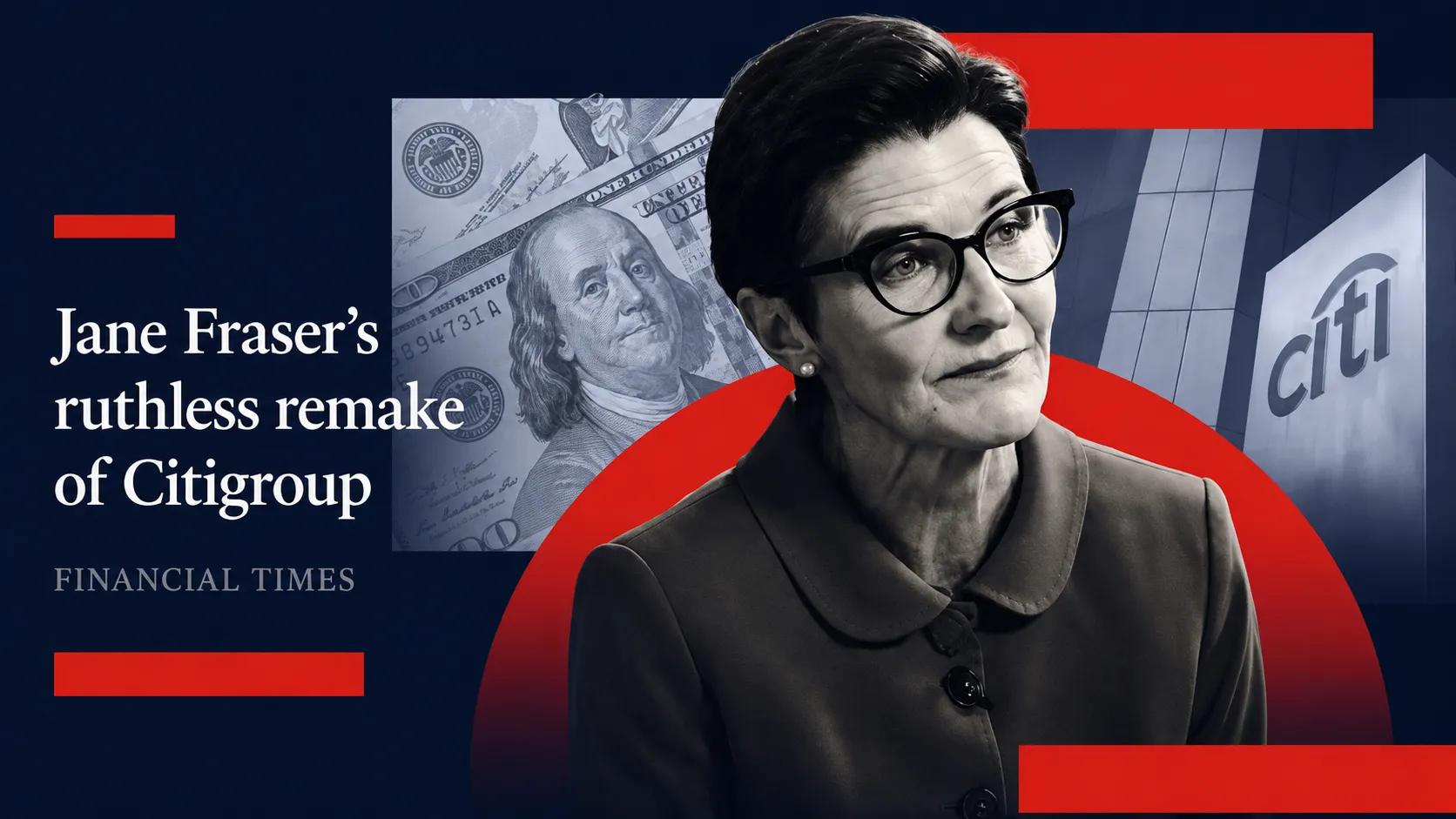
When Jane Fraser walked into Citigroup's Park Avenue headquarters as its new chief executive in March 2021, she inherited an institution that Wall Street had quietly written off as unfixable. Citi was the perennial laggard among America's largest banks, weighed down by a sprawling, inefficient structure and a stock price that had barely moved in a decade. Four years later, that narrative has been rewritten, and much of the credit belongs to a Scottish-born banker whose rise to the top of American finance was as improbable as it was deliberate.
Fraser was born on 13 July 1967 in St Andrews, Scotland, the only child of an accountant father. As a schoolgirl she earned pocket money caddying at St Andrews' famous Old Course, a detail she has referenced fondly as an early lesson in patience and reading difficult terrain. Her family relocated to Australia when she was twelve, and though she initially considered medicine, she gravitated toward economics, eventually earning a degree from Girton College at the University of Cambridge in 1988. She went on to Harvard Business School, where she completed her MBA in 1994, positioning her for a career that would take her through some of the most demanding rooms in global finance.
Her early career reads like a masterclass in disciplined risk-taking. She began in mergers and acquisitions at Goldman Sachs in London, then moved to Asesores Bursátiles, a boutique consultancy in Madrid, where she learned fluent Spanish, a skill that would later prove unexpectedly valuable in her career. She then spent a decade at McKinsey & Company, rising to partner while raising her first child, before joining Citigroup in 2004 in the corporate and investment banking division. What followed was one of the more comprehensive executive apprenticeships in modern banking: she led corporate strategy and M&A through the 2008 financial crisis, ran Citi's global private bank, took charge of Citigroup's operations across Latin America, and then, in a move many read as a genuine career risk, agreed in 2013 to take over the ailing CitiMortgage division just as the mortgage refinancing market was collapsing nationwide.
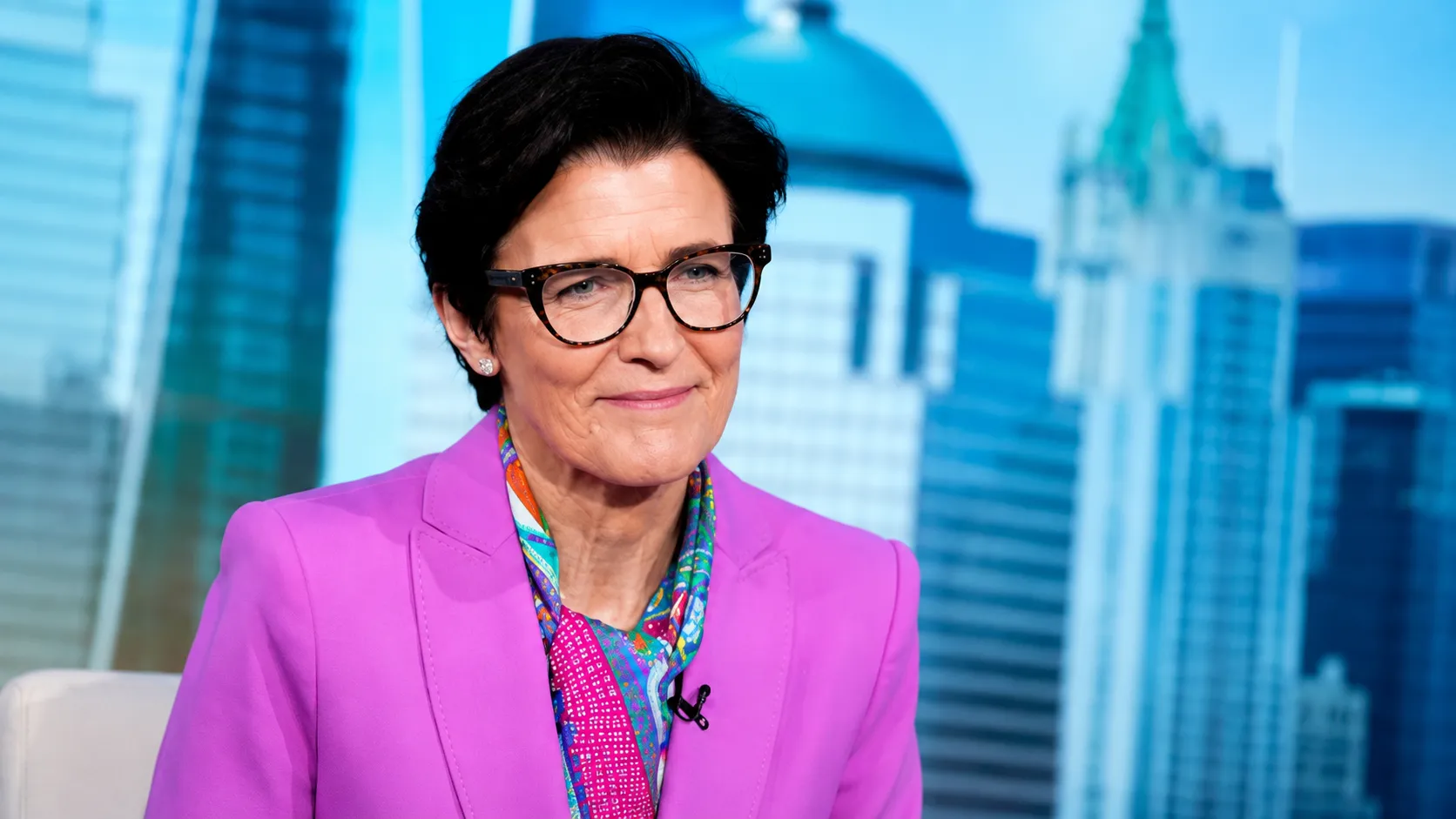
That willingness to take on the bank's hardest, least glamorous problems became the defining thread of Fraser's ascent. She oversaw the painful contraction of Citi's mortgage business through 2013, including the closure of numerous offices amid a marketwide slump, before being promoted the following year to run all of US Consumer and Commercial Banking. In 2019 she returned to New York as President of Citigroup and CEO of Global Consumer Banking, a position that placed her directly in line to succeed long-serving CEO Michael Corbat. When Corbat informed her in the autumn of 2020 that he intended to retire, the board's decision to elevate Fraser was, by most accounts inside the bank, the culmination of nearly two decades of demonstrated judgment rather than a symbolic gesture.
Taking the corner office in March 2021 made Fraser the first woman in history to lead a major Wall Street bank, a milestone that generated global headlines but also enormous scrutiny. She inherited a bank that had drawn regulatory criticism for years over risk-management shortcomings, including a 2020 consent order from US regulators demanding an overhaul of internal controls. Rather than pursue incremental fixes, Fraser launched what she called a multi-year strategy to transform, simplify and modernise Citi for the digital age. She narrowed the bank's sprawling international footprint, exiting consumer banking operations in more than a dozen markets across Asia, Europe, the Middle East and Africa to concentrate capital on businesses where Citi held genuine competitive advantage: institutional banking for multinational corporations, wealth management, and its home market of the United States.
The results have been difficult to dismiss. By July 2026, Fraser had presided over a 45 percent increase in Citigroup's profit, a turnaround substantial enough that the bank's board elected her Chair of the board in October 2025 in addition to her role as CEO, explicitly citing the need for leadership continuity. Her total compensation for 2025 was approved at roughly 42 million dollars, up nearly 22 percent from the prior year, reflecting the board's confidence that her restructuring strategy has moved from promise to delivery. Under her leadership, Citi has also leaned into artificial intelligence as an operational lever rather than a marketing slogan, deploying AI-enabled tools across trade documentation, regulatory compliance and client servicing, and forming a partnership with Google Cloud to modernise its technology stack.
What distinguishes Fraser's leadership style, according to colleagues and industry observers, is a combination of technical rigor and personal accessibility rarely found together at the top of global banking. She has been a vocal advocate for hybrid work flexibility within an industry that largely resisted it, a stance she has connected explicitly to supporting working parents, drawing on her own experience raising two children while climbing the ranks at McKinsey and Citi. She sits on the boards of the Business Roundtable, the Council on Foreign Relations, and Partnership for New York City, and has become a fixture at global economic forums, including meetings with foreign heads of state on matters of cross-border trade and investment, a reflection of Citi's unique position as the most internationally connected of America's largest banks.
Fraser's journey has not been without turbulence. She has faced continued regulatory scrutiny over the pace of Citi's risk-management overhaul, and the bank's restructuring has meant difficult decisions, including thousands of job cuts as she simplified the organisation's management layers. Yet even critics who once questioned whether Citi's problems ran too deep for any single leader to fix now acknowledge that Fraser has done what her predecessors could not: she has made Citigroup's turnaround credible rather than aspirational. She was named the eighth most powerful woman in the world by Forbes in 2025 and has repeatedly appeared on Fortune's Most Powerful Women in Business list, but colleagues who have worked alongside her consistently point to something less quantifiable than rankings: a willingness to make unpopular decisions early rather than delay them, a trait she has carried since her first tour running CitiMortgage through its darkest years.
For the global Indian diaspora and the wider community of business leaders and investors who follow Citigroup's fortunes closely, Fraser's story carries a broader resonance beyond banking. Citi remains one of the most significant Western financial institutions operating across India and the broader Asia-Pacific region, and Fraser has personally overseen the bank's recalibrated strategy toward emerging markets, balancing footprint reduction in some geographies with deepened institutional relationships in others. Her insistence on operational discipline paired with global ambition offers a template increasingly studied by executives well beyond finance: that patient, methodical competence, sustained over decades rather than engineered for a single headline moment, remains one of the most durable paths to the very top of global business.
As Citigroup enters the next phase of its transformation under Fraser's combined role as Chair and CEO, the question facing Wall Street is no longer whether she can fix the bank, but how far she can take it. Having already rewritten what was once considered an immovable narrative about Citigroup's decline, Fraser's next chapter will be watched closely by investors, regulators and a new generation of women in finance for whom her ascent has become both inspiration and evidence that the path to the top of Wall Street, however long and demanding, is no longer closed.
Fraser's personal story adds another layer to why her leadership resonates so widely beyond finance. She married Alberto Piedra in 1996 and has raised two children while ascending through some of the most demanding institutions in global business, a balancing act she has discussed with unusual candour for a chief executive at her level. Rather than treating motherhood as a private matter separate from her professional identity, she has actively woven it into her public leadership positioning, championing flexible working arrangements at Citi specifically because she understands, from direct experience, how punishing rigid schedules can be for parents trying to build careers at the highest levels of competitive industries. That stance put her at odds with several Wall Street peers who pushed aggressively for full return-to-office mandates in the years following the pandemic, yet Citi has largely maintained hybrid flexibility under her direction, a policy she has defended as a genuine talent-retention advantage rather than a concession.
Her rise has also been closely studied for what it reveals about how large, complex organisations actually select their next leaders. Unlike executives who arrive from outside with a mandate to disrupt, Fraser spent seventeen years inside Citigroup before becoming CEO, absorbing the bank's operational weaknesses from the inside across nearly every major business line: consumer banking, private banking, Latin American operations, corporate strategy, and the mortgage crisis of the early 2010s. That depth of internal knowledge has proven decisive in her ability to identify precisely which parts of Citi's sprawling global footprint were genuinely strategic and which had simply persisted through organisational inertia. Her decision to exit consumer banking operations across more than a dozen countries was, by several accounts, informed directly by lessons she drew from her earlier years running the bank's Latin American division, where she witnessed firsthand how thinly stretched management attention became across too many disconnected markets.
Fraser has also become an increasingly prominent voice in broader conversations about the future of global finance, particularly regarding the integration of artificial intelligence into core banking operations. Rather than treating AI adoption as a public relations initiative, she has directed substantial resources toward embedding machine learning tools directly into Citi's trade finance, compliance and client service operations, arguing publicly that banks failing to modernise their technology infrastructure now risk becoming structurally uncompetitive within a decade. Her approach has been notably pragmatic rather than triumphalist, emphasising measurable efficiency gains and regulatory compliance improvements over speculative claims about AI's transformative potential, a tone consistent with the broader operational discipline that has defined her tenure since 2021.
Looking toward the remainder of the decade, Fraser has articulated an ambition for Citigroup that extends beyond simply restoring the bank's competitiveness among American peers: she has spoken of positioning Citi as the essential banking partner for institutions navigating an increasingly fragmented and geopolitically complex global economy, leveraging the bank's unmatched international footprint precisely at a moment when many competitors have retreated toward more domestically focused strategies. That bet, that global connectivity itself remains a durable competitive advantage even as trade tensions and regulatory fragmentation increase worldwide, represents the next major test of the strategic judgment that has defined every major turn in her career, from Madrid to Latin America to the CEO's office on Park Avenue.

For the global business community that watches Wall Street leadership closely, Fraser's continued success carries implications well beyond Citigroup's own balance sheet. Her tenure has become a widely cited reference point in conversations about institutional investor confidence in women-led financial organisations, with several governance researchers noting that Citi's sustained profit growth under her leadership has helped normalise the presence of women at the very top of global banking in a way that earlier, more symbolic appointments had not fully achieved. As more boards across global finance weigh succession decisions in the years ahead, Fraser's demonstrated ability to combine operational discipline with genuine strategic ambition offers a template that extends well beyond her own institution, reshaping expectations for what sustained, credible leadership at the top of global finance can look like.
Fraser has also spoken candidly about the difference between mentorship, which offers advice, and sponsorship, which actively opens doors and advocates for advancement, arguing that the latter has historically been in shorter supply for women navigating careers in finance. That distinction, drawn from her own experience benefiting from senior sponsors at both McKinsey and Citigroup earlier in her career, has informed concrete institutional changes at the bank, including expanded mentorship and sponsorship programmes and more structured succession planning processes designed to surface female leadership candidates earlier in their careers rather than relying on informal, often male-dominated networks that historically determined who advanced fastest inside major banking institutions.