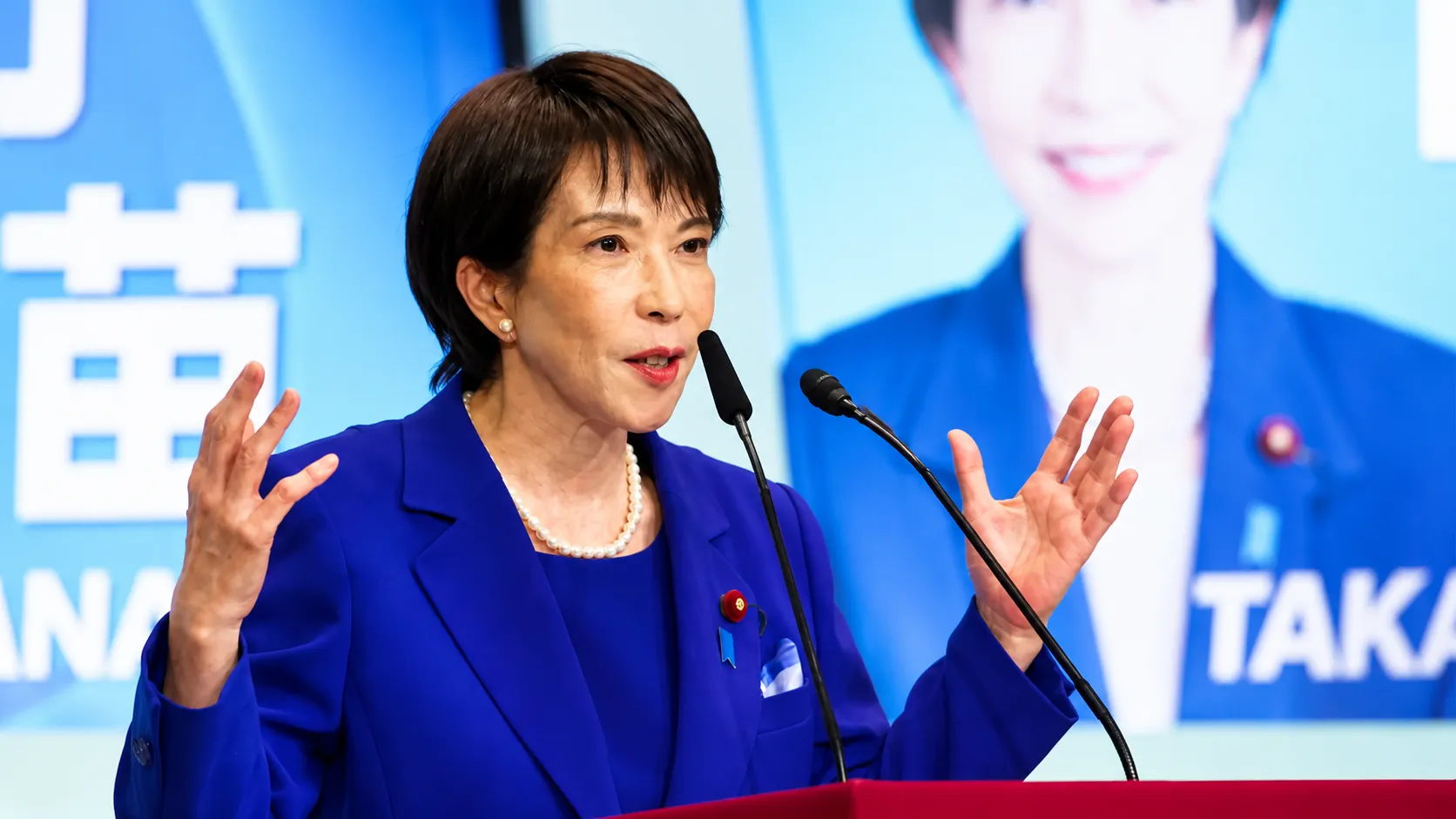
Japan's parliament reconvenes on Monday for an extraordinary session that will test the economic agenda of the country's first woman-led economic leadership, as Prime Minister Sanae Takaichi and Finance Minister Satsuki Katayama seek support for a temporary cut in the consumption tax on food.
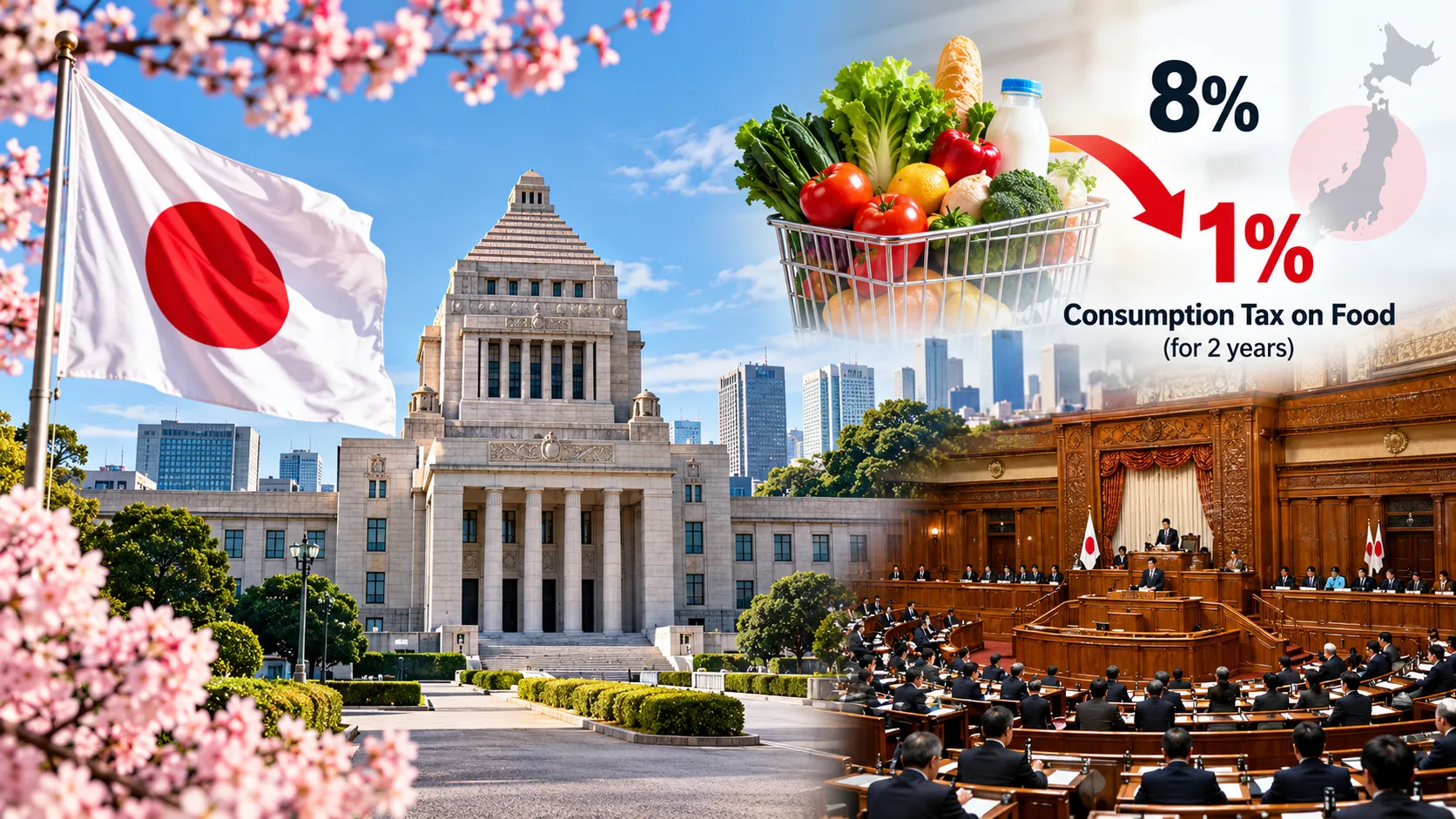
The session opens on 5 October and is scheduled to run for 69 days, until 12 December. The government plans to submit 21 bills and one treaty. The centrepiece is a proposal to reduce the consumption tax on foodstuffs from 8% to 1% for two years, a measure intended to ease the pressure of rising living costs on households.
It is also expected to be the most contentious item on the agenda. The government has not yet secured sufficient support in the upper house to pass it, and the proposal will require negotiation with opposition parties.
Two firsts at the top
Takaichi became Japan's first female prime minister in October 2025. When she formed her cabinet on 21 October 2025, she appointed Satsuki Katayama as Japan's first female finance minister.
Katayama is a former senior official at the Ministry of Finance, where she spent more than two decades and became the first woman to serve as a budget examiner in its powerful Budget Bureau. She studied law at the University of Tokyo and attended France's École nationale d'administration before entering politics in 2005.
In a cabinet reshuffle in September 2026, Takaichi kept her core economic team in place, including Katayama, a decision widely read as a signal of stability at a time of volatile financial markets and rising interest rates.
The economics of a food tax cut
The proposed cut reflects political pressure from rising prices. Japan has experienced its most sustained period of inflation in decades, after many years of deflation, and food prices have been a particular source of public frustration.
A temporary reduction in the food consumption tax would put money directly into households' pockets. But it would also reduce tax revenue in a country with one of the highest levels of public debt in the developed world. Katayama, as finance minister, will need to reassure bond investors that the measure is temporary and that Japan's commitment to fiscal sustainability remains intact.
That balancing act matters for global markets. Japan's government bond market is one of the largest in the world, and shifts in Japanese yields can affect global capital flows, including flows into emerging markets such as India.
The Bank of Japan factor
The session also takes place as the Bank of Japan continues to move away from its decades of ultra-loose policy. The summary of opinions from the central bank's September meeting showed policymakers monitoring how recent interest rate increases are affecting financial conditions and the real economy, with some board members arguing for faster increases to bring above-target inflation under control.
A larger fiscal deficit at a time when the central bank is tightening would put upward pressure on bond yields. The relationship between Takaichi's government and the Bank of Japan will therefore be closely watched by investors.
Political crosscurrents
Beyond the tax cut, the session will deal with contested electoral reform. The Japan Innovation Party, known as Ishin, which governs in coalition with Takaichi's Liberal Democratic Party, is pressing for legislation to reduce the number of seats in the lower house, particularly proportional representation seats. Opposition parties oppose the plan, and Ishin is concerned that the tax debate could overshadow its priority. The coalition partners have agreed to seek a compromise by the end of October.
How Takaichi manages these competing demands will determine how much political capital she retains for her economic programme.
Women at the top, but not yet across the system
The presence of women in Japan's two most powerful economic posts is historic. Yet it has not translated into broad change in women's representation in government.
Takaichi's September reshuffle fell short of her pledge to increase female representation, appointing just two women to lead ministries, according to reports. Critics noted that previous governments had at times included as many as five women ministers.
Japan continues to rank last among G7 countries on the World Economic Forum's Global Gender Gap Index, reflecting low representation of women in politics and senior business positions and a persistent gender pay gap.
The economic case for change has been made for decades. Goldman Sachs estimated a quarter of a century ago that Japan's GDP could be as much as 15% larger if women participated in work at the same rate as men, an analysis that gave rise to the term "womenomics." Female labour force participation has risen substantially since then, but many women work in part-time or non-regular jobs with lower pay and fewer prospects for advancement.
Takaichi remains popular among many Japanese women voters, according to analysts, even as advocates of gender equality argue that her policies have done little to address structural barriers.
Why it matters for India and the diaspora
Japan is one of India's most important economic partners. Japanese investment has supported major Indian infrastructure projects, including the Mumbai-Ahmedabad high-speed rail corridor, and Japan has set an ambitious target for private investment in India over the coming decade. Japanese companies are significant investors in Indian automobiles, electronics and financial services.
The direction of Japan's economy, and its interest rates, therefore matters to Indian businesses. A stable Japan with a clear fiscal path supports continued investment flows. Sharp moves in Japanese bond yields, by contrast, can unsettle global markets and affect the cost of capital for emerging economies.
For the growing Indian community in Japan, including engineers and professionals in the technology sector, the government's economic and labour policies also have a direct impact.
The test ahead
The extraordinary session will show whether Takaichi and Katayama can turn popular support into legislative results. Passing the food tax cut would deliver on a central promise. Doing so without unsettling bond markets would demonstrate the fiscal credibility that investors expect.
For women in leadership worldwide, Japan's experience offers a nuanced lesson. Reaching the top of government is a milestone, but it does not automatically change the institutions beneath. The next 69 days will be judged first on economics, and only later on whether this leadership leaves a broader legacy for women in Japanese public life. </content> </invoke>