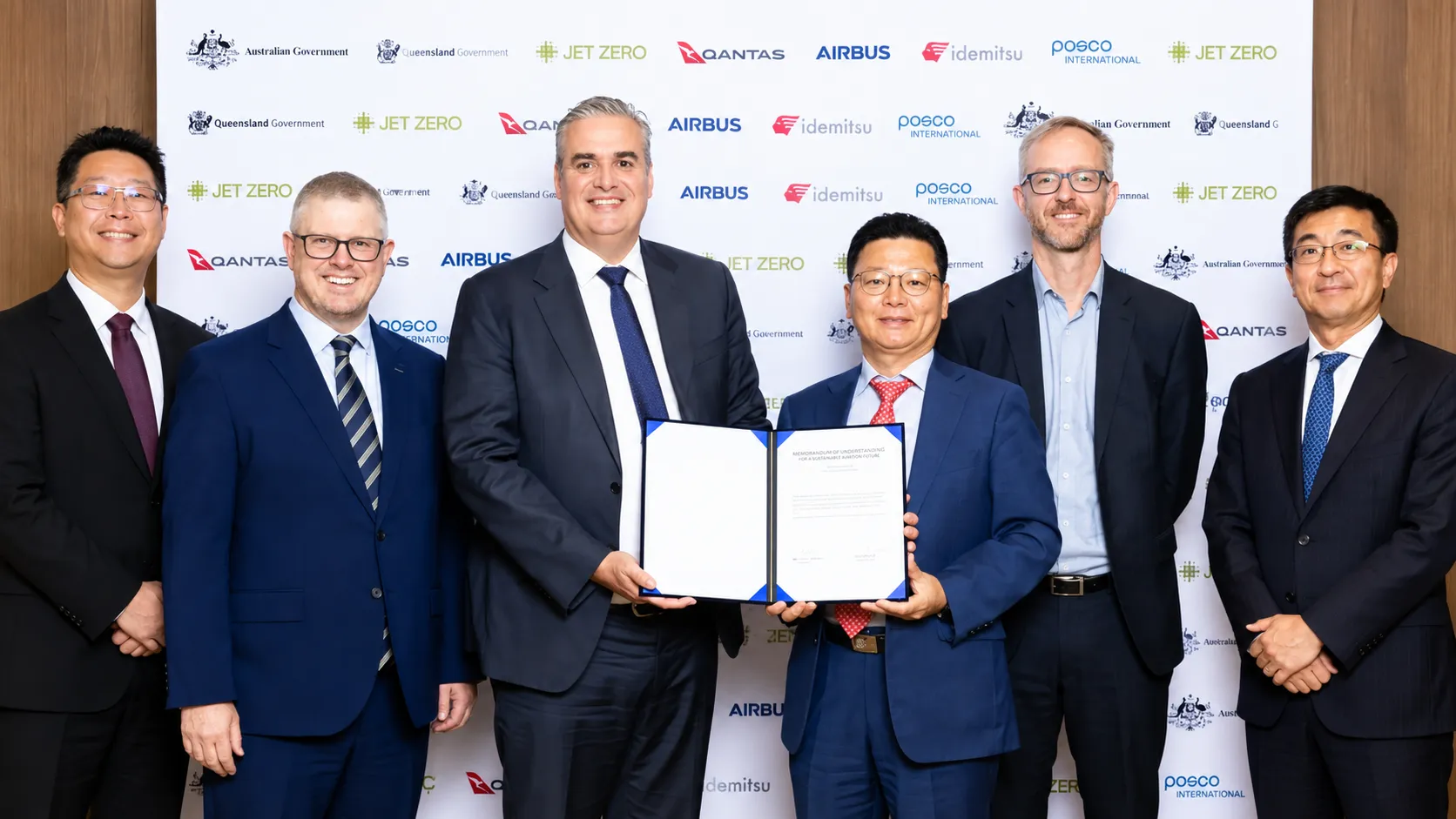
Jet Zero Australia, a climate-technology company developing sustainable aviation fuel and related energy infrastructure, has raised A$30 million from existing investors Qantas, Airbus and POSCO International, the company confirmed on September 7, 2026. The round takes Jet Zero Australia's total reported funding past A$80 million, reinforcing continued strategic-investor confidence in a sector that remains one of the most technically difficult segments of the broader decarbonisation push.
Aviation accounts for a stubborn share of global transport emissions that has proven far harder to address than road transport, where electrification has advanced rapidly. Sustainable aviation fuel — typically produced from waste feedstocks, agricultural residues or synthetic pathways rather than fossil-derived kerosene — is widely regarded by airlines and regulators as the most viable near-term lever for cutting aviation's carbon footprint, given that battery-electric or hydrogen-powered long-haul aircraft remain years, if not decades, from commercial viability. That has made SAF production capacity a strategic priority for airlines such as Qantas, which face increasing regulatory pressure and customer expectations around emissions reporting and offset credibility.
The involvement of both Qantas and Airbus as repeat investors is notable: it signals that Jet Zero Australia's technology and offtake potential have cleared the kind of technical and commercial due diligence that major airlines and aircraft manufacturers apply before committing capital, rather than simply lending their names to a sustainability-adjacent startup for reputational purposes. POSCO International's continued participation similarly points to industrial-scale ambitions around feedstock and fuel-supply infrastructure, an area where South Korean industrial conglomerates have been expanding their footprint as they diversify beyond steel and traditional heavy industry into the energy transition.
For Jet Zero Australia, the fresh capital arrives at a stage where sustainable aviation fuel developers globally are shifting from pilot-scale demonstration to the far more capital-intensive work of building commercial production facilities — a transition that has proven fatal for several well-funded SAF ventures elsewhere that struggled to secure the offtake agreements and infrastructure financing needed to scale. With strategic backing from two of the aviation industry's most significant players already in place, the company's next challenge will be translating that support into operating production capacity at a cost structure that can compete with conventional jet fuel without permanent subsidy.