
JetZero, the California-based aerospace startup developing a blended-wing-body passenger aircraft, has closed a senior secured term loan facility of up to $100 million to advance development and production of its Z4 aircraft program, the company announced on August 31, 2026.
The loan facility is led by Pinegrove Credit Partners, backed by Brookfield and HRTG Partners, alongside Silicon Valley Bank, a division of First Citizens Bank. Proceeds will accelerate technology maturation and manufacturing of Jet1, JetZero's full-scale demonstrator aircraft, and support the build-out of its manufacturing and test facilities in Greensboro, North Carolina, as well as provide working capital for its broader US operations.
The financing follows a $175 million Series B round announced in January 2026, led by global investment firm B Capital and backed by a mix of airline, aerospace and industrial investors including United Airlines Ventures, RTX Ventures and Northrop Grumman, and adds to more than $1 billion the company says it has secured through private investment, government funding, incentives and commercial commitments to date, including a separate $3 billion agreement with the US Export-Import Bank.
Unlike a conventional tube-and-wing airliner, in which the fuselage contributes little to lift and substantial drag, JetZero's Z4 design integrates the wings and fuselage into a single blended structure that generates lift across a much larger portion of the airframe. The company says this configuration can reduce aerodynamic drag and fuel burn, with the Z4 — designed to carry approximately 250 passengers over a range of up to 5,000 nautical miles — expected to cut fuel consumption and emissions by up to 50 percent compared with a conventional aircraft of the same passenger capacity. The aircraft is also designed to be compatible with sustainable aviation fuel and to offer a roomier passenger cabin, with wider aisles and larger seats, while remaining compatible with existing airport infrastructure.
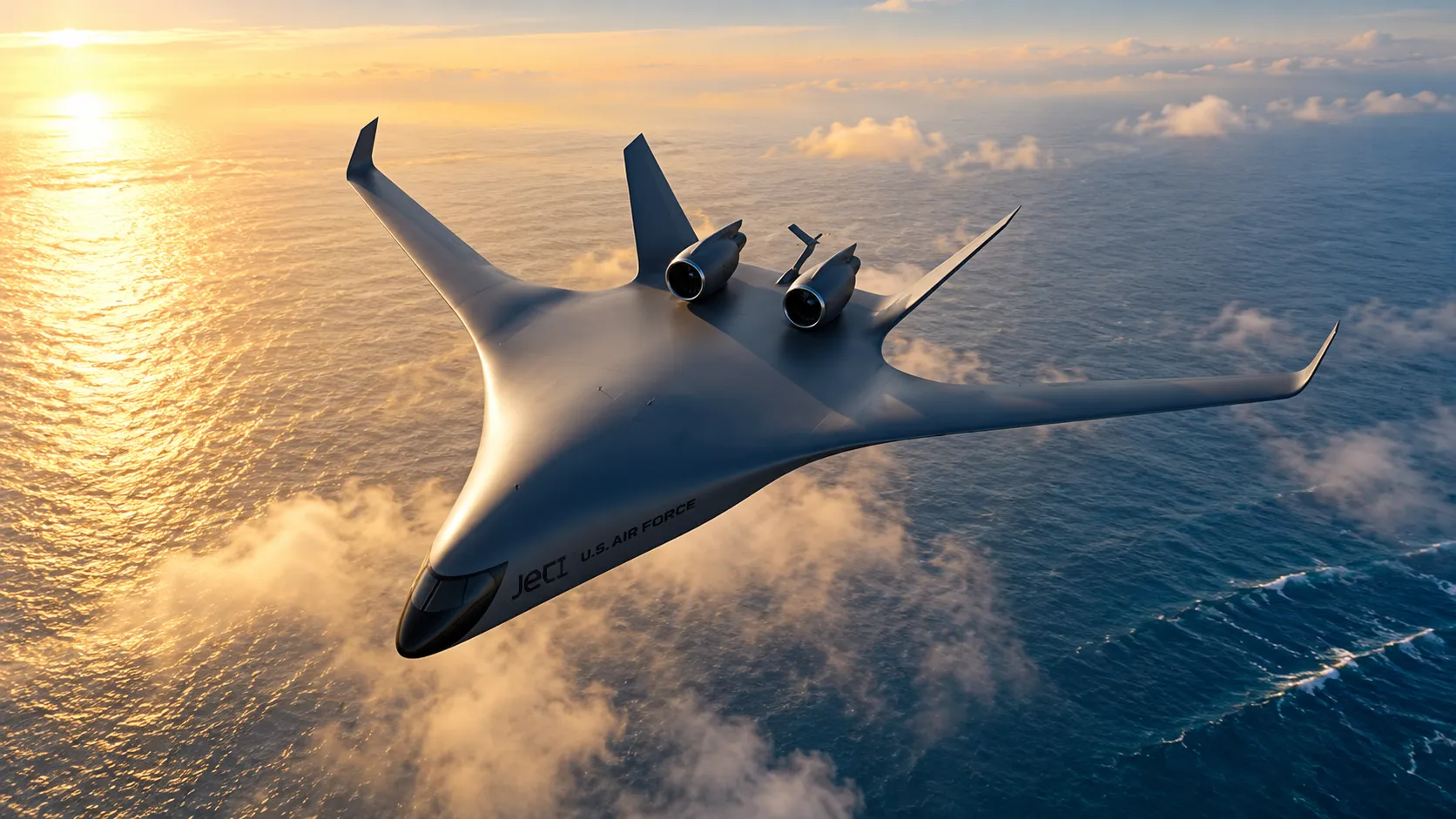
JetZero is targeting first flight of its Jet1 demonstrator in the fourth quarter of 2027; as of June 2026, the aircraft was reported to be 40 percent complete at Northrop Grumman's Scaled Composites facility in Mojave, California. United Airlines has previously announced a conditional order for up to 100 Z4 aircraft, with an option for 100 more, contingent on JetZero meeting development milestones including a successful full-scale demonstrator flight and the aircraft meeting United's safety, business and operating requirements.
"Adding sophisticated credit providers to our team as investors and stakeholders validates our creditworthiness and informs our funding roadmap," said Sergey Kulyagin, JetZero's Chief Financial Officer and Treasurer, of the new loan facility. Pinegrove structured the financing around the Z4 program's development trajectory rather than as a conventional corporate lending facility, reflecting the specialized nature of financing an aircraft still years from commercial certification.
"This facility is targeted for pace," JetZero CEO and co-founder Tom O'Leary said of the new financing, underscoring the urgency behind the company's push to reach a first flight before the end of 2027.
The blended-wing-body concept has a long history in aerospace research — NASA spent more than $1 billion studying similar designs decades ago in partnership with Boeing, while Airbus explored and ultimately shelved a comparable concept as impractical. Skeptics have raised concerns ranging from the passenger experience of sitting further from a window to unresolved questions about emergency evacuation from a wider, multi-aisle cabin, and financing has historically been considered the biggest obstacle to bringing the concept to market.
For sustainability-focused investors and the aviation industry more broadly, JetZero's ability to combine venture equity, government-backed financing and now specialized project debt — while securing conditional commercial orders from a major airline — marks a notable proof point for how capital-intensive, long-development-cycle climate technologies can be financed outside of traditional equity rounds alone.