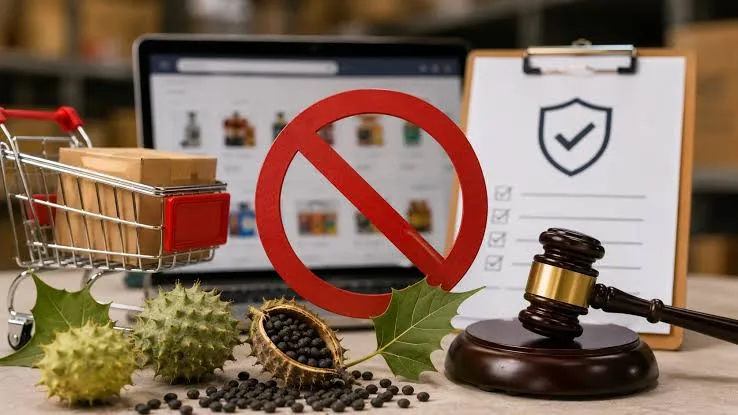
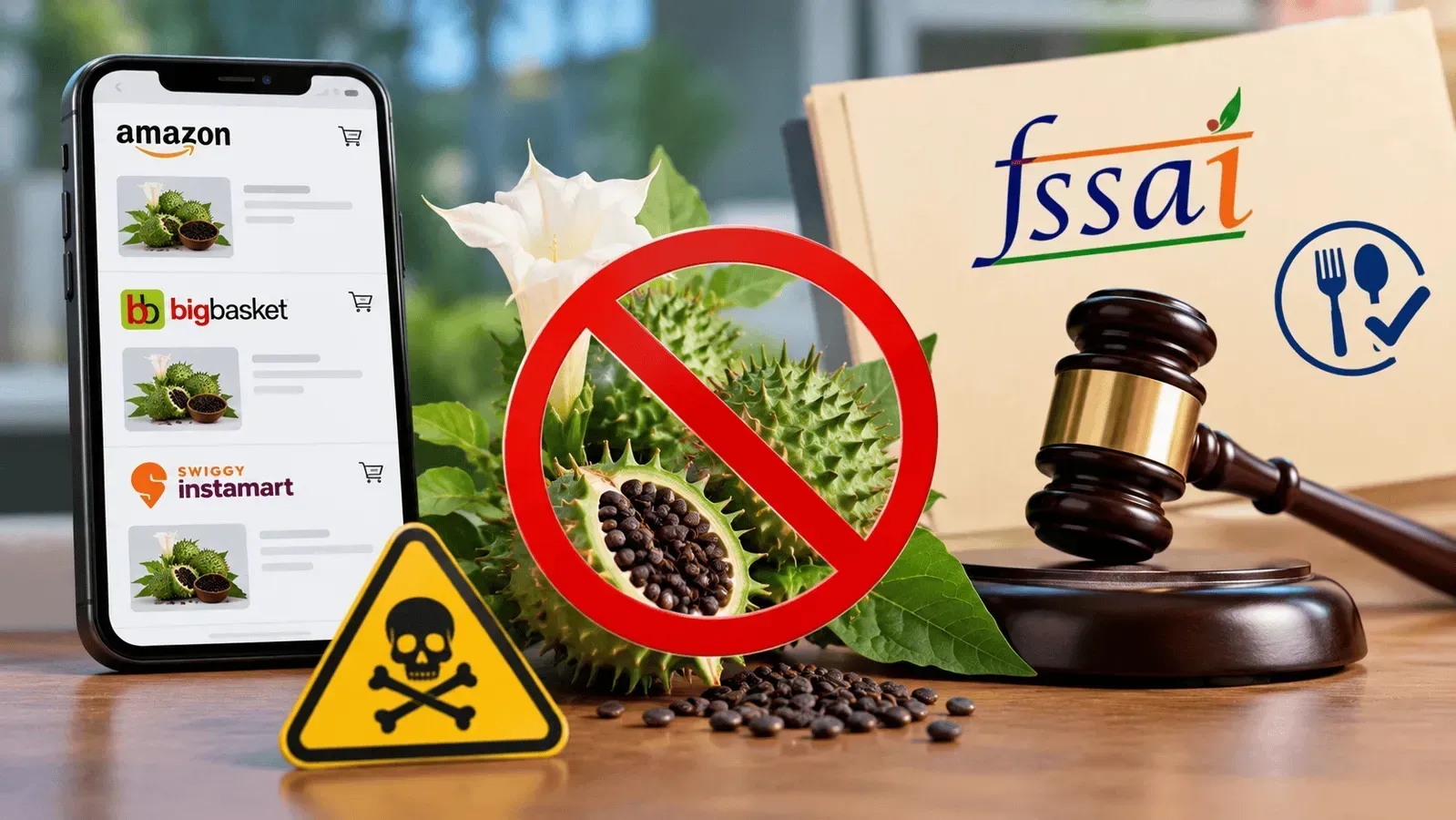
Karnataka's food safety authorities have suspended the licences of Amazon, Instamart and BigBasket after the e-commerce platforms were found listing Datura seeds, a plant material known to be poisonous, for sale to consumers. The action, announced on August 25, 2026, marks one of the more significant regulatory interventions against major e-commerce and quick-commerce platforms in India this year.
The simultaneous action against three separate platforms, rather than a single operator, is itself unusual and suggests Karnataka's food safety department conducted a coordinated review across multiple e-commerce operators rather than responding to an isolated complaint about one company's listings.
Datura, a plant containing toxic alkaloids that can cause severe illness or death if ingested, has occasionally appeared in online marketplaces mislabelled or miscategorised alongside legitimate herbal or seed products, a gap that regulators say points to weaknesses in how large platforms vet third-party sellers and product listings. The suspension of food licences across three major platforms simultaneously suggests Karnataka's food safety department found the issue to be systemic rather than isolated to a single seller or listing.
Datura's toxicity stems from tropane alkaloids that affect the central nervous system, and cases of accidental poisoning in India have historically been associated with the plant's presence in unregulated herbal medicine and traditional remedy markets rather than mainstream e-commerce -- making its appearance on major, well-known platforms a particularly striking failure of listing oversight in the eyes of regulators.
The action places renewed scrutiny on how India's largest e-commerce and quick-commerce operators police the millions of product listings uploaded by third-party sellers on their platforms. As grocery and quick-commerce delivery has scaled rapidly across Indian cities, regulators in multiple states have grown increasingly attentive to gaps in food safety compliance, particularly for products that fall outside standard packaged-goods categories.
Quick-commerce platforms in particular have faced growing regulatory attention over the past two years as their rapid growth has outpaced the development of category-specific compliance frameworks, especially for perishable, herbal and loosely regulated product categories that do not fit neatly within the packaged food safety standards originally designed for traditional retail.
For Amazon, Instamart and BigBasket, the suspension is likely to require swift corrective action, including tightened seller verification and listing review processes, before licences can be reinstated. The episode is likely to accelerate broader conversations in India about whether existing food safety regulatory frameworks, designed largely around physical retail, are adequately equipped to oversee the scale and speed of online grocery and quick-commerce platforms.
Industry observers expect the episode to prompt renewed calls for stronger automated screening systems capable of flagging potentially dangerous listings before they go live, rather than relying primarily on post-facto regulatory audits -- a shift that would require significant investment from platforms already under margin pressure as they compete intensely for market share in India's quick-commerce sector.