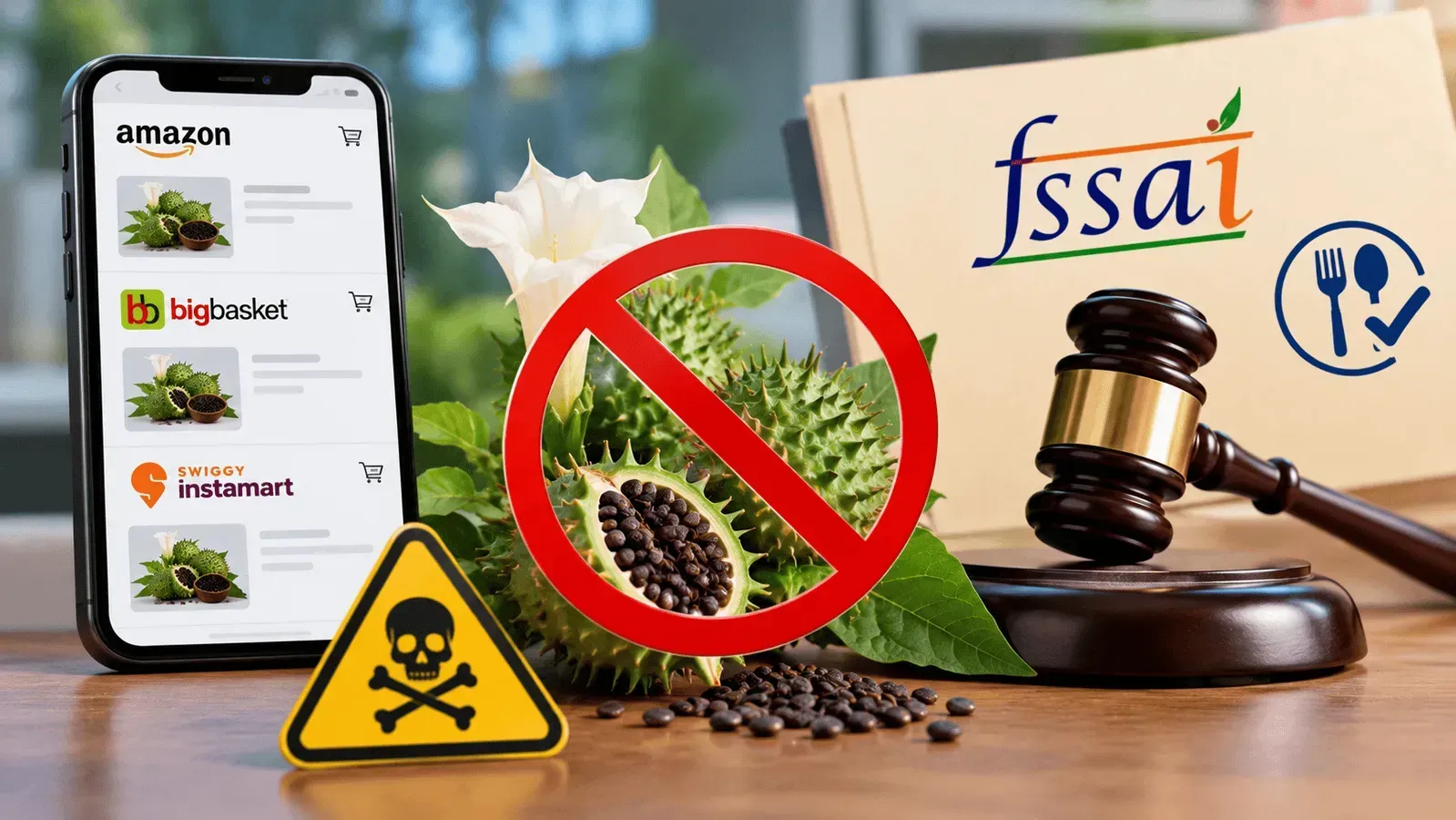
Karnataka's food safety authorities have suspended the food licences of Amazon, Swiggy Instamart and BigBasket, according to reports on August 25, 2026, a regulatory action that has sent ripples through India's quick-commerce and online grocery sector at a moment when the category is scaling its physical footprint faster than perhaps any other segment of Indian e-commerce.
While the precise grounds for suspension have not been fully detailed in public disclosures, such actions by state food safety regulators typically stem from lapses identified during inspections of dark stores and fulfilment centres, including issues related to licensing renewals, storage conditions, hygiene standards, or documentation gaps across a company's rapidly expanding network of warehouses. For platforms operating hundreds of micro-fulfilment centres across a single state, maintaining uniform regulatory compliance across every location has become an increasingly complex operational challenge.
The suspension is particularly notable given the scale at which these three companies have been expanding their dark-store networks in recent months, as quick-commerce operators race to densify coverage across Bengaluru and other Karnataka cities in pursuit of faster delivery times and broader market share. Rapid physical expansion of this kind inherently increases the surface area for regulatory non-compliance, particularly when new facilities are being opened and staffed at a pace that can outstrip a company's ability to secure and maintain the necessary local licences and certifications.
For Amazon, Instamart and BigBasket, the suspension carries both operational and reputational implications. Operationally, any interruption to food-category fulfilment in Karnataka — one of India's largest and most lucrative quick-commerce markets — could affect order volumes and customer experience in the near term. Reputationally, the action adds to a broader pattern of increased regulatory attention on India's e-commerce and quick-commerce sector, as authorities at both the state and national level grow more assertive in enforcing food safety, labour and consumer protection standards against companies that have historically prioritised growth velocity.
The development also intersects with a wider conversation around food safety standards in India more broadly, with regulators recently taking action against several packaged food companies, including Mondelez India and Amway, over health and nutrition claims. Taken together, these actions suggest a regulatory environment that is becoming more active across the food and consumer products value chain, from packaged goods manufacturers to the platforms that deliver them to consumers' doorsteps.
For the quick-commerce sector as a whole, the suspension serves as a reminder that the industry's rapid infrastructure build-out — evidenced this week by Flipkart Minutes' overtaking of Swiggy Instamart in dark-store count — must be matched by equally rigorous compliance systems if platforms are to avoid regulatory disruptions that can undermine the operational reliability on which their entire business model depends.
Industry watchers will be looking closely at how quickly the three affected companies are able to remediate the identified issues and restore their licences, as well as whether Karnataka's action prompts similar scrutiny from food safety regulators in other states where quick-commerce platforms have been expanding their dark-store footprints at a similarly aggressive pace.