ImpactSustainability5 MIN READ

LG Energy Solution Signs MoU With Energix for About 2 GWh of Battery Storage in Europe and North America, Starting in Lithuania

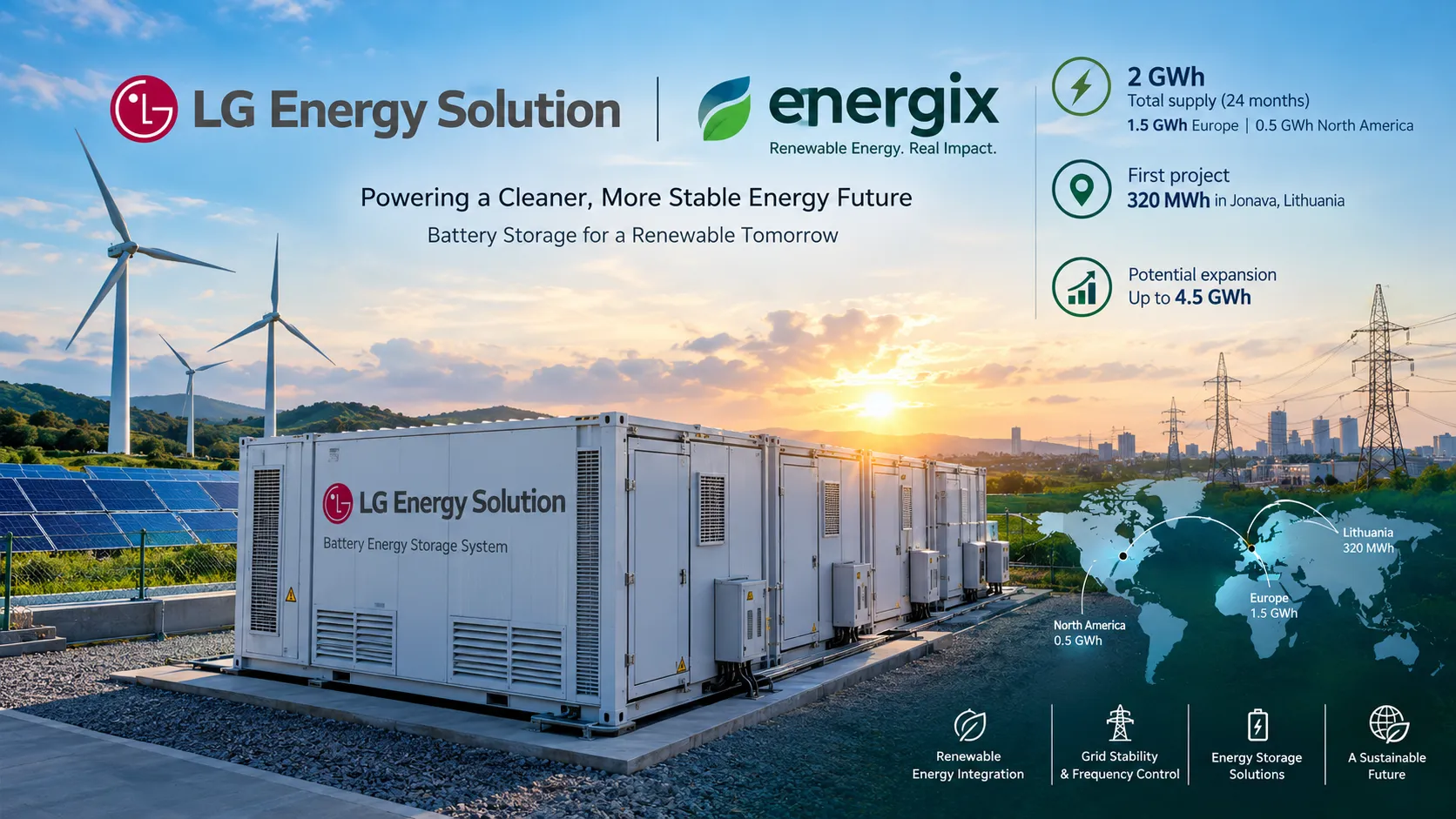
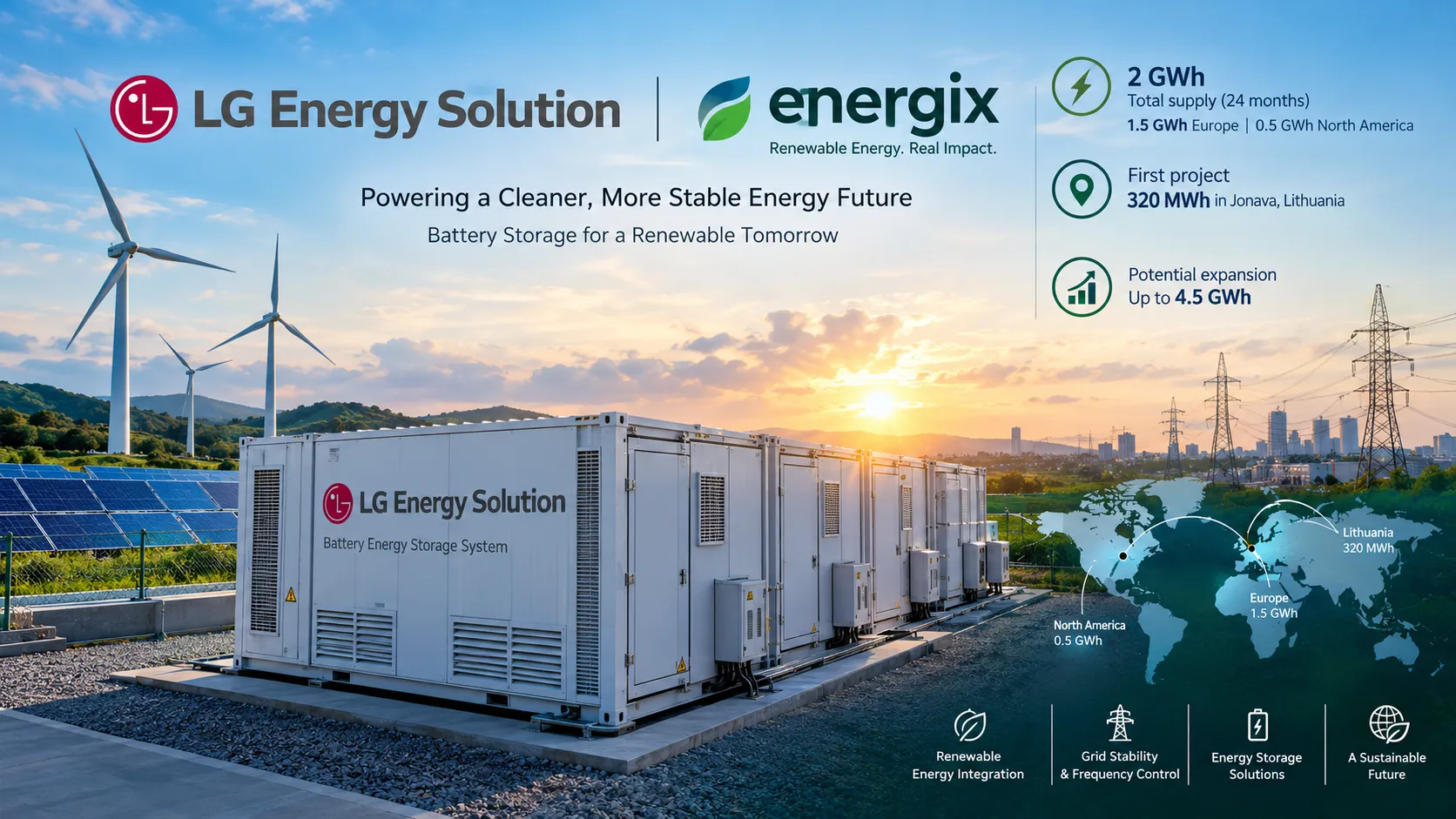
LG Energy Solution has signed a non-binding memorandum of understanding with renewable energy developer Energix to supply about 2 GWh of energy storage systems over 24 months, including 1.5 GWh in Europe and 0.5 GWh in North America, with talks on up to 4.5 GWh. The first project is a 320 MWh system in Jonava, Lithuania.

By Prathista Lazar · Author29 October 2026New
LG Energy Solution Signs MoU With Energix for About 2 GWh of Battery Storage in Europe and North America, Starting in Lithuania

As electric vehicle demand cools in some markets, battery makers are increasingly turning to another fast-growing source of demand: the large battery systems that store renewable electricity and stabilise power grids.

LG Energy Solution, South Korea's largest battery maker, has signed a non-binding memorandum of understanding with Energix, a renewable energy developer, to supply about 2 GWh of energy storage systems over 24 months, according to a SustainabilityOnline report on Wednesday, October 28.

Under the agreement, about 1.5 GWh would be supplied in Europe and 0.5 GWh in North America. The two companies are also discussing a potential expansion of up to 4.5 GWh. The first project under the partnership is a 320 MWh energy storage system in Jonava, Lithuania.

Changbeom Kang, a senior executive at LG Energy Solution, said in the announcement that the partnership reflected the company's commitment to supporting the growth of renewable energy through reliable storage solutions.

Why storage matters

Solar and wind power produce electricity only when the sun shines and the wind blows, which does not always match when people need power. Battery energy storage systems (BESS) store surplus renewable electricity and release it when demand is high or generation is low. They also help grid operators maintain stable frequency and voltage, a service that becomes more important as renewables replace conventional power plants.

As countries add more renewable capacity, demand for storage has grown rapidly. Grid-scale storage installations have risen sharply worldwide, and analysts expect strong growth to continue for years.

The Lithuania project

Lithuania has made energy independence a priority, particularly since Russia's invasion of Ukraine in 2022. The Baltic states disconnected from the Russian-controlled power grid and synchronised with the continental European grid in 2025, increasing the need for local resources to keep the grid stable. Battery storage plays an important role in this effort, and Lithuania has been investing in storage alongside wind and solar power.

The 320 MWh Jonava project will provide an early test of the LG Energy Solution and Energix partnership.
960e56c8-5290-44cf-86cc-1f16d9d7894a.png

A non-binding agreement

It is important to note that the memorandum of understanding is non-binding, meaning that the two companies have agreed on a framework but have not signed firm supply contracts for the full volume. MoUs of this kind are common in the energy industry and signal intent, but the final volumes depend on project development, financing and regulatory approvals.

Battery makers pivot to storage

LG Energy Solution and other battery makers have been expanding their energy storage businesses as growth in electric vehicle demand has slowed in some markets, notably the United States, where policy changes have reduced support for electric vehicles. Energy storage offers an alternative source of demand for battery production lines, particularly in North America, where battery makers have invested heavily in new factories.

Korean battery makers have also been shifting towards lithium iron phosphate (LFP) chemistry for storage, which is cheaper and safer than the nickel-based chemistries traditionally used in electric vehicles. Chinese companies such as CATL and BYD dominate the LFP market, and Korean manufacturers are working to compete by offering production outside China, which appeals to customers seeking to diversify their supply chains.


“Storage is becoming the backbone of renewable grids, and battery makers are racing to lock in long-term partners.”
— TIGI Impact Desk

Energix

Energix is a renewable energy company that develops, owns and operates solar and wind projects, with activities in Europe, the United States and Israel. By pairing storage with its renewable projects, the company can make its electricity output more valuable, selling power when prices are higher and providing grid services.

The global storage market

Energy storage is one of the fastest-growing segments of the energy transition. Falling battery prices, government policies and the growth of renewables have driven rapid expansion in markets including the United States, China, Europe and Australia. Storage is also increasingly important for data centres, which require reliable power and are adding significantly to electricity demand.

What it means for India

India is also accelerating its investment in battery storage as it adds large amounts of solar and wind capacity. The government has launched viability gap funding for battery storage projects and introduced requirements for storage alongside new renewable projects. India's need for storage is growing as solar power floods the grid during the day while demand peaks in the evening.

Indian companies are building battery manufacturing capacity under the government's production-linked incentive scheme, and global battery makers, including Korean companies, see India as a potential market. The upcoming Bharat Renewable Energy Summit in New Delhi is expected to highlight the importance of storage in India's clean energy plans.

Korea's battery industry

South Korea's battery makers, including LG Energy Solution, Samsung SDI and SK On, are among the world's largest producers of lithium-ion batteries. They have historically focused on batteries for electric vehicles, supplying automakers in the United States, Europe and Asia. Competition from Chinese manufacturers, which dominate global battery production and have lower costs, has intensified, and Korean companies are seeking new markets and technologies to stay competitive.

Energy storage has become a key growth area. LG Energy Solution has converted some of its manufacturing capacity in North America to produce batteries for energy storage, responding to strong demand from utilities and developers. Partnerships with developers such as Energix provide a pipeline of projects that can help fill that capacity.

Europe's storage needs

Europe is adding large amounts of renewable capacity as it seeks to reduce dependence on imported fossil fuels and meet climate targets. Storage is increasingly needed to manage the variability of wind and solar, and several European countries have introduced support schemes and market reforms to encourage investment in batteries. The Baltic states, in particular, have prioritised storage to strengthen grid stability after leaving the Russian-linked grid.

What comes next

LG Energy Solution and Energix will now work to convert their memorandum into firm contracts, starting with the Lithuania project. The partnership's progress will be watched as an indicator of how quickly battery makers can grow their storage businesses and how strongly demand for storage continues to rise in Europe and North America. Investors will also watch LG Energy Solution's quarterly results for evidence of how quickly its energy storage business is growing relative to its electric vehicle battery business, and whether new partnerships like this one help offset slower growth in electric vehicle demand in some markets.

TagsLG Energy SolutionEnergixenergy storagebattery storageBESSlithium iron phosphateLFP batteriesLithuaniaJonavaEuropeNorth Americarenewable energygrid storagesolar powerwind powerenergy transitionSouth Koreabatteriesclean energysustainability

Reader reviews

Sign in to rate and review this article.
Loading reviews…
