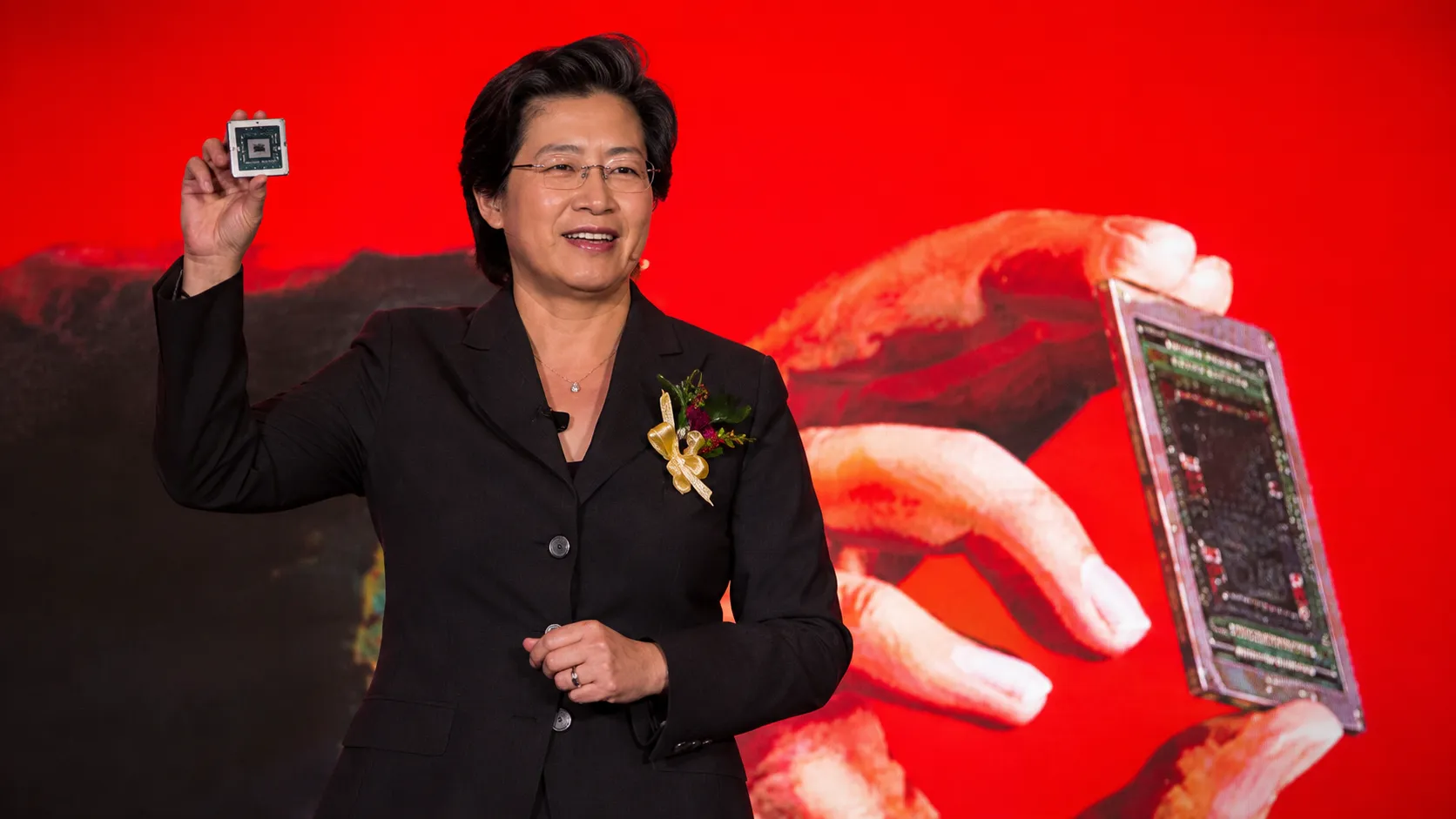
In November 1969, in the southern Taiwanese city of Tainan, a mathematician and an accountant welcomed a daughter they named Lisa Tzwu-Fang Su. Three years later, the family immigrated to the United States and settled in Queens, New York, where young Lisa developed an early habit that would define the rest of her life: taking apart her brother's remote-control cars simply to understand how they worked. That instinct for pulling technology apart to rebuild it stronger has, over the following five decades, made her one of the most consequential engineers and chief executives in the history of the semiconductor industry.
Su's academic path was singular in its focus. After graduating from the elite Bronx High School of Science in 1986, she enrolled at the Massachusetts Institute of Technology, where she would spend the better part of a decade earning a bachelor's degree, a master's degree, and ultimately a doctorate in electrical engineering, all before the age of twenty-six. Her 1994 doctoral thesis focused on an obscure but consequential area of chip design known as silicon-on-insulator transistors, technical groundwork that would prove unexpectedly prescient as the semiconductor industry's central challenges shifted toward exactly the kind of power efficiency and performance trade-offs her research anticipated. She has said she chose electrical engineering in part because it was the most demanding major MIT offered, a characteristically understated explanation for a career built on seeking out the hardest possible problems.
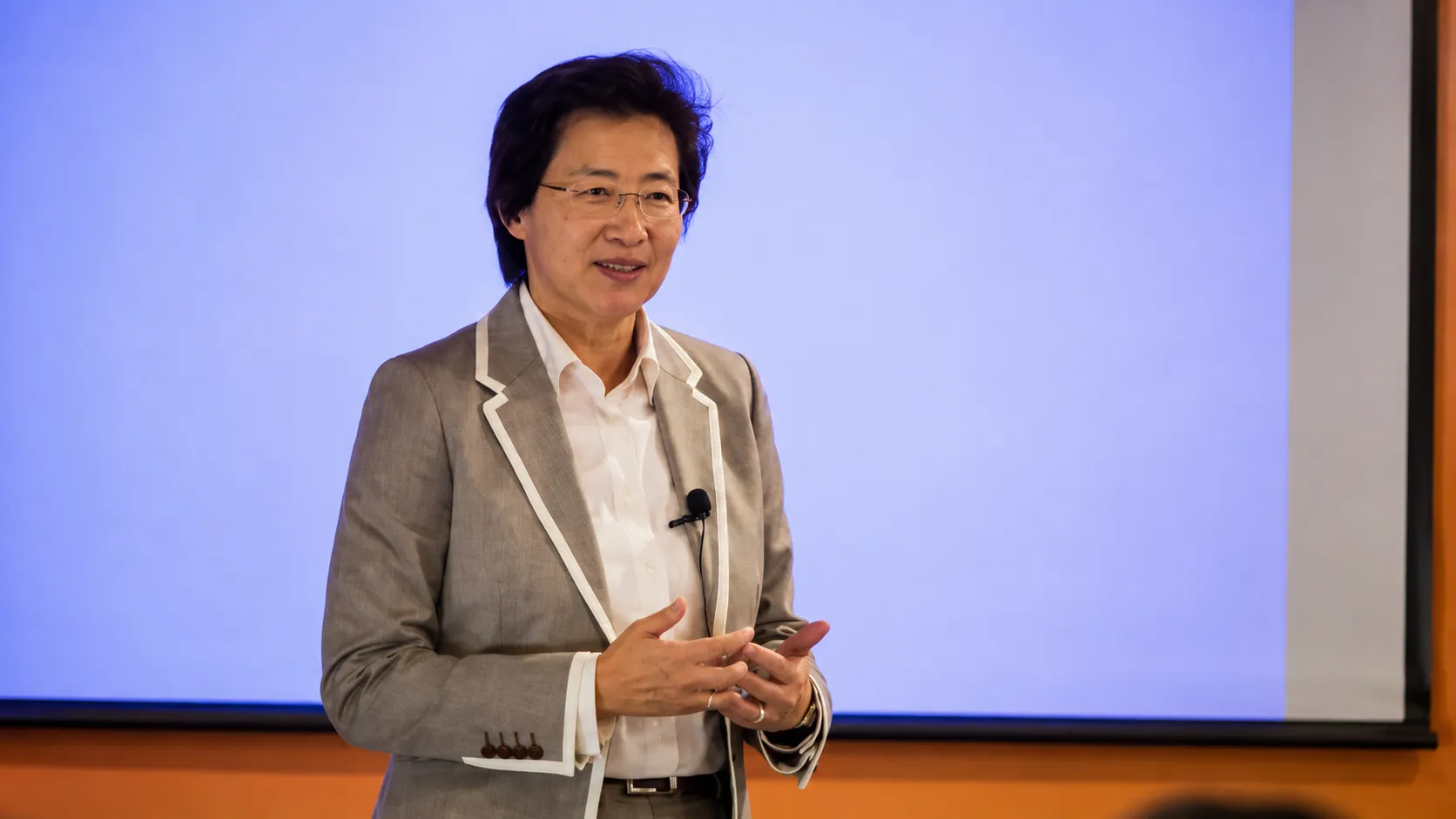
Su's professional path began at Texas Instruments in 1994, but it was her subsequent decade at IBM that established her reputation among engineers as a serious technical force. Working directly with the company's storied leadership, she played a pivotal role in pioneering copper interconnect technology, a breakthrough that fundamentally improved how efficiently chips could conduct electricity and set new industry standards for processor performance. She rose to vice president of IBM's Semiconductor Research and Development Center before moving to Freescale Semiconductor in 2007 as Chief Technology Officer, where she guided the company's broader research and development roadmap and gained her first sustained experience shaping corporate strategy rather than just chip architecture.
She joined Advanced Micro Devices in January 2012, a company that, at the time, was struggling badly against dominant rivals Intel and Nvidia and faced genuine questions about its long-term survival. Su initially served as senior vice president overseeing AMD's global business units before being named President and Chief Executive Officer in October 2014, becoming the company's first female CEO. What she inherited was, by most measures, a company in crisis: shrinking market share, thin cash reserves, and a product roadmap that had fallen years behind competitors. Su's response was to make a concentrated bet on a new processor architecture, codenamed Zen, that would take years to develop and offered no guarantee of success.
The gamble paid off spectacularly. AMD's Zen architecture, launched in 2017, delivered the kind of performance leap that allowed the company to compete credibly with Intel for the first time in over a decade, and subsequent generations of the architecture have powered AMD's expansion into data centre processors, gaming consoles, and, increasingly, the artificial intelligence infrastructure now reshaping the global technology landscape. Under Su's stewardship, AMD's stock has risen nearly fortyfold since she became CEO in 2014, a turnaround frequently cited among the most significant in modern technology history. She added the title of Chair in 2022, consolidating her authority over both the company's operations and its long-term strategic direction.
As the artificial intelligence boom accelerated through 2024 and 2025, Su positioned AMD as the most credible alternative to Nvidia's dominance in AI accelerator chips, a rivalry made all the more striking by the fact that Su and Nvidia founder Jensen Huang are documented distant relatives, a connection both companies acknowledge with evident amusement rather than rivalry-driven tension. In 2025, AMD announced a major partnership with OpenAI to supply computing power for the AI research lab's expanding infrastructure needs, a deal that underscored how central AMD's chips have become to the next phase of the global AI buildout. Su has projected that the company's data centre AI revenue will grow more than 80 percent annually in the years ahead, a forecast grounded in AMD's expanding roster of hyperscale cloud customers.
Su's achievements have been recognised well beyond AMD's own shareholders. She was named Time magazine's CEO of the Year in 2024 and appeared on Time's list of the 100 Most Influential People in AI the same year. The Financial Times named her among the 25 most influential women of 2024, and she has received the IEEE's Robert N. Noyce Medal, one of the highest honours in the field of electrical engineering, alongside the Bower Award for Business Leadership. In 2022, MIT dedicated an entire new nanotechnology research building in her name, a rare honour that reflects both her technical contributions as a doctoral researcher and her subsequent stature as one of the most prominent engineering alumni in the university's history.
Colleagues and industry analysts consistently describe Su's leadership style as defined by technical credibility rather than charisma alone. Unlike many chief executives who rely primarily on financial or strategic messaging, Su is frequently the person in the room who can engage engineers on the granular details of chip architecture, a trait that has earned her deep respect inside AMD's technical ranks and given her unusual authority when making high-stakes bets on unproven technology roadmaps. She has spoken publicly about the counterintuitive nature of her own career path, noting that during her early years, engineers with doctorates often found themselves working for executives with only MBAs, an inversion of technical merit she found difficult to accept and has spent much of her leadership correcting within AMD's own culture.
For the global business and technology community, Su's story carries particular resonance as a case study in what disciplined, long-horizon leadership can achieve even from a position of apparent structural disadvantage. She took over a company written off by much of Wall Street, committed to a multi-year technical bet with no guaranteed payoff, and delivered one of the defining corporate turnarounds of the last decade. As the global race to build AI infrastructure intensifies, with hundreds of billions of dollars in capital now flowing into chip development and data centre buildouts, Su's AMD sits at the centre of a rivalry that will help determine which companies, and which countries, control the computational foundations of the next technological era.
Su's continued ascent also reflects a broader and encouraging shift within the historically male-dominated world of semiconductor engineering, where she has become one of the most visible role models for women pursuing careers in deeply technical fields. Her insistence that engineering rigor and business leadership are not separate skill sets but complementary ones has reshaped how a generation of technologists think about the path to the corner office. As AMD continues its expansion into the AI era under her leadership, Lisa Su's trajectory, from a three-year-old immigrant taking apart toy cars in Queens to one of the most powerful executives in global technology, stands as one of the more remarkable personal and professional stories in modern American business.
The scale of AMD's transformation under Su becomes clearer when measured against where the company stood when she took over in October 2014. At that point, AMD's market capitalisation had fallen to roughly two billion dollars, and the company was widely discussed in financial media as a potential acquisition target or, in more pessimistic assessments, a candidate for eventual bankruptcy given its shrinking share of both the CPU and GPU markets. Su's decision to commit years of research and development spending to the unproven Zen architecture, at a time when the company had limited cash reserves to absorb a failed bet, represented precisely the kind of high-conviction, long-horizon risk that distinguishes transformative corporate leadership from incremental management. By the time AMD's market capitalisation crossed into the hundreds of billions of dollars in the mid-2020s, the decision looked less like a gamble and more like one of the more prescient strategic calls in recent technology history.
Su's approach to talent and organisational culture inside AMD has also drawn sustained attention from management researchers studying successful corporate turnarounds. Rather than pursuing sweeping layoffs or drastic restructuring upon taking the CEO role, she instead focused AMD's limited resources on a small number of strategically critical product lines, effectively concentrating the company's best engineering talent on fewer, more consequential bets rather than spreading effort thinly across a broader but less differentiated product portfolio. This focus-driven strategy, sometimes described internally as prioritising fewer things done exceptionally well, has since become a widely cited case study in business schools examining how resource-constrained companies can successfully compete against far better-capitalised rivals through disciplined strategic prioritisation rather than simply matching competitors dollar for dollar in research spending.
Beyond her corporate responsibilities, Su has taken on a broader role advising US policy on semiconductor competitiveness, serving as a member of the President's Council of Advisors on Science and Technology, a position that places her among a select group of technologists directly shaping national conversations about supply chain resilience, domestic chip manufacturing capacity, and the strategic importance of semiconductor leadership amid intensifying global technology competition. Her perspective carries particular weight given her rare vantage point spanning both deep technical expertise, developed across decades in advanced semiconductor research, and direct commercial experience competing against international rivals for market share in an industry now widely regarded as foundational to national economic and security interests.
Su's leadership has also coincided with, and arguably accelerated, a broader cultural shift within AMD toward embracing open collaboration with the wider software and AI research ecosystem, a departure from the more closed, proprietary approach that characterised much of the semiconductor industry's earlier competitive posture. Under her direction, AMD has invested heavily in open-source software tools designed to make its chips more accessible to AI researchers and developers who might otherwise default to Nvidia's more established software ecosystem, a strategic bet that access and developer goodwill can meaningfully offset AMD's historical disadvantage in software tooling maturity. Industry analysts have increasingly credited this openness strategy with helping AMD close the gap with Nvidia faster than raw hardware specifications alone would suggest, reinforcing Su's broader philosophy that sustainable competitive advantage in technology increasingly depends on ecosystem thinking rather than hardware performance in isolation.
For young engineers and particularly for women considering careers in semiconductor design and computer engineering, fields that continue to see significant gender disparities among both students and working professionals, Su's visibility as one of the most powerful executives in global technology carries significance well beyond her direct business achievements. She has spoken candidly at industry conferences about the isolation she sometimes felt as one of few women in her MIT engineering cohort and later in AMD's senior leadership ranks, using that experience to advocate actively for expanded mentorship pathways connecting established women in technical fields with the next generation of engineering students. That advocacy, paired with the undeniable commercial success of her leadership at AMD, has made her one of the most frequently cited role models among young women pursuing technical, rather than purely business-oriented, paths into corporate leadership.
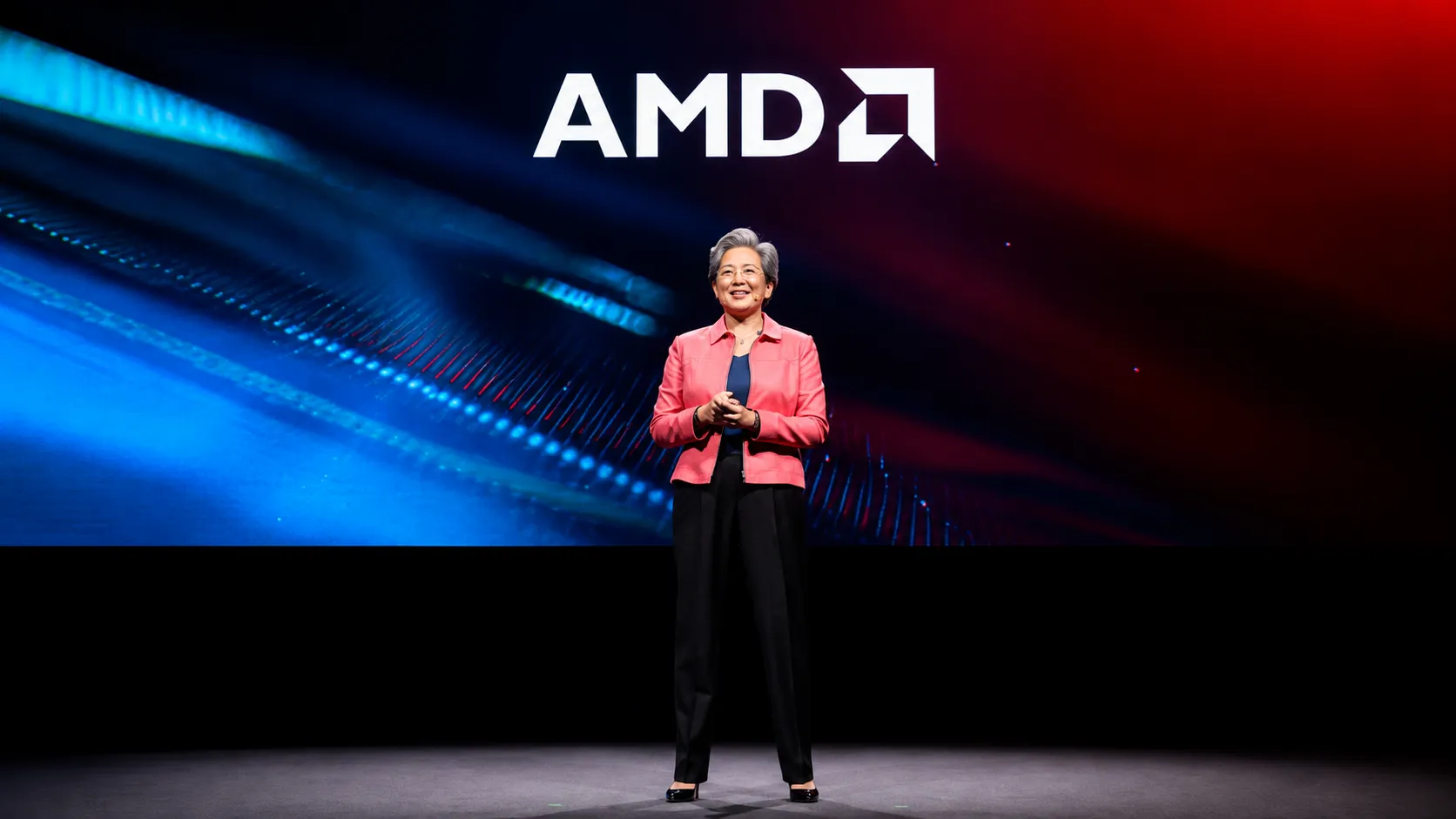
AMD's competitive positioning against Nvidia has also evolved considerably under Su's later-stage leadership, moving from a narrative of simple catch-up toward one of genuine differentiation. Rather than attempting to match Nvidia feature for feature across every category of AI hardware, Su has directed AMD toward a more targeted strategy, emphasising total cost of ownership advantages for large-scale data centre customers and building deeper direct partnerships with major cloud providers and AI labs seeking to diversify their chip supply chains away from near-total dependence on a single vendor. That diversification argument has proven increasingly persuasive to hyperscale customers wary of the supply chain and pricing risks associated with relying on one dominant supplier for the computational backbone of their AI infrastructure, giving AMD a structural opening independent of pure performance benchmarks alone.
Su's public communication style has also drawn consistent praise from industry analysts for its unusual technical precision, a trait that distinguishes her from many chief executives who rely on broader, less specific messaging when discussing product roadmaps. During AMD's public presentations and investor communications, she frequently engages directly with detailed architectural and performance specifications rather than delegating that discussion entirely to technical staff, a habit that has built unusual credibility among the engineering community that ultimately decides which chips get designed into next-generation AI systems. That direct technical engagement, maintained consistently even as AMD has grown into a company valued in the hundreds of billions of dollars, reflects Su's continued identity as a practising engineer as much as a chief executive, a combination that remains rare at the very top of large public technology companies.