As governments and consumers demand to know more about how and where products are made, the business of checking supply chains is consolidating. LRQA, one of the world's leading assurance and risk management companies, has bought a specialist in monitoring factories across Asia.
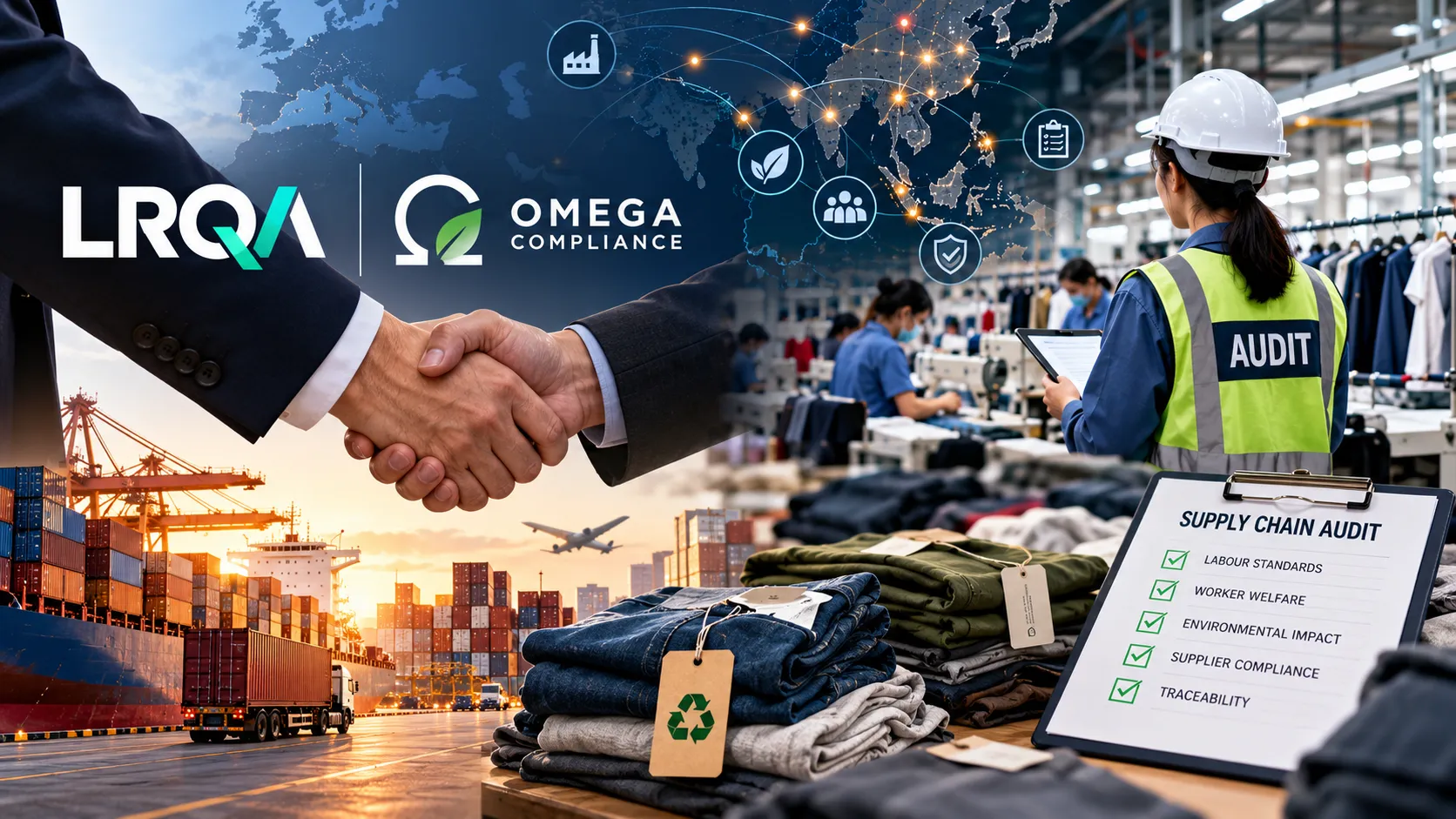
LRQA announced on Thursday, October 23, that it had acquired Omega Compliance, a Hong Kong-based supply chain monitoring and integrity provider, ESG Today reported. Financial terms were not disclosed.
The deal is intended to expand LRQA's capabilities in responsible sourcing, traceability and supply chain transparency, as its clients face growing regulatory pressure across global supply chains.
What Omega does
Omega Compliance provides a range of services to help companies understand and improve conditions in their supply chains. These include supplier audits, supplier improvement programmes, migrant worker protection, supply chain security, anti-corruption programmes and supply chain traceability.
Its client base is concentrated in retail and apparel, industries where long and complex supply chains, often involving many subcontractors, have made it difficult for brands to ensure that products are made responsibly.
"Omega has built its reputation on integrity, transparency and trusted client relationships," said Jon White, managing director of Omega Compliance.
Regional reach
Omega brings regional expertise in China, South Asia, Southeast Asia and Turkey, which are among the world's most important sourcing hubs for consumer goods, particularly clothing, footwear and electronics.
"Omega brings deep expertise, strong local presence and a reputation for quality that complements LRQA's," said LRQA chief executive Ian Spaulding.
LRQA's acquisition spree
LRQA was formerly the business assurance and cybersecurity division of Lloyd's Register, the maritime classification society. Goldman Sachs Asset Management acquired it in 2021, and it has since expanded through a series of acquisitions focused on supply chains and sustainability.
These include Partner Africa, a responsible sourcing advisory firm; RESET Carbon, which specialises in supply chain carbon management; Ergon Associates, a human rights advisory firm; and ELEVATE, a Hong Kong-based supply chain sustainability and risk management company. The Omega deal adds further depth in Asia.
The strategy reflects the growing market for supply chain assurance services, driven by regulation and investor expectations.
The regulatory push
Companies face a growing array of rules requiring them to know and report on their supply chains. In the United States, the Uyghur Forced Labor Prevention Act presumes that goods made wholly or partly in China's Xinjiang region are made with forced labour and bars their import unless companies can prove otherwise. In Europe, the Corporate Sustainability Due Diligence Directive requires large companies to identify and address human rights and environmental harms in their supply chains, though its scope and timing have been scaled back. The EU has also adopted a ban on products made with forced labour.
Other rules, including the EU's deforestation regulation and battery passport requirements, demand detailed traceability of raw materials.
These regulations have increased demand for audits, traceability systems and advisory services, as companies seek to demonstrate compliance and avoid penalties or shipment detentions.
The limits of audits
Supply chain audits have long faced criticism. Investigations have found cases where factories passed audits despite serious labour abuses, sometimes because audits were announced in advance or relied on documents that were falsified. High-profile disasters, such as the Rana Plaza factory collapse in Bangladesh in 2013, exposed the shortcomings of audit-based approaches.
Assurance companies have responded by expanding services beyond audits, including worker voice programmes, unannounced inspections, data analytics and traceability technology. Omega's focus on migrant worker protection and supplier improvement programmes reflects this broader approach.
Why apparel matters
The apparel industry has been a focus of supply chain scrutiny because of its reliance on labour-intensive production in lower-cost countries and frequent reports of abuses, from unsafe working conditions to forced labour and wage theft. Brands face pressure from consumers, investors and regulators to demonstrate responsible sourcing.
What it means for India
India is one of the world's largest producers and exporters of textiles and apparel, with major manufacturing clusters in Tiruppur, Bengaluru, Delhi NCR and elsewhere. Indian suppliers increasingly face audits and traceability requirements from Western brands, particularly as buyers diversify sourcing away from China.
Compliance with responsible sourcing standards has become a condition of access to major export markets. The EU-India trade agreement and growing scrutiny under European due diligence rules are likely to increase these requirements. For Indian manufacturers, investing in worker welfare, transparency and traceability can be both a compliance necessity and a competitive advantage.
The business case for responsible sourcing
For brands, responsible sourcing has become a business necessity as well as a compliance requirement. Shipment detentions under forced labour laws can disrupt supply chains and cost millions. Reputational damage from exposés about factory conditions can hurt sales and brand value. Investors increasingly assess companies on supply chain risks as part of environmental, social and governance analysis.
At the same time, traceability can create value. Brands that can demonstrate where materials come from and how products are made can differentiate themselves with consumers who care about sustainability and ethics, and can respond more quickly to disruptions.
Technology in supply chain monitoring
The industry is increasingly turning to technology to supplement audits. Traceability platforms track materials from raw inputs to finished products, isotope and DNA testing can verify the origin of cotton, and satellite imagery can monitor deforestation linked to commodities. Worker voice tools, such as anonymous hotlines and surveys delivered through mobile phones, allow workers to report problems directly.
Artificial intelligence is being used to analyse supplier data, identify risk patterns and prioritise audits. Assurance companies that combine on-the-ground expertise with technology are positioned to capture growing demand.
What comes next
LRQA will integrate Omega's operations and expertise into its supply chain services. The deal is likely to be followed by further consolidation in the assurance industry, as companies seek scale, regional reach and technology to meet growing demand. For brands sourcing from South and Southeast Asia, including India, Bangladesh, Vietnam and Indonesia, the deal could mean more comprehensive monitoring services, potentially raising the bar for supplier compliance. Suppliers that invest early in worker welfare and transparency are likely to be best placed to win business from brands seeking to reduce risk in their supply chains. Further deals in the sector are widely expected as demand for supply chain assurance continues to grow.