Lxme, a financial platform built to help women take charge of their money, has partnered with Shiprocket to extend the reach of Lxme UPI across India's direct-to-consumer (D2C) commerce ecosystem, in a move that links everyday online payments with long-term wealth building.
The integration, announced on 22 September 2026, is already live across Shiprocket's Fastrr merchant ecosystem. Merchants using Fastrr can offer Lxme UPI as a payment option without additional integration work, and eligible transactions allow customers to earn Digital Gold.
The partnership is expected to expand the availability of Lxme UPI across hundreds of merchant websites spanning categories such as beauty, grocery and D2C commerce. It is non-exclusive, allowing Lxme to continue building its merchant network with other partners.
Payments as a gateway to wealth
Lxme has said the initiative supports its strategy of encouraging women to participate in wealth creation through everyday financial transactions. The underlying idea is behavioural: many people, and particularly many women in India, find it difficult to begin investing because it feels complex, intimidating or separate from daily life. Linking a small reward in gold to routine purchases turns saving into a by-product of spending.
Gold is a deliberate choice. It holds deep cultural significance in Indian households and has historically been one of the primary ways Indian women have held and passed on wealth. Digital Gold products allow customers to buy small fractions of gold that are held in vaults on their behalf, without the need to buy physical jewellery or coins.
That cultural familiarity could make Digital Gold a comfortable entry point for first-time savers. The challenge for Lxme will be to use that entry point to introduce users to a broader range of financial products and to build lasting financial habits.
Why Shiprocket matters
Shiprocket is one of the most important infrastructure providers for India's D2C brands, offering shipping, logistics and checkout solutions to a large base of online sellers. Its Fastrr checkout product helps merchants streamline the purchase process on their own websites, an increasingly important capability as brands try to reduce cart abandonment and depend less on marketplaces.
For Lxme, plugging into Fastrr offers distribution at scale. Instead of negotiating individual integrations with hundreds of brands, it can reach them through a single partner. For Shiprocket, the collaboration adds value to its checkout experience for both consumers and merchants, differentiating Fastrr in a competitive market for checkout solutions.
The categories involved are also significant. Beauty and personal care, in particular, is one of the largest D2C segments in India and has a large base of women shoppers. Placing a women-focused payment option at checkout in those categories aligns Lxme's product with its target audience.
The UPI landscape
UPI has transformed payments in India, with billions of transactions processed every month. Yet the market for UPI apps is highly concentrated, with a small number of large players accounting for the vast majority of transaction volume. Regulators and the National Payments Corporation of India have repeatedly expressed a desire for a less concentrated market, but challengers have found it difficult to win users away from dominant apps.
Lxme's approach is to compete not on the payment itself but on what surrounds it. By pairing UPI with rewards tied to wealth creation and a brand explicitly designed for women, it is trying to create a reason for users to choose it over default options. Placement at the checkout of partner merchants gives it a moment of visibility at the point of purchase, which is crucial for a newer app.
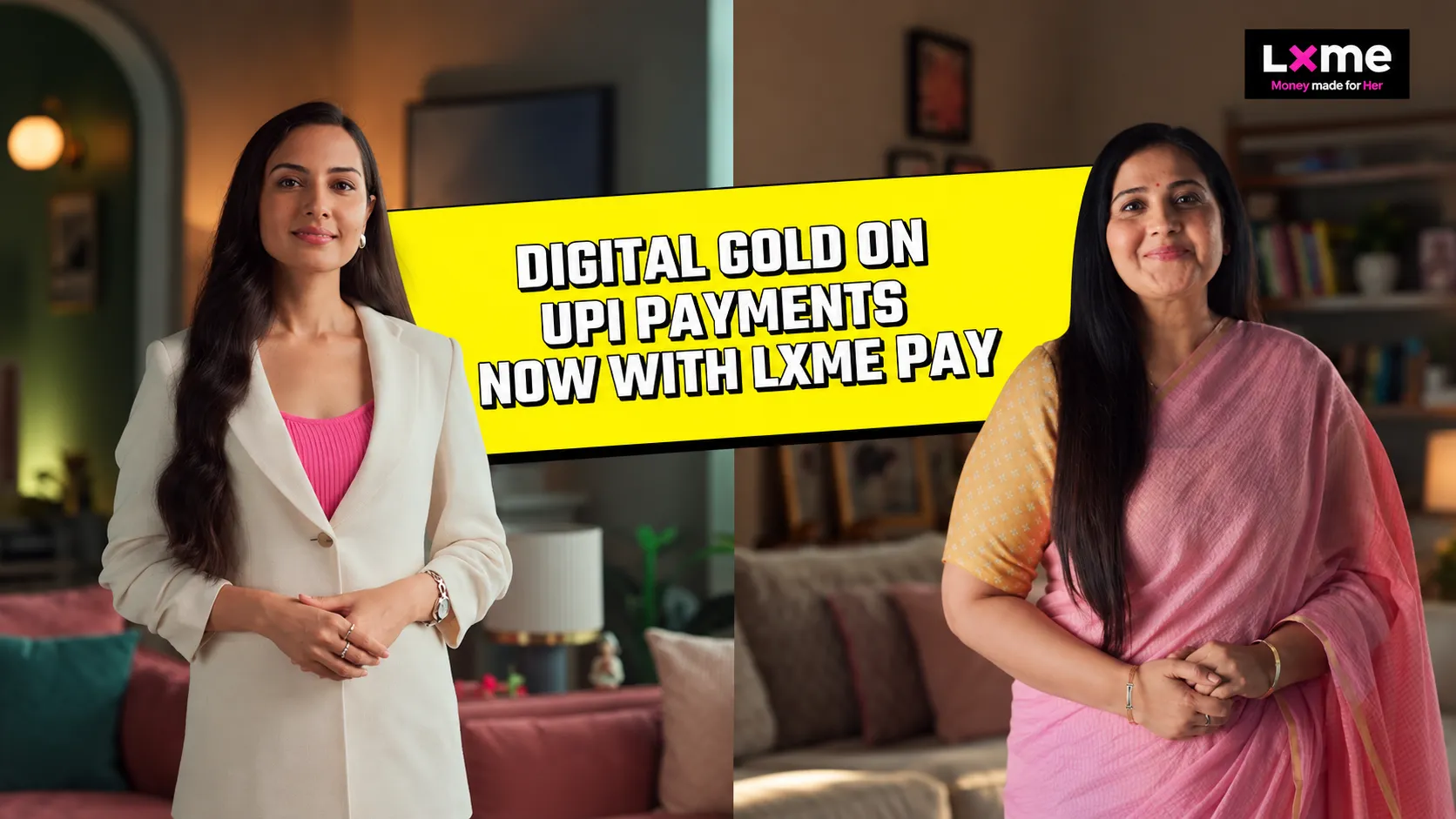
Closing the gender gap in finance
The partnership speaks to a broader challenge. India has made substantial progress in bringing women into the formal financial system, with large numbers of bank accounts opened in women's names under financial-inclusion programmes. But ownership of an account does not always translate into active use, investment or financial decision-making.
Surveys and industry studies have repeatedly found that women in India are underrepresented among investors in equities, mutual funds and other market-linked products. Barriers include lower financial confidence, limited time, social norms around money management and a lack of products designed with women in mind.
Platforms like Lxme, founded by entrepreneur Priti Rathi Gupta, have been built to address those gaps through content, community and products tailored to women. The Shiprocket partnership extends that mission from education and investing into the everyday act of paying.
Why the checkout is strategic real estate
In e-commerce, the checkout page is where intent turns into revenue, and every element on it is carefully optimised. Payment options displayed at checkout influence conversion rates, the average order value and repeat purchase behaviour. For payment providers, a presence on the checkout page of a merchant is valuable precisely because it reaches customers at the moment they are ready to pay.
By integrating through Shiprocket's Fastrr, Lxme gains that presence across many merchants at once. For D2C brands, offering an additional rewards-linked UPI option could help differentiate their checkout and, potentially, improve conversion among customers who value the Digital Gold incentive. Whether the incentive is strong enough to change behaviour at scale will become clear as the partnership matures.
The partnership also reflects how India's commerce infrastructure providers are becoming distribution platforms for financial services. As logistics and checkout companies accumulate relationships with thousands of merchants, they are increasingly able to offer those merchants and their customers additional products, from payments and credit to rewards and insurance, creating new channels for fintech firms to reach users at scale.
Questions to watch
Several factors will determine the partnership's impact. The value of the Digital Gold rewards on eligible transactions will influence whether consumers find the offer compelling. Adoption will depend on how prominently merchants display Lxme UPI at checkout. And Lxme will need to demonstrate that users who start with rewards go on to engage with its broader financial offerings.
Digital Gold itself deserves careful explanation to consumers. India's market regulator has previously cautioned investors that digital gold products sold online fall outside its regulatory framework, making transparency about custody, pricing and redemption important for any platform offering them.
For women shoppers across India's growing D2C ecosystem, the partnership offers a simple proposition: pay as usual, and build a small store of wealth along the way. If Lxme can turn that simple habit into deeper financial engagement, it could help chip away at one of the most persistent gaps in India's financial landscape, one checkout at a time.