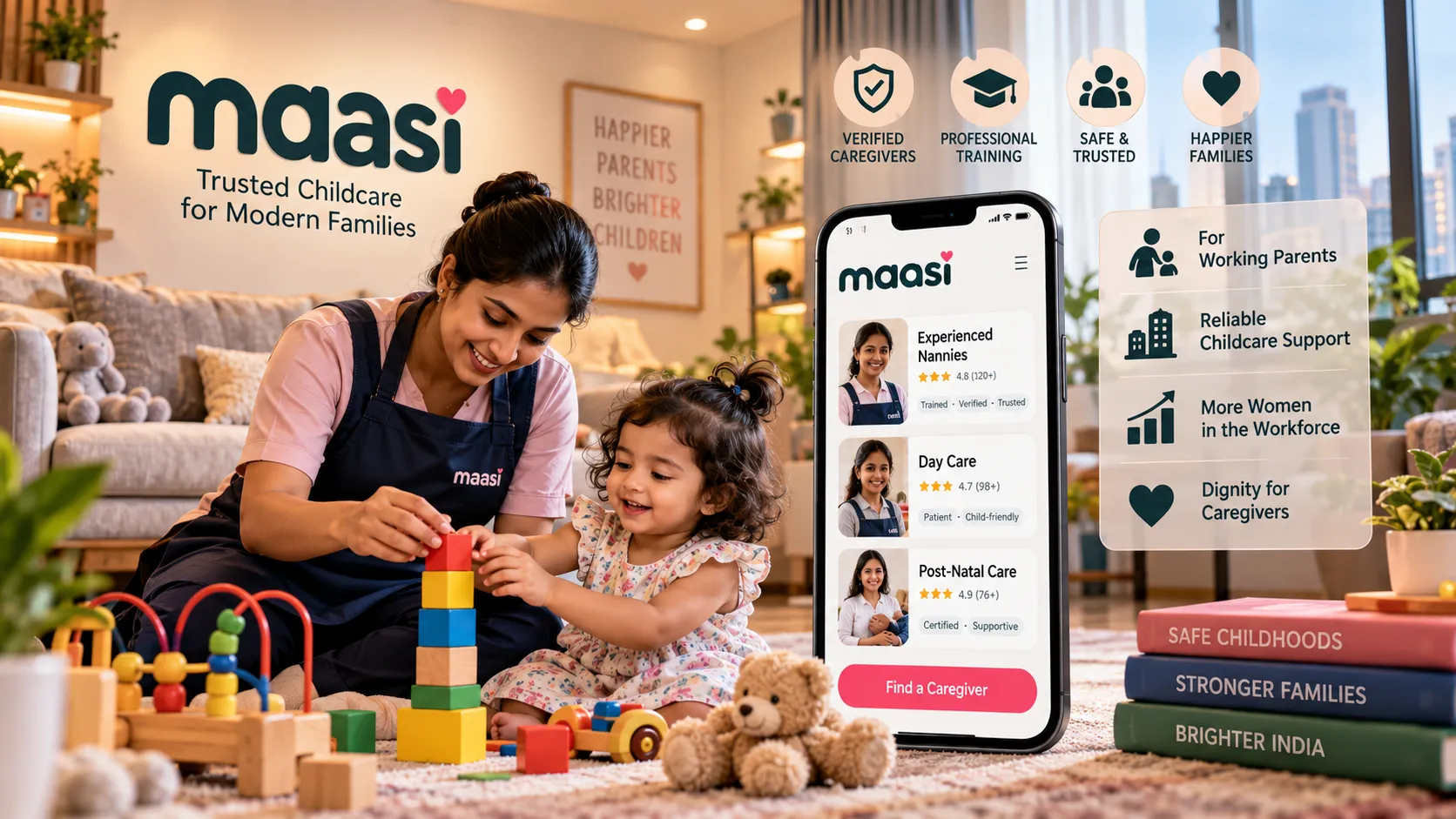
For millions of working parents in India's cities, finding a reliable nanny is one of the most stressful parts of family life. A Bengaluru startup born out of a parents' community is trying to bring structure and trust to a largely informal market.
Maasi, a childcare platform that trains, places and pays nannies, has raised ₹6 crore, about $630,000, in a pre-seed round led by Better Capital, with participation from Antler India, according to StartupTalky and other reports on October 27.
Angel investors include Rishikesh SR of Rapido, Vaibhav Khandelwal of Shadowfax, Sumit Khandelwal of Xoxoday, Siddhant Goyal of Crane VC and Sanjay Ramakrishnan of Multiply Ventures.
Born from a community of parents
Maasi was founded by Aashu Manchali, a former chief of staff at Xoxoday; Gargi Pandey, who previously worked at Cars24, MPL and Gameskraft; and Reshov Roy, whose background includes CapMint and Gameskraft.
The company grew out of Urban Parents Club, a Bengaluru community of more than 8,000 parents. The founders say they saw a gap in "reliable, accountable childcare" after hearing repeated concerns from parents about finding trustworthy nannies.
How Maasi works
Families browse caregiver profiles, have a video call with a shortlisted caregiver and then confirm the arrangement. Maasi collects the caregiver's monthly fee from the family and passes it on, acting as an intermediary that handles payments and accountability.
Caregivers complete a free training programme led by preschool directors, nurses and former airline cabin crew trainers. Six in ten candidates do not clear it, according to the company. Most caregivers are vetted before being introduced to families, and background checks through verification firms SpringVerify and OnGrid are run after a family selects a caregiver. Maasi also describes a psychometric assessment and weeks of in-person observation.
Pricing
According to Maasi's website, subscriptions start at ₹5,999 a month and on-demand care at ₹199 an hour. A day nanny for six to 12 hours costs ₹15,660 a month, a 24-hour live-in nanny ₹24,600, and a post-natal "japa" nanny ₹33,660. A governess service, offering English-speaking caregivers trained in screen-free engagement, starts at ₹35,660 a month.
Early traction
Maasi launched publicly on October 20, 2026, and says it built a waitlist of more than 4,000 parents within five days. It says it has served more than 1,200 parents through more than 500 caregivers and claims 20% weekly growth. These figures are company-reported, and the company has not disclosed how many placements continue after six months.
Rajiv Srivatsa of Antler India described Maasi as "exclusive by design."
The childcare gap
Childcare is a major challenge for working families in urban India. Joint families, which once provided childcare support, are less common in cities, and formal daycare options are limited and often expensive. Many families rely on domestic workers hired through word of mouth, with little verification, training or recourse if things go wrong.
The lack of reliable childcare has consequences beyond individual families. It is widely cited as one of the factors behind India's low female labour force participation rate, as many women leave jobs or reduce working hours after having children. Making childcare more reliable and accessible could help more women stay in the workforce.
Dignity for caregivers
Formalising the nanny market could also benefit caregivers, who are typically women from low-income backgrounds working in the informal sector. Training, verified credentials and regular, transparent payment can improve working conditions and earnings, and give caregivers a pathway to more skilled and better-paid roles, such as governess positions.