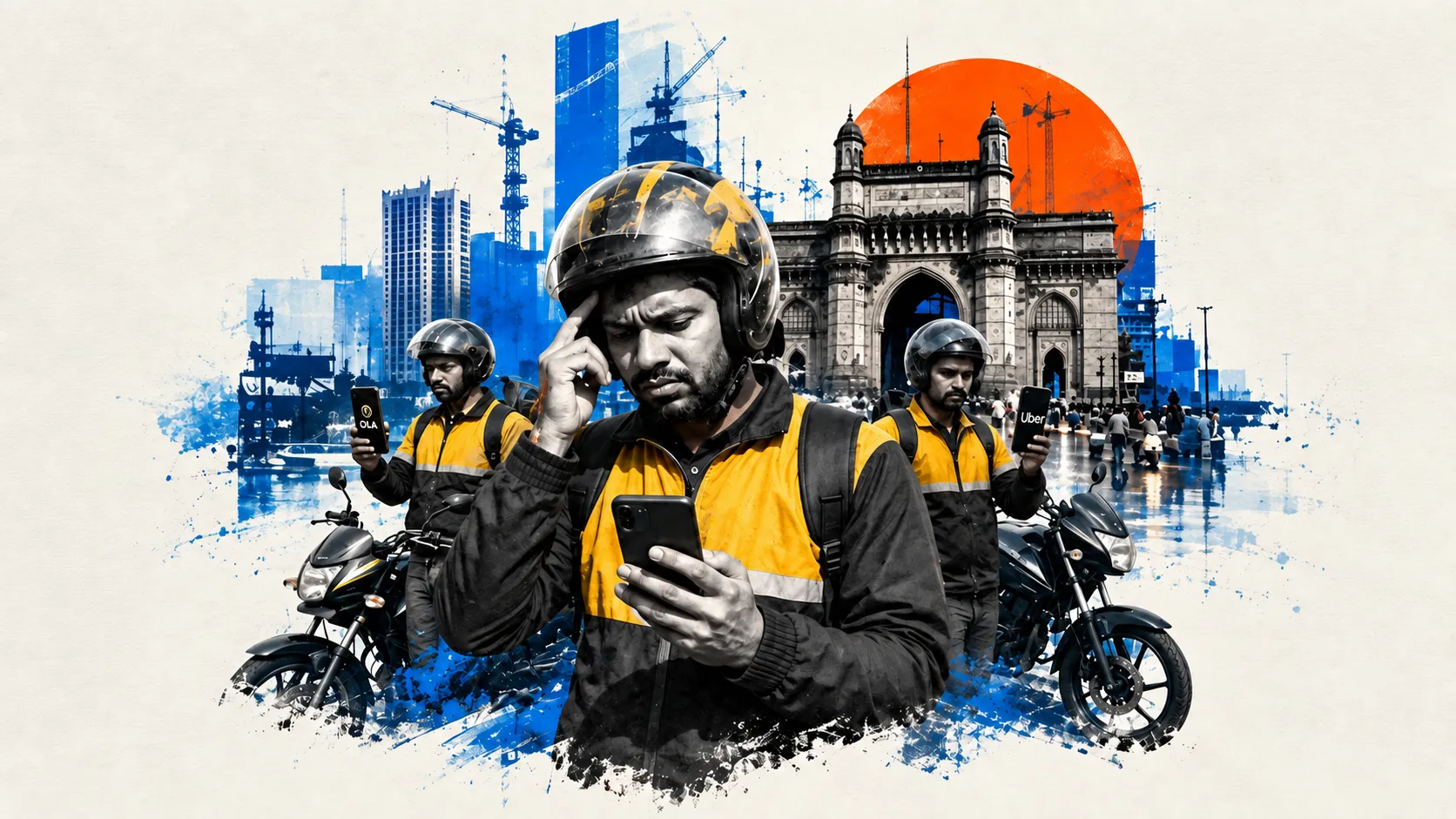
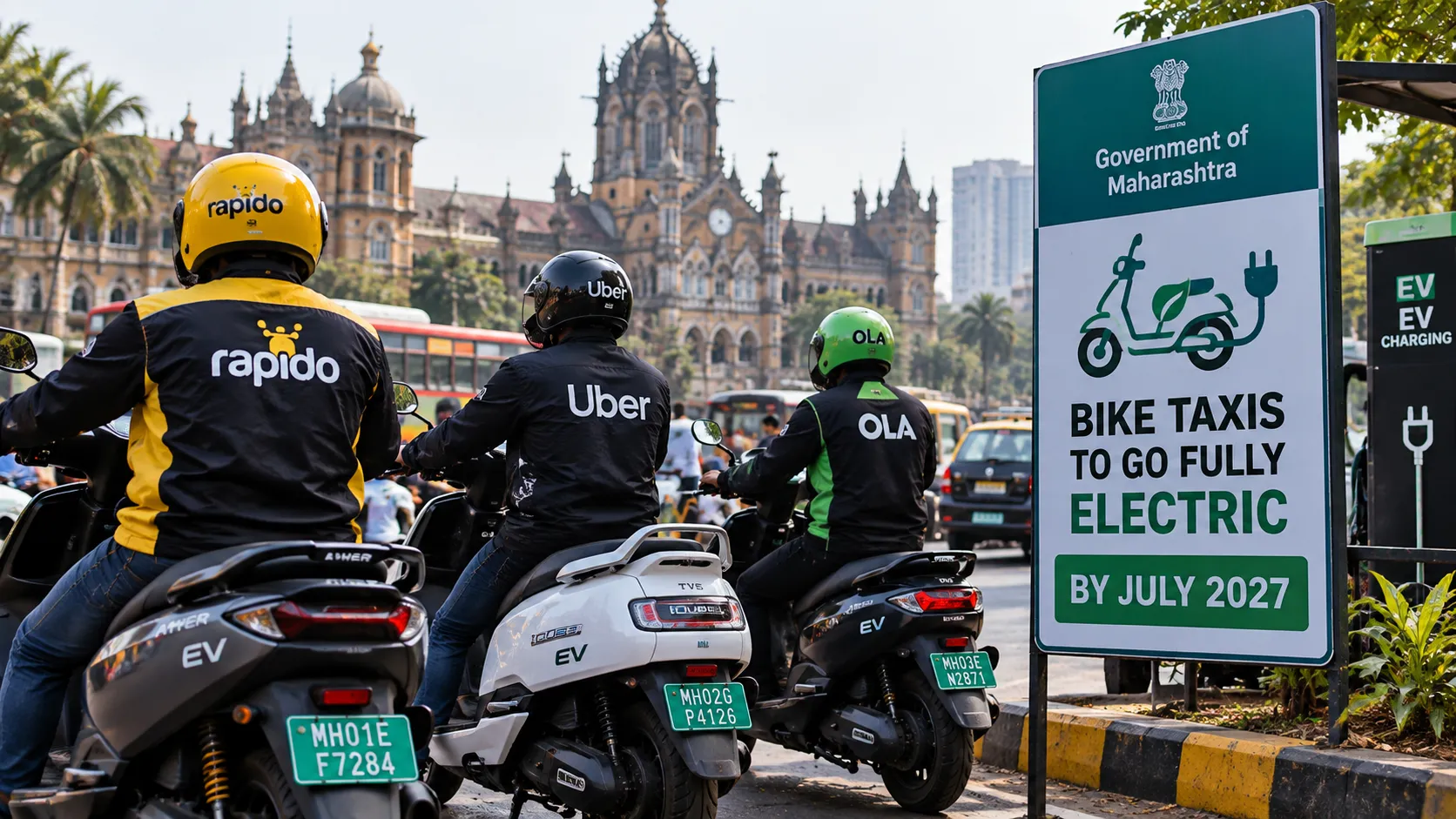
Maharashtra has ordered ride-hailing platforms including Rapido, Uber and Ola to move their bike-taxi services entirely to electric two-wheelers by July 2027, setting one of the most aggressive clean-mobility deadlines imposed on India's gig economy so far.
According to a report in the Indian Express, cited by Inc42 on 7 October, the state transport department wrote to aggregators earlier this month instructing them to phase out petrol-powered bike taxis over the next nine months. The directive follows instructions from Chief Minister Devendra Fadnavis.
The timeline is considerably shorter than the industry wanted. Platforms had reportedly sought until 2030 to convert their fleets, while the main association representing riders asked for at least 18 months. The state has instead settled on a two-step window that gives most operators six months, with an additional three months for those that have applied for licences under the state's bike-taxi rules.
How the deadline works
Under the proposed plan, ride-hailing platforms will initially have six months to comply with the electric-vehicle mandate. Bike-taxi operators that have applied for provisional or temporary licences under the Maharashtra Bike Taxi Rules, 2025, will get a further three months, taking their deadline to July 2027.
The structure is designed to reward platforms that engage with the licensing regime, which has had a troubled start. Bike taxis became legal in Maharashtra in July 2025, when the state notified its rules. Local authorities then granted provisional 30-day licences to Ola, Uber and Rapido on the understanding that they would transition to electric vehicles. The rules specified that only electric two-wheelers, painted yellow and clearly marked as bike taxis, could operate commercially.
The platforms allegedly failed to comply, and in March 2026 the state revoked their provisional licences. Officials have since taken enforcement action against unauthorised petrol bike-taxi services, collecting fines of ₹16.25 lakh between April 2025 and March 2026 and a further ₹2.31 lakh in April and May 2026.
Four months ago, state Transport Minister Pratap Sarnaik also said the government would impose a temporary daily fee of ₹5 on bike-taxi services operating illegally in the state, and that aggregators would be required to contribute 2 per cent of the fare of every ride to a welfare fund for drivers.
The new order therefore lands on top of an already tense relationship between the state and the platforms. For the government, the deadline is a way to bring a fast-growing, loosely regulated service inside a framework that matches its environmental goals. For the companies, it adds a cost and compliance burden to a segment that has been one of the most dynamic parts of urban mobility.
Who pays for the switch
The sharpest objections have come from riders rather than platforms. Most bike-taxi drivers own their vehicles, often financed through small loans, and work on the platforms as independent partners. Replacing a petrol scooter or motorcycle with an electric model requires either upfront capital or access to credit on terms many cannot obtain.
"Most bike taxi riders hail from middle or lower-middle-class backgrounds, making it difficult for them to undertake a significant investment to purchase an EV bike at once," Amit Gawde, president of the Maharashtra Bike Taxi Welfare Association, said in remarks reported last month. "The lack of EV charging infrastructure and the smaller life of an electric vehicle also makes this decision more difficult."
Charging is a further constraint. Riders who live in shared or rented housing often have no secure place to charge a vehicle overnight, and public charging for two-wheelers remains patchy outside central business districts. Without dependable charging or swapping close to where riders live and work, an electric bike taxi can lose hours of earning time each day.
The association wrote to Fadnavis, Sarnaik and the transport commissioner seeking an 18-month window. That request appears to have been rejected, leaving riders with less than a year to change vehicles or leave the platforms.
Several models could ease the transition. Platforms could lease electric two-wheelers to riders, partner with financiers to offer subsidised loans, or tie up with battery-swapping networks that separate the cost of the battery from the vehicle, lowering the upfront price. Some of these arrangements already exist in Indian cities, particularly for delivery fleets, and fleet operators that rent electric scooters to gig workers have attracted significant investor interest.
The economics of an electric two-wheeler can be attractive for high-mileage users once the purchase hurdle is cleared, because running costs per kilometre are typically much lower than for a petrol vehicle. Bike-taxi riders, who may cover long distances each day, are in principle among the users best placed to benefit. The difficulty is that the savings arrive gradually, while the cost of switching arrives all at once.
A test case for national policy
Maharashtra's decision will be watched in other states. Bike taxis occupy a legal grey zone across much of India, and state governments have taken sharply different approaches. Karnataka halted bike-taxi operations in 2025 following a High Court ruling, while other states have permitted them with varying conditions. The Centre's Motor Vehicle Aggregator Guidelines, issued in 2025, gave states room to allow private two-wheelers to be used for aggregator rides but left key decisions to state governments.
Linking legality to electrification offers states a way to accommodate a popular, low-cost mode of transport while advancing their climate and air-quality goals. Two-wheelers make up the majority of vehicles on Indian roads, and urban air pollution remains a serious public health concern in cities including Mumbai and Pune.
For aggregators, the deadline creates an operational challenge that also contains an opportunity. A fully electric bike-taxi fleet in one of India's largest urban markets would be a substantial source of demand for electric two-wheeler makers, financiers and charging and swapping operators. Whether that demand can be built in nine months, and whether riders can afford to take part, will determine whether Maharashtra's experiment becomes a model or a cautionary tale.
The most likely outcome is negotiation. Platforms have every incentive to show progress before the deadline, through financing schemes and fleet partnerships, while seeking flexibility on enforcement. The state, having set a firm date, will face pressure from riders' groups if livelihoods are disrupted. How both sides handle the next nine months will shape the future of one of India's most widely used, and least regulated, forms of urban transport.