ImpactSustainability8 MIN READ

Maharashtra May Force Swiggy, Zomato And Zepto Into EV-Only Fleets With A New 2% Gig Worker Welfare Levy

Maharashtra is drafting amendments to its Bike-Taxi Rules that would require food-delivery and quick-commerce platforms to run EV-only fleets, add GPS tracking and insurance, and contribute 2% of every fare to a driver welfare fund — bringing gig-economy regulation to India's largest state economy for the first time.

By Shaym Kumar · Author10 August 2026New
Maharashtra May Force Swiggy, Zomato And Zepto Into EV-Only Fleets With A New 2% Gig Worker Welfare Levy

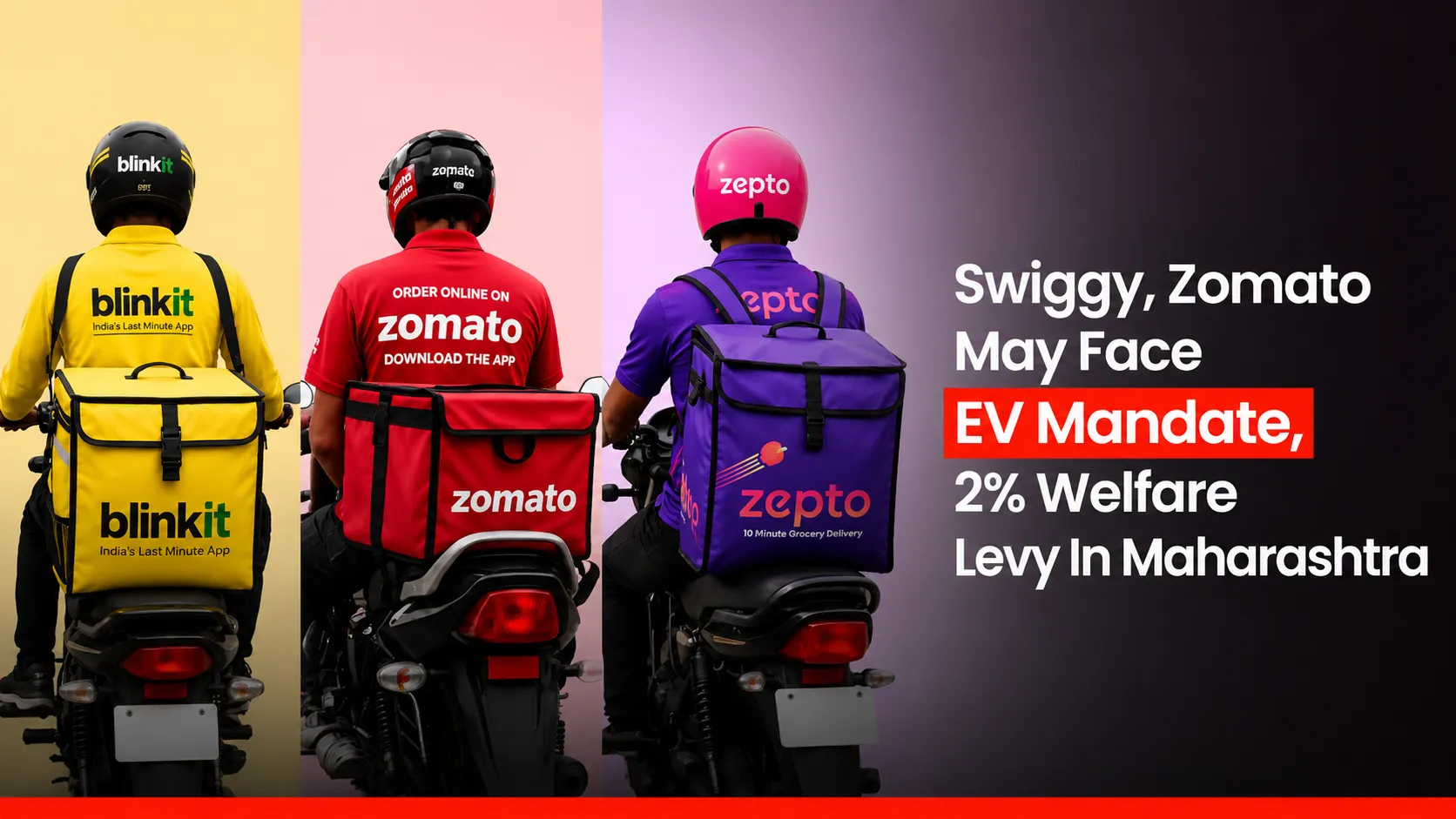
Maharashtra's Transport Department is drafting amendments to the state's Bike-Taxi Rules, 2025, that would, for the first time, bring food-delivery, quick-commerce and e-commerce platforms under a dedicated state-level regulatory framework — one that could require companies including Swiggy, Zomato, Zepto and Meesho to run electric-vehicle-only delivery fleets, install GPS tracking on drivers and vehicles, provide insurance coverage, and contribute 2% of every trip's fare to a newly created driver welfare fund. The proposal, first reported by The Indian Express and confirmed by Maharashtra Transport Minister Pratap Sarnaik on August 8, would classify covered platforms as 'delivery service providers,' extending a regulatory category that currently applies only to ride-hailing aggregators.

The move positions Maharashtra, home to Mumbai and India's largest state economy by GDP, as the second major state after Karnataka to move decisively toward formal, platform-specific regulation of India's gig economy — a sector that has grown explosively over the past several years but has, until recently, operated with comparatively limited state-level oversight of driver welfare, vehicle standards or environmental impact. If enacted, the amendments would apply to delivery trips of under 15 kilometres and would mark the first time an Indian state has attempted to mandate electric vehicle fleets specifically for the delivery and quick-commerce sector, rather than for ride-hailing alone.

The proposed welfare fund at the centre of the amendments would draw its financing directly from platform revenue: a 2% contribution from every delivery fare, channelled toward a dedicated fund intended to provide pension benefits, accident insurance, loans for electric vehicle purchases, and education assistance for drivers' children. That structure — funding driver welfare directly through a percentage levy on platform transactions, rather than through general taxation or voluntary corporate contributions — mirrors, and in Maharashtra's case exceeds, the framework Karnataka established through its Platform-Based Gig Workers (Social Security and Welfare) Act, 2025, which set a welfare cess capped at 50 paise per two-wheeler ride for food and grocery delivery platforms and up to ₹1 per ride for four-wheeler ride-hailing trips — a materially lower effective rate than Maharashtra's proposed 2% of total fare value would represent for most transactions.

That distinction matters considerably for how the industry is likely to respond. Karnataka's per-transaction cap structure, while still contested, imposes a bounded, predictable cost per ride regardless of fare size; Maharashtra's proposed percentage-of-fare model would scale directly with transaction value, meaning higher-value orders — increasingly common as platforms including Flipkart Minutes, Blinkit and Zepto push into premium and gourmet grocery categories — would generate proportionally larger welfare contributions. For platforms simultaneously chasing higher average order values through premiumisation strategies, as reported elsewhere this week, and facing a percentage-based welfare levy, the two trends point toward a genuine tension: strategies designed to increase basket value may simultaneously increase regulatory compliance costs under frameworks like Maharashtra's proposed rules.
ChatGPT Image Aug 10, 2026, 01_43_23 PM.png

Industry response to comparable state-level gig-worker regulation has, in Karnataka's case, been openly adversarial. Industry bodies and platforms including the Internet and Mobile Association of India, Eternal (Zomato's parent company), Swiggy, Zepto, Urban Company, Uber, and Meesho's logistics arm Valmo Transportation have jointly challenged the constitutional validity of Karnataka's gig worker welfare law, arguing that state-specific welfare legislation creates overlapping and potentially conflicting obligations alongside the central government's Code on Social Security, 2020. In July 2026, the Karnataka High Court directed the platforms to deposit the disputed welfare fees within three weeks even as the broader constitutional challenge continued, with the central government's Additional Solicitor General arguing before the court that the state legislation directly conflicts with the central Code and therefore violates Article 254 of the Constitution, which governs the relationship between central and state law in areas of concurrent jurisdiction.


It takes commitment and vision to solve real-world problems — vehicles operating on trips of less than 15 km would be covered under the policy, with EV and other compliance requirements applying to the relevant aggregators if the amendments are approved.
Pratap Sarnaik, Transport Minister, Maharashtra

That ongoing legal battle in Karnataka creates an important backdrop against which Maharashtra's proposal must be read: any Maharashtra framework that survives the drafting and consultation process is likely to face similar constitutional scrutiny, and platforms are almost certain to raise comparable arguments about regulatory overlap with central labour law. At the same time, the sheer economic weight of Maharashtra — and Mumbai specifically, one of India's largest and most lucrative quick-commerce and food-delivery markets — means platforms have considerably more at stake in how this particular fight resolves than in smaller state markets, making an early, coordinated industry response to the Maharashtra proposal more likely than a wait-and-see approach.

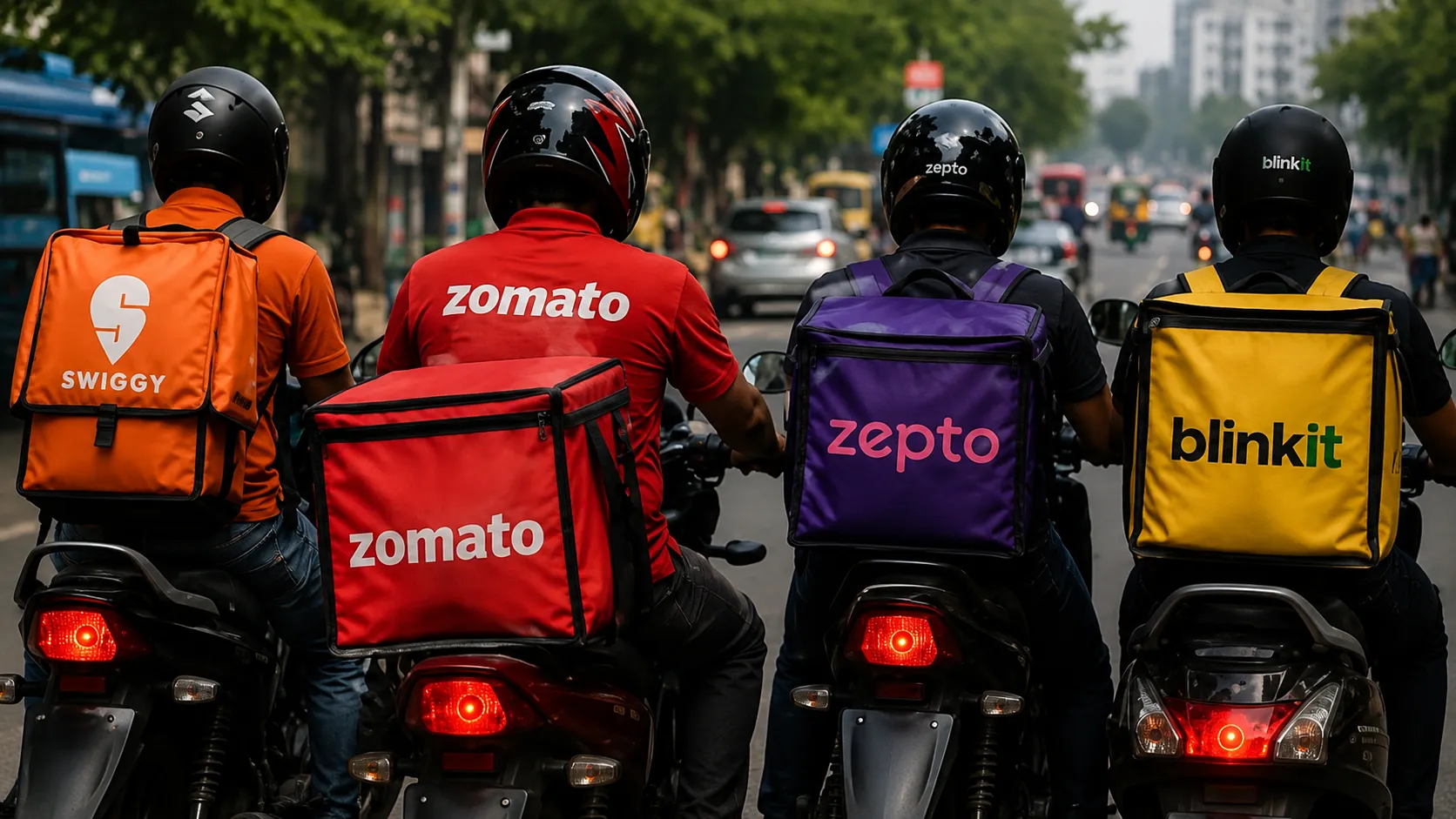
Beyond the welfare levy, the proposed EV mandate raises its own distinct set of implementation questions that the government has yet to fully address. Unlike ride-hailing aggregators, which in many cases directly own or lease their vehicle fleets, food-delivery and quick-commerce platforms typically do not own the motorcycles and scooters used by their delivery partners; riders overwhelmingly operate their own vehicles, or vehicles obtained through third-party financing and rental arrangements largely outside the platforms' direct control. That structural reality means a straightforward EV mandate imposed on the platforms themselves would, in practice, require passing compliance costs and vehicle-transition timelines down to individual gig workers, many of whom operate on thin margins and would face a genuine financial burden in switching from petrol to electric two-wheelers without substantial subsidy or financing support — precisely the kind of support the proposed welfare fund's EV purchase loan provision appears designed to address, even if the fund itself would be capitalised by the same platforms now being asked to enforce the EV transition.

Maharashtra officials have framed the broader push partly in terms of youth employment, with the state government indicating the wider regulatory changes are intended to create employment opportunities for young people in Maharashtra even as they raise compliance costs for platforms. Officials have also noted that delivery platforms currently operate in the state without being covered by any dedicated regulatory framework at all — a genuine regulatory gap that the proposed amendments are explicitly designed to close, positioning Maharashtra's move less as an incremental tightening of existing rules and more as the state's first attempt to bring an entire, economically significant sector under formal oversight for the first time.

For Swiggy, Zomato, Zepto and other affected platforms, Maharashtra's proposal — still in the drafting and inter-departmental review stage rather than finalised law — represents a genuine strategic inflection point regardless of its ultimate final form: a second major Indian state, and by far the most economically significant one to move in this direction, signalling that gig-economy regulation, EV transition mandates and worker welfare funding are moving from a patchwork of voluntary corporate initiatives toward mandatory, state-enforced frameworks. Whether Maharashtra's final rules mirror Karnataka's more contained per-transaction cap model or proceed with the considerably more expansive 2%-of-fare structure currently proposed will materially shape the cost calculus for every major delivery and quick-commerce platform operating in India's largest urban consumer market.

TagsMaharashtra EV MandateGig Worker WelfareSwiggyZomatoZeptoElectric Vehicles IndiaPlatform RegulationKarnataka Gig Workers ActSustainability

Reader reviews

Sign in to rate and review this article.
Loading reviews…