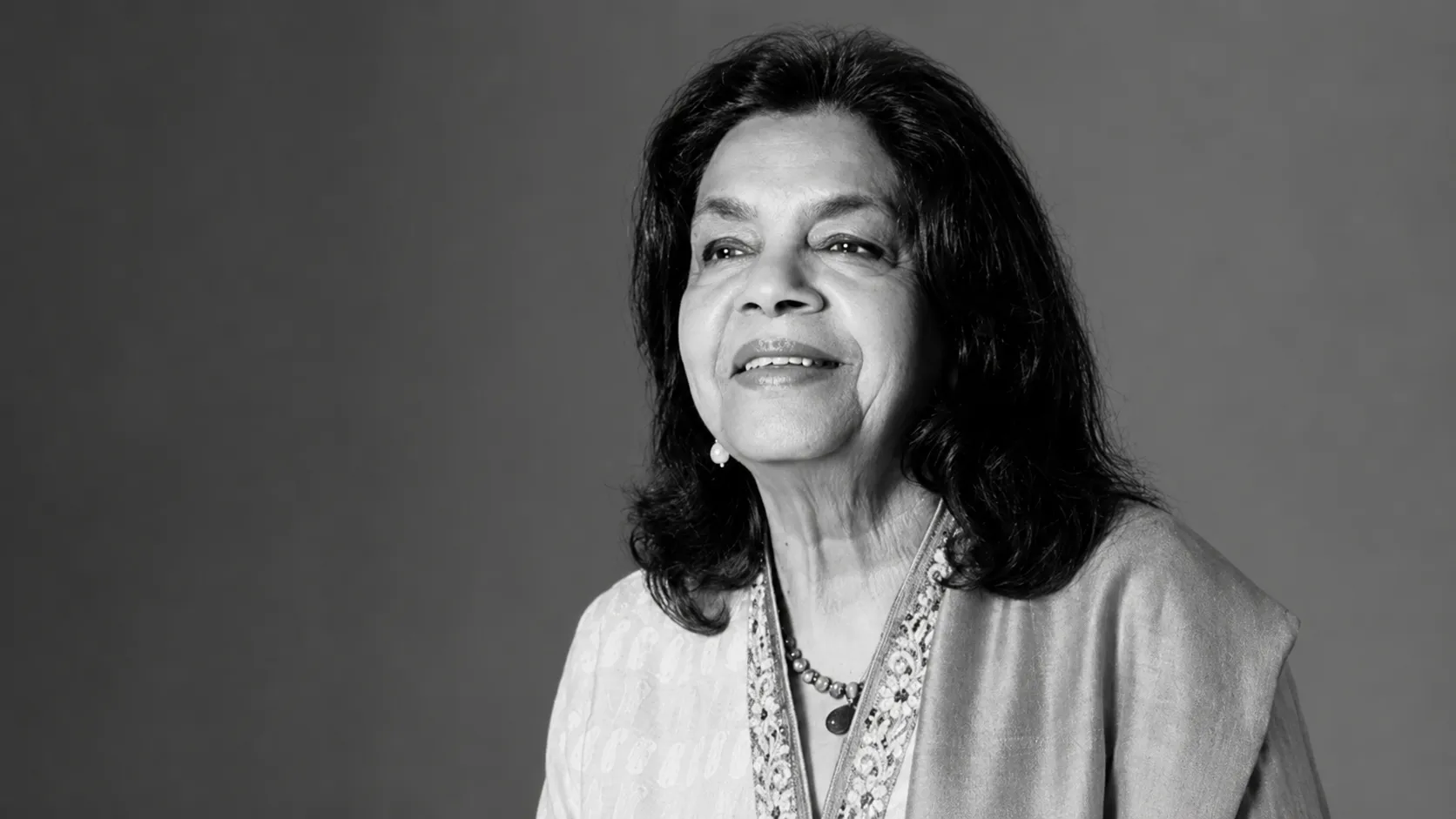
In 1988, Meena Bindra was not trying to build a business empire. She was, by her own account, a homemaker in her late thirties whose children had grown old enough to attend boarding school, leaving her with time she had not previously had and a modest ambition: to earn some pocket money doing something she found genuinely engaging. With no formal training in fashion design and no prior business experience, she began working from home with printed cotton fabric, designing suits based on her own instinct for what Indian women wanted to wear — outfits that were graceful, comfortable and distinctly wearable rather than aspirational in an unattainable sense. Her husband helped her secure a bank loan of ₹8,000 to get started. That modest sum became the founding capital of what is today one of India's most recognisable ethnic wear brands.
Nearly four decades later, BIBA — a Punjabi endearment meaning 'pretty woman' — has grown from that home-based operation into a company whose revenues have, at various points, been reported in excess of ₹600 crore, with a footprint spanning more than 375 points of sale across dozens of Indian cities, including both exclusive brand outlets and multi-brand retail partnerships. In the 2026 Candere Hurun India Women Leaders List, Bindra leads the 'Indian Fashion and Lifestyle' category, a recognition that, unlike many entries on lists of this kind, was earned by a woman who built her company entirely from scratch, without an existing family business, industrial fortune or professional design credential to draw on.
Bindra's early success came through a combination of genuine design instinct and old-fashioned retail relationship-building. Her designs caught the attention of local buyers, and a well-known Mumbai store, Benzer, agreed to stock her pieces — a small but pivotal validation that transformed what had begun as a pocket-money project into a growing commercial operation. Orders began flowing in, and Bindra found herself managing a business that was expanding faster than she had anticipated. In a decision that speaks to her early commitment to the venture, she chose to remain in Mumbai to run the business even when her husband was transferred to Visakhapatnam to take up a prestigious chairmanship of a public sector unit — a choice that, at the time, invited social scrutiny in a milieu where a wife typically followed her husband's career rather than prioritising her own.
As the business scaled through the 1990s and early 2000s, Bindra progressively brought her sons, Sanjay and Siddharth, into management, gradually professionalising what had remained, at its core, a design-led enterprise. BIBA opened its first standalone store in Mumbai in 2004 and, that same year, pioneered Bollywood merchandising tie-ups in India with the film 'Na Tum Jaano Na Hum,' later supplying costumes for major productions including 'Devdas,' 'Hulchul' and 'Baghban' — collaborations that extended the brand's visibility well beyond conventional retail marketing. In 2007, Kishore Biyani's Future Group acquired a 6.5% stake in the company, an early institutional validation of BIBA's commercial trajectory, though Future Group would later divest that stake in 2013.
The 2013 transaction that followed Future Group's exit marked a genuine inflection point in BIBA's institutional history. Warburg Pincus, the global private equity giant, together with Faering Capital, invested approximately ₹300 crore to acquire roughly 30% of the company — a deal Bindra has described as one nobody, including herself, quite expected: a foreign private equity major committing serious capital to what was, in essence, a salwar-kameez business built from a home kitchen table. The investment valued BIBA at approximately ₹1,000 crore at the time, and it marked BIBA as the first ethnic wear company in India to secure funding from a major international private equity investor — a distinction the company and Bindra herself have referenced repeatedly since as evidence of the category's underappreciated commercial potential.