ImpactSustainability5 MIN READ

Microquanta Signs RMB 1.5 Billion Deal to Power a Chinese AI Data Centre With Perovskite Solar Panels

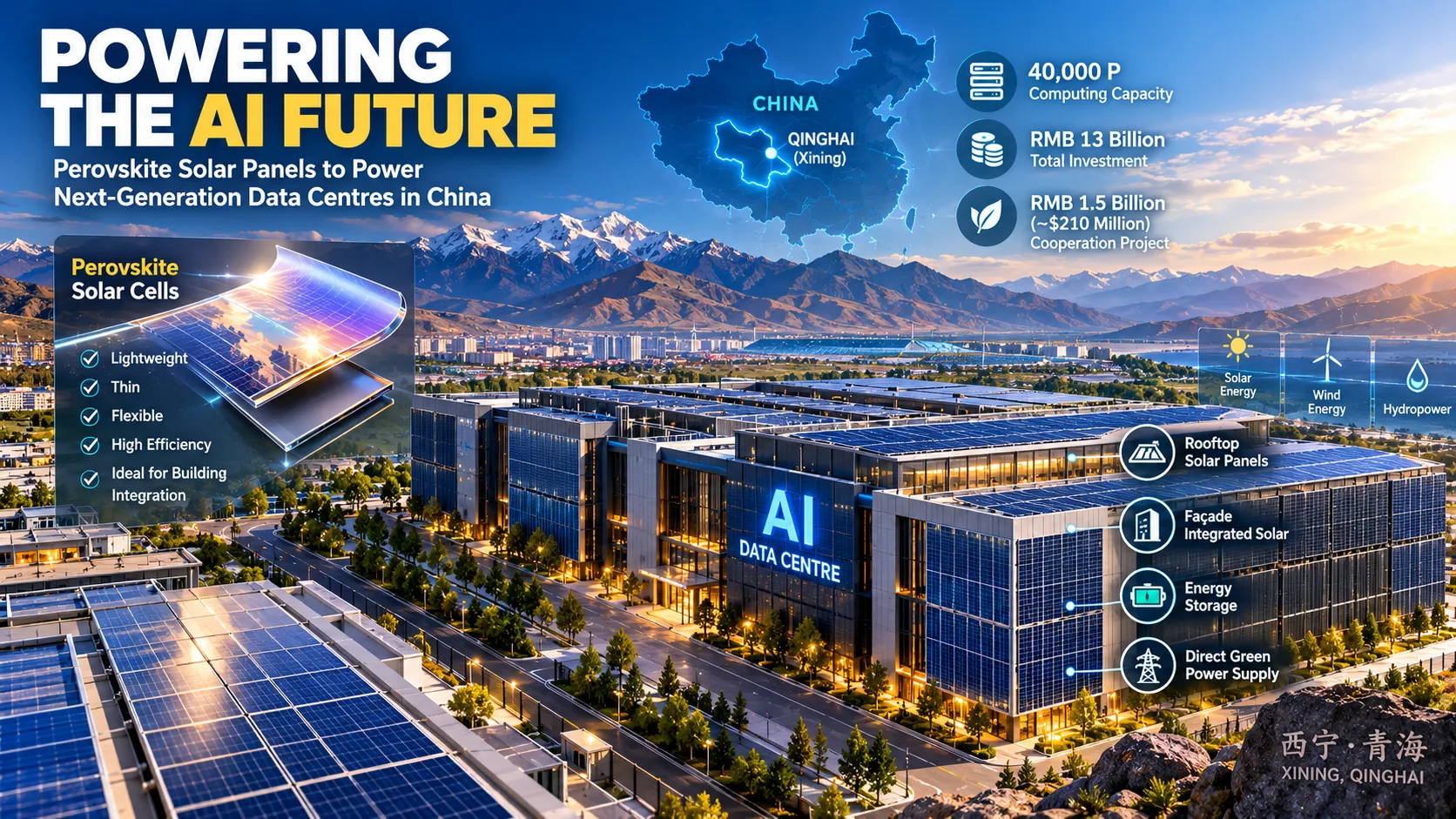
Chinese perovskite solar maker Microquanta has signed a strategic cooperation agreement worth a planned RMB 1.5 billion with data centre developer Xinpu Tuling Technology to integrate solar panels into rooftops and façades at a green computing project in Xining, Qinghai, which has a total planned investment of about RMB 13 billion.

By Prathista Lazar · Author19 October 2026New
Microquanta Signs RMB 1.5 Billion Deal to Power a Chinese AI Data Centre With Perovskite Solar Panels

As artificial intelligence drives an unprecedented surge in demand for electricity, a Chinese solar company is betting that next-generation panels built into the walls and roofs of data centres can help power the computing boom.

Microquanta, a manufacturer of perovskite photovoltaic modules, has signed a strategic cooperation agreement with data centre developer Xinpu Tuling Technology for what the companies describe as "a demonstration project integrating computing and energy infrastructure," according to a report by solar industry publication TaiyangNews on October 19. The planned cooperation is valued at RMB 1.5 billion, or roughly $210 million.

The project will support Xinpu Tuling's green computing initiative in Xining, the capital of Qinghai province in western China. The overall initiative has a total planned investment of about RMB 13 billion and includes a computing cluster with a planned capacity of 40,000 P, a measure of processing power.

Solar on every surface

The partners plan to combine Microquanta's perovskite solar technology with building-integrated photovoltaics (BIPV), direct supply of green power and energy storage. Rather than relying solely on large solar farms located far away, the project will use the rooftops, façades and other distributed spaces of the data centre buildings themselves to generate electricity.

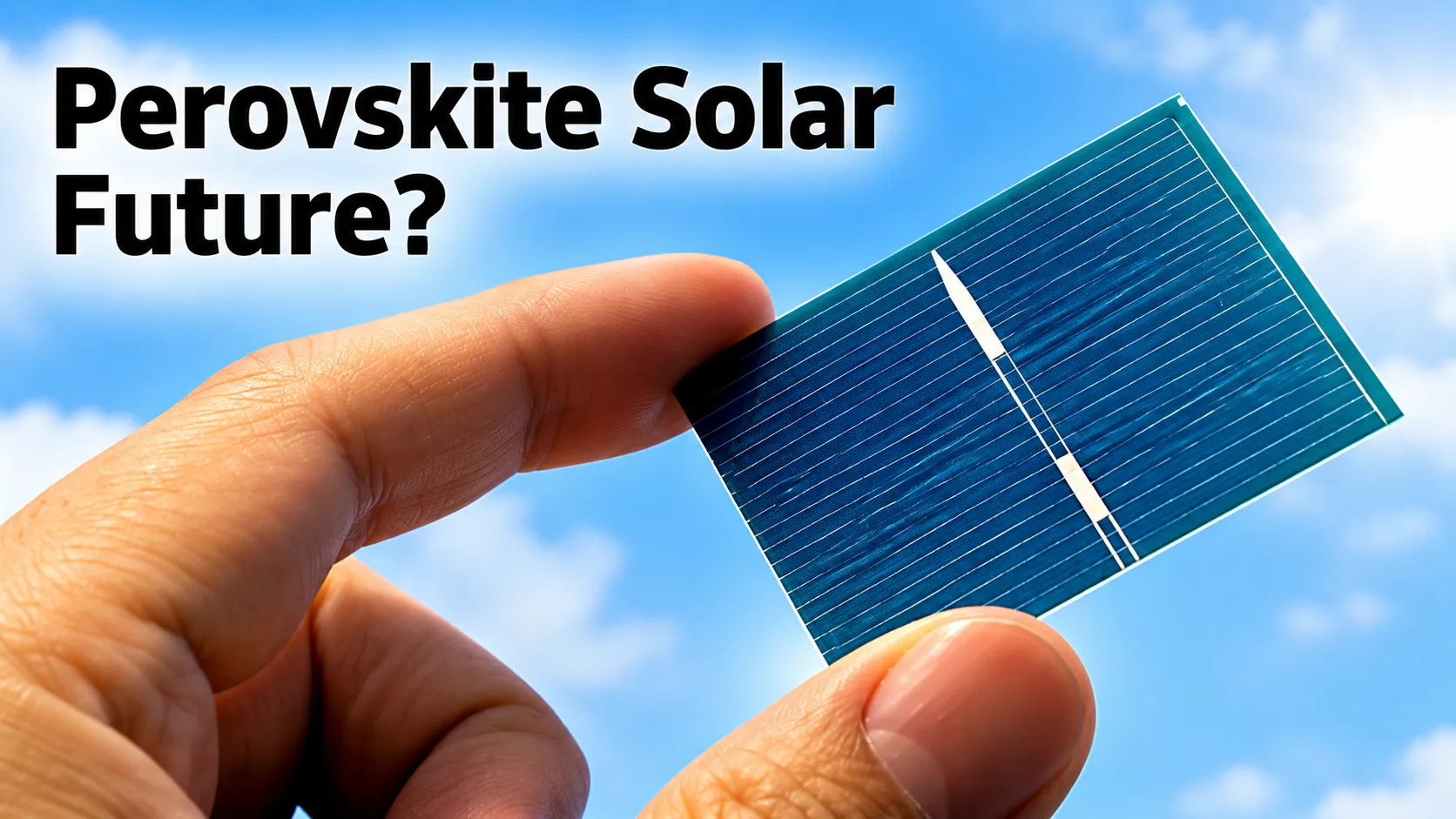
Building-integrated photovoltaics replace conventional building materials, such as roofing or cladding, with panels that generate power. Perovskite solar cells are particularly suited to such applications because they can be made lighter, thinner and, in some forms, semi-transparent or flexible, opening up surfaces that traditional silicon panels cannot easily use.

Combined with energy storage, on-site generation can help data centres reduce their reliance on the grid, lower their carbon footprint and manage costs. Direct green power supply arrangements allow renewable generators to sell electricity directly to large consumers, bypassing some of the constraints of traditional grid procurement.

Why perovskites matter

Perovskites are a class of materials with a particular crystal structure that can absorb light and convert it into electricity very efficiently. Over the past decade, perovskite solar cells have attracted intense research interest because their laboratory efficiencies have risen rapidly and because they can potentially be manufactured at lower cost and with less energy than conventional silicon cells.

Their main challenges have been durability and scaling. Perovskite materials can degrade when exposed to moisture, heat and light over long periods, and producing large, stable modules consistently has proved difficult. Companies including Microquanta, based in Hangzhou, have been working to commercialise the technology, and large demonstration projects like this one are important steps in proving its reliability in real-world conditions.

If perovskites can be produced durably at scale, they could lower the cost of solar power further and enable new applications, from building façades to tandem cells that combine perovskite and silicon layers for higher efficiency.

Qinghai's clean energy advantage

The choice of Qinghai is no accident. The high-altitude province on the Tibetan Plateau has abundant sunshine, large areas of available land and extensive hydropower, solar and wind resources. It has become one of China's leading clean energy bases, and authorities have promoted it as a destination for energy-intensive industries seeking renewable power.

China has been encouraging the construction of data centres in its resource-rich western regions under its "East Data, West Computing" strategy, which aims to process data generated in the densely populated east using computing facilities located in the west, where land and renewable energy are more plentiful. Cooler climates at high altitudes can also reduce the energy needed to cool servers.

“The AI boom has created a new question for clean energy: can computing be powered by the buildings it sits in?”
— TIGI Sustainability Desk
7177c01c-bb83-4daf-be57-8120b835e8ff.png

The AI energy challenge

The deal reflects a global trend. The rapid expansion of AI is driving a surge in electricity demand from data centres, raising concerns about grid capacity, emissions and costs. Technology companies around the world are signing deals for solar, wind, nuclear and other sources to secure power for their facilities.

Other Chinese solar companies are also targeting the intersection of energy and computing. Trinasolar and Intel recently launched a pilot project on integrated power and computing technologies for AI data centres. On the same day as the Microquanta announcement, Trinasolar disclosed plans to buy a 1.6% stake in encapsulant and backsheet maker Betterial for RMB 40 million, while JA Solar received a Gold rating in the EcoVadis sustainability assessment, placing it in the top 5% of companies assessed globally.

Chinese provinces are also opening electricity markets to distributed energy. Hunan province has issued a trial plan allowing virtual power plants, which aggregate distributed solar, energy storage and flexible industrial loads, to trade in electricity markets, including spot markets and green power trading.

What it means for India

India faces a similar challenge. Data centre capacity in India is expanding rapidly, driven by cloud providers, AI developers and data localisation rules, and the largest venture deal in India this year was a $1 billion investment in Bharti Airtel's data centre business, Nxtra. Powering those facilities with clean energy will be essential if India is to meet its climate goals.

India is also one of the world's fastest-growing solar markets, and it has been building its own solar manufacturing industry to reduce dependence on Chinese imports. Indian manufacturers and research institutions are exploring next-generation technologies, including perovskites and tandem cells. Gujarat, Karnataka and Rajasthan accounted for 73% of India's utility-scale solar capacity additions in August 2026.

Integrating solar generation into data centre buildings and campuses, combined with storage and direct green power purchase agreements, could become an increasingly important model in India as well.

China's solar dominance

China dominates the global solar manufacturing supply chain, producing the vast majority of the world's polysilicon, wafers, cells and modules. That dominance has driven down solar costs worldwide, but it has also led to overcapacity and intense price competition, squeezing profits for Chinese manufacturers.

To escape the price war, many Chinese solar companies are investing in next-generation technologies, such as perovskites and tandem cells, and in new applications, including building-integrated solar and integrated energy systems for data centres. Beijing has also proposed export controls on certain solar technologies, a sign that it sees its lead in the sector as strategically important.

What to watch

The Microquanta project will be closely watched as a test of whether perovskite technology can deliver reliable performance at commercial scale. Its success could accelerate adoption of perovskite and building-integrated solar in other energy-intensive facilities.

For the wider industry, the deal is a sign of how the AI boom and the energy transition are becoming intertwined. As computing demand grows, the companies that can supply clean, reliable power to data centres, whether from solar farms, rooftops or entirely new technologies, will find themselves at the centre of two of the most powerful investment trends of the decade.

TagsMicroquantaperovskite solarsolar PVdata centresAI computinggreen computingQinghaiXiningBIPVenergy storagerenewable energyChinaclean energyTrinasolarJA Solarvirtual power plantsHunansustainabilityAI energy demandIndia solar

Reader reviews

Sign in to rate and review this article.
Loading reviews…