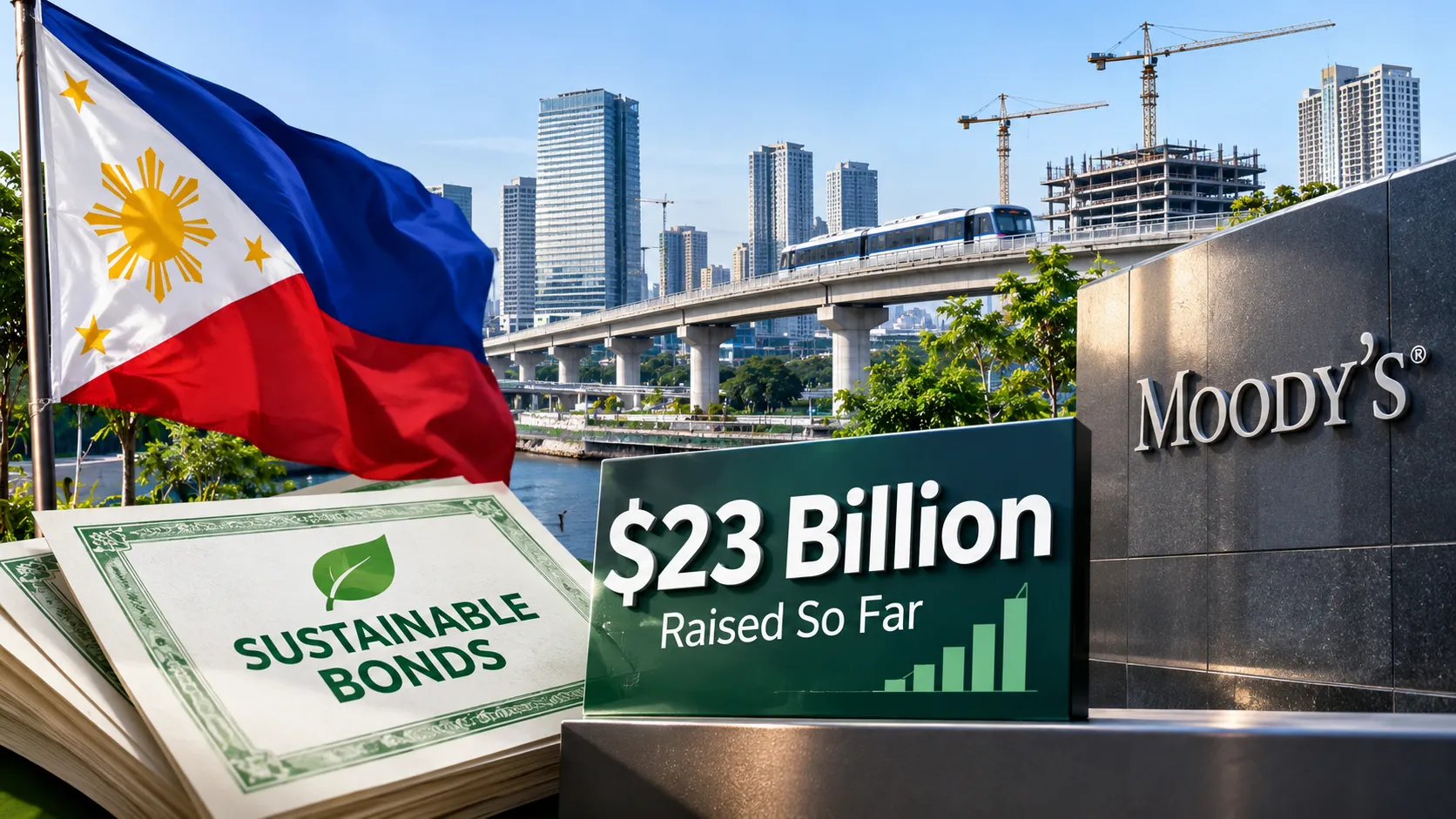
The Philippines is set to rely increasingly on sustainable financing to fund its infrastructure and development priorities, according to Moody's Ratings. The rating agency's latest Sustainable Finance report, reported on November 4, says the country's labelled bond market has become an important channel for directing long-term capital into infrastructure, climate and energy-transition projects.
Moody's argues that the shift is driven by necessity as much as by environmental ambition. With large infrastructure needs and fiscal space tightening, the government and private issuers are turning to sustainable bonds to tap a pool of investors who specifically seek green, social and sustainability-linked assets.
A $23 billion market
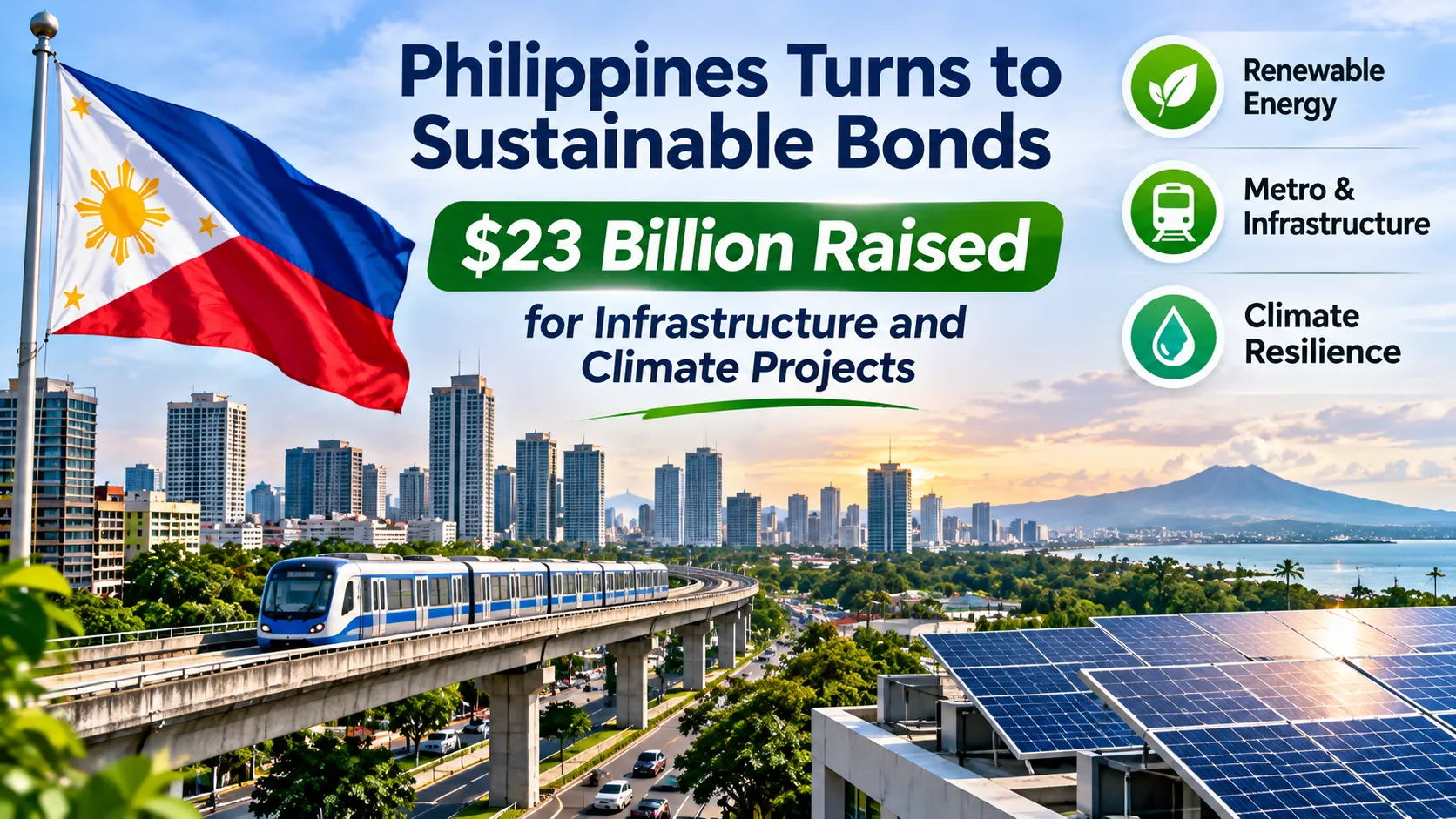
The Philippines has issued a cumulative $23 billion of sustainable bonds, the third-largest total in Southeast Asia after Singapore and Thailand, according to the report. The country accounted for 17% of all sustainable bond issuance in the region from 2017 through the third quarter of 2026.
The government has been a significant issuer. It has raised around $7.5 billion through sovereign sustainable bonds, with proceeds allocated to climate adaptation and resilience projects, metro rail networks, electrification initiatives and other eligible investments.
For an archipelago nation that is among the world's most exposed to typhoons, flooding and sea-level rise, adaptation spending is not optional. Infrastructure that can withstand extreme weather, from sea walls and drainage to resilient roads and power grids, is central to protecting lives and economic activity. Sustainable bonds give the government access to investors who prioritise exactly these outcomes.
Banks lead the charge
Financial institutions have been the backbone of the market. Banks and other financial firms account for 54% of cumulative thematic bond issuance in the Philippines since 2016, Moody's said. Nine Philippine banks have issued sustainable bonds, with frameworks covering renewable energy, energy efficiency, green buildings, water infrastructure and financial inclusion.
The scale of bank activity is substantial. The five largest Philippine banks had mobilised ₱1.9 trillion in sustainable finance-related lending through 2025, according to the report. BDO Unibank holds the largest portfolio at ₱1.2 trillion, with the other four ranging from ₱140 billion to ₱376 billion.
BDO's bond issues illustrate the depth of investor demand. In January, the bank raised ₱100 billion through its fifth peso-denominated ASEAN Sustainability Bond, far exceeding its initial offer size of ₱5 billion, a twentyfold upsizing. It followed with another ₱132 billion issue in July. In total, BDO has raised ₱518.7 billion through six sustainability bond issues since January 2022.
Bank of the Philippine Islands (BPI) raised ₱33.7 billion, about $527 million, through its sustainable, environmental and equitable development bonds. Roughly two-thirds of the proceeds went to lending for micro, small and medium-sized enterprises (MSMEs), mainly medium-sized businesses, with the remainder funding renewable energy, green buildings and sustainable water projects.
State-owned Land Bank of the Philippines raised ₱50 billion through sustainable bonds early in 2026 to fund initiatives such as affordable loans for smallholder farmers, supporting agricultural productivity, rural incomes and food security.
Social as well as green
The Philippine market shows that "sustainable finance" is not only about climate. Several of the largest issues have strong social components, from MSME lending and financial inclusion to support for farmers. In a country where small businesses employ a large share of the workforce and agriculture supports millions of rural households, channelling capital towards these segments can have significant development impact.
That broader definition is increasingly common across Asian markets. Investors and regulators are recognising that the transition to a low-carbon economy must be accompanied by inclusive growth, and that social bonds and sustainability bonds, which fund both environmental and social projects, can serve both goals.
The breadth of issuers also matters. A market dominated by one sovereign issuer tends to be thin and volatile, while one with multiple banks and corporate issuers usually develops deeper liquidity, more consistent pricing and a broader investor base. The Philippines' mix of sovereign, private-bank and state-bank issuance is one reason Moody's sees room for further growth.
Governance is the next frontier
Moody's cautioned that sustaining the market's expansion will depend on stronger governance, transparent reporting and credible commitments on how bond proceeds are allocated and used.
"Robust sustainable finance frameworks will therefore become increasingly important for issuers across the Philippines," the agency said, adding that investors will focus more closely on governance, transparency and use-of-proceeds commitments.
This reflects a global trend. As sustainable bond markets have grown, concerns about "greenwashing", where issuers overstate the environmental or social benefits of their projects, have prompted investors to demand rigorous reporting, independent verification and clear impact metrics. Regulators across Asia and Europe have introduced taxonomies and disclosure rules to standardise what counts as sustainable.
Moody's said a growing pool of eligible assets and strong demand for labelled bank debt should support further issuance in the Philippines.
Lessons for India and other emerging markets
The Philippine experience offers useful lessons for India, which faces similar challenges: vast infrastructure needs, high climate vulnerability and fiscal constraints.
India has issued sovereign green bonds since 2023, and Indian banks, non-bank lenders and corporations have tapped green and sustainable bond markets at home and abroad. Its market, however, remains small relative to the scale of the country's climate and infrastructure investment needs.
Three features of the Philippine market stand out for Indian policymakers and financial institutions. The first is the central role of banks as issuers that can aggregate many smaller sustainable loans into large, liquid bonds. The second is the strong demand for domestic-currency sustainable bonds, which reduces currency risk for issuers. The third is the integration of social objectives such as MSME and agricultural lending, which are equally relevant to India's development priorities.
At the same time, the Moody's report is a reminder that growth must be matched by credibility. For India, as for the Philippines, the ability to attract long-term sustainable capital will depend on clear taxonomies, transparent reporting and evidence that money raised under sustainability labels delivers real outcomes.
As climate risks intensify across Asia, sustainable finance is moving from a niche to a mainstream source of infrastructure funding. The Philippines' $23 billion market shows how far that shift has come, and how much further it may go.