ImpactSustainability8 MIN READ

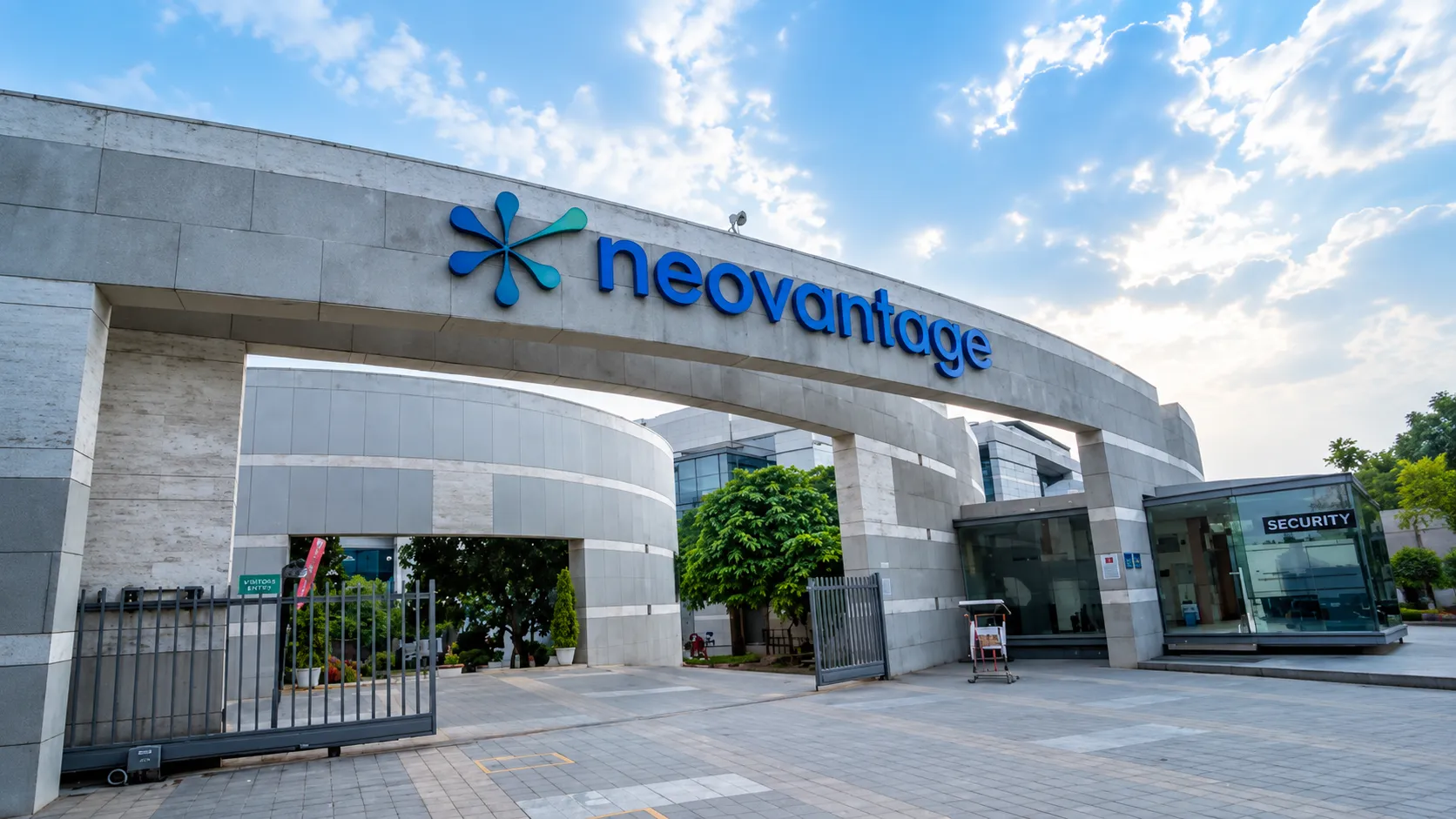
Neovantage Innovation Parks Secures Rs 300 Crore Green Loan From HSBC India for Life-Sciences Real Estate

Neovantage Innovation Parks has secured its inaugural green loan of Rs 300 crore from HSBC India to fund sustainable life-sciences real estate development, reflecting growing green-finance activity in India's specialised industrial property sector.

By Shaym Kumar · Author18 September 2026New
Neovantage Innovation Parks Secures Rs 300 Crore Green Loan From HSBC India for Life-Sciences Real Estate

Neovantage Innovation Parks, a private owner and operator of life-sciences-focused real estate, has secured its inaugural green loan of Rs 300 crore, equivalent to roughly C$50 million, from HSBC India, the companies confirmed September 17, 2026. The financing marks a notable milestone for India's specialised industrial and life-sciences real estate sector, which has historically relied on conventional debt financing structures, as green-loan instruments tied to environmental performance criteria become an increasingly common feature of institutional real estate financing across the Indian market.

Green loans, unlike conventional debt facilities, are typically structured with pricing or terms linked to a borrower's achievement of specific environmental performance benchmarks, such as energy efficiency standards, renewable energy usage, water conservation measures or green-building certification achievements. For a specialised real estate developer like Neovantage, securing green-loan financing signals both a commitment to sustainable development practices within its life-sciences facilities and, from a lender's perspective, growing confidence that properties built to higher environmental standards represent lower long-term operational and obsolescence risk, a consideration that has become increasingly important to institutional lenders as environmental, social and governance criteria have become more deeply embedded within commercial real estate underwriting standards globally.

India's life-sciences real estate sector has grown substantially as the country's pharmaceutical, biotechnology and contract research and manufacturing industries have expanded, creating sustained demand for specialised facilities equipped with the laboratory infrastructure, cold-chain capabilities and regulatory-compliant manufacturing spaces that life-sciences companies require. That growth has attracted increasing institutional real estate investment, with developers like Neovantage positioning themselves to capture demand from both domestic pharmaceutical companies and the growing number of multinational life-sciences firms establishing research and manufacturing operations in India as part of broader supply-chain diversification strategies pursued by the global pharmaceutical industry in recent years.

HSBC's decision to extend green-loan financing specifically to a life-sciences real estate developer reflects the bank's broader sustainable-finance strategy in India, where it has increasingly sought to direct capital toward projects that combine genuine environmental performance improvements with strong underlying commercial fundamentals, rather than treating sustainable finance as a niche or purely reputational lending category. Life-sciences facilities carry particularly significant energy and resource intensity relative to conventional commercial real estate, given the demanding climate-control, ventilation and power-reliability requirements of laboratory and manufacturing spaces, making environmental performance improvements in this specific real estate subcategory potentially more consequential in absolute energy and emissions terms than comparable green-building initiatives in lower-intensity commercial property types such as standard office space.
ChatGPT Image Sep 19, 2026, 09_54_27 AM.png

The broader Indian green-finance market has expanded considerably over the past several years, with green bonds, sustainability-linked loans and dedicated green-loan facilities becoming increasingly mainstream financing tools across sectors ranging from renewable energy and real estate to manufacturing and infrastructure. That growth has been supported by both regulatory encouragement, as Indian financial regulators have worked to develop clearer green-finance taxonomies and disclosure standards, and genuine commercial demand from institutional investors and corporate borrowers alike who increasingly view credible sustainability credentials as material to long-term asset value and access to global capital markets, particularly for developers and companies with ambitions to attract international institutional investment or multinational corporate tenants with their own sustainability commitments.


Life-sciences facilities carry significantly higher energy intensity than conventional commercial real estate, making environmental performance gains here particularly consequential.
TIGI Impact Desk

For Neovantage, the green loan provides capital to advance its life-sciences real estate development pipeline while establishing a sustainability-linked financing track record that could support more favourable terms on future capital raises as the company continues expanding its footprint within India's growing life-sciences property sector. As more Indian real estate developers across specialised commercial property categories pursue similar green-financing arrangements, the sector's overall environmental performance standards are likely to continue rising, reinforcing a broader shift within Indian commercial real estate toward treating sustainability credentials as a core underwriting consideration rather than an optional differentiator.

The deal also illustrates how sustainability-linked financing has begun extending beyond the renewable energy and infrastructure sectors that have historically dominated India's green-finance activity, into more specialised commercial and industrial real estate categories where the connection between environmental performance and long-term asset value may be less immediately obvious to conventional lenders but increasingly material to sophisticated institutional borrowers and financiers alike navigating a global capital environment where sustainability credentials carry growing weight in investment decisions.

Analysts tracking India's commercial real estate financing landscape note that green-loan structures of this kind typically require ongoing reporting against agreed environmental benchmarks throughout the loan's tenure, rather than a one-time certification at financial close, meaning Neovantage will need to sustain measurable performance on energy efficiency and other sustainability metrics across its property portfolio for the life of the facility rather than treating the green designation as a one-time achievement. That ongoing accountability structure has become an increasingly standard feature of credible green-finance instruments globally, as lenders and regulators alike have grown more wary of green-washing concerns that previously undermined confidence in some earlier, less rigorously structured sustainability-linked financial products.

For India's broader life-sciences sector, access to green financing on favourable terms could meaningfully influence where multinational pharmaceutical and biotechnology companies choose to locate new manufacturing and research facilities, particularly as many global life-sciences firms have made their own corporate sustainability commitments that increasingly factor into site-selection decisions for new facility investments across their global supply chains.

That site-selection influence could, in turn, reinforce Neovantage's own commercial case for pursuing sustainability-linked capital across future development phases.

The Rs 300 crore facility, in that sense, functions as both financing and proof of concept for the developer's broader green-building strategy.

It also signals to peer developers that credible environmental performance can now be financed on competitive commercial terms rather than requiring a green-premium trade-off, an argument that has taken considerable time to gain traction within India's traditionally cost-focused commercial real estate lending market.

TagsNeovantageHSBC IndiaGreen LoanLife Sciences Real EstateSustainable FinanceIndia

Reader reviews

Sign in to rate and review this article.
Loading reviews…