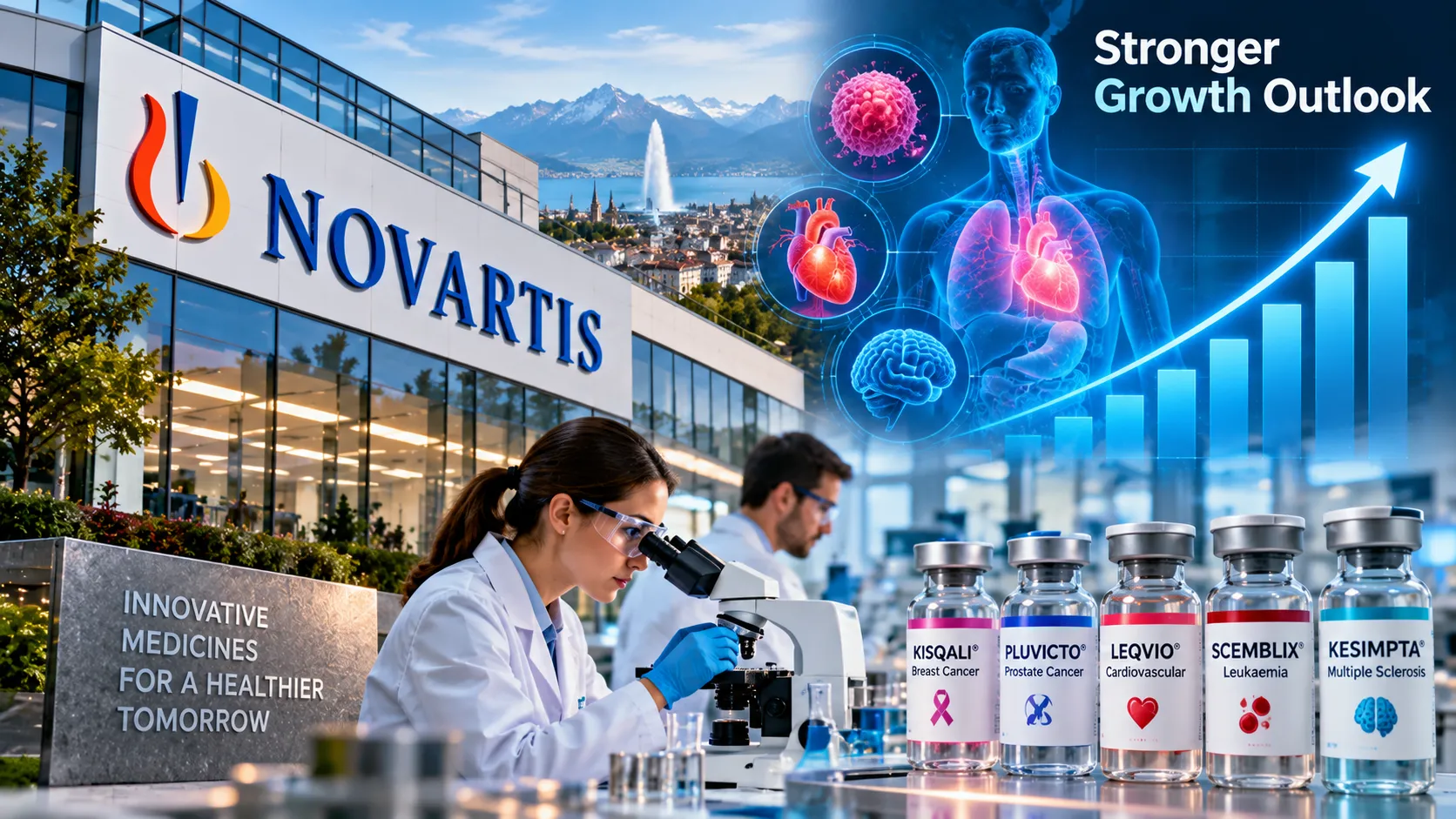
Novartis has raised its profit outlook for the year, as strong demand for its newer medicines, particularly in cancer and cardiovascular disease, more than offset pressure on older drugs facing generic competition.
The Swiss drugmaker reported core earnings per share of $2.46 for the third quarter, up 8% and ahead of analysts' forecast of $2.28, according to Investing.com on Tuesday, October 27. Net sales rose 4% in constant currency to $14.5 billion, slightly below the $14.6 billion analysts expected.
Core operating income rose 10% to $6 billion, and the core operating margin improved by two percentage points to 41.6%.
Novartis shares rose 1.7% in European trading on Tuesday, according to Reuters.
A sharply better outlook
The most significant change was to Novartis's guidance for the full year. The company now expects core operating income to grow by a low double-digit percentage in 2026, compared with its previous forecast of a low single-digit decline.
Net sales guidance was maintained at low single-digit growth. For the second half, Novartis expects net sales to grow by a mid- to high-single-digit percentage and core operating income by a high single- to low double-digit percentage.
The company expects its fourth-quarter core margin to decline from the third quarter because of seasonal spending, higher royalties and lower other income related to biosimilar competition for its asthma drug Xolair.
Priority brands drive growth
"We delivered strong growth in the quarter driven by our priority brands and launches," said chief executive Vas Narasimhan. Priority brands, the newer medicines on which Novartis is focusing its growth, rose 29% in constant currency.
Kisqali, a treatment for breast cancer, grew 37%. Scemblix, for chronic myeloid leukaemia, rose 67%. Leqvio, a cholesterol-lowering therapy given twice a year, increased 63%. Kesimpta, for multiple sclerosis, grew 22%, and Pluvicto, a radioligand therapy for prostate cancer, rose 20%. Cosentyx, for psoriasis and other inflammatory conditions, grew 9%.
Novartis also cited a strong launch for Rhapsido, raising its peak sales guidance for the drug to more than $4 billion across chronic spontaneous urticaria and chronic inducible urticaria, two forms of chronic hives.
The impairment
Reported operating income fell 61% to $1.2 billion, and net income declined 71% to $1.2 billion, mainly because of a $1.9 billion partial impairment related to del-desiran, an experimental medicine. Impairments reflect a reduction in the expected value of a drug or asset, often because of clinical trial results, regulatory issues or changed commercial prospects.
Free cash flow was $5.1 billion in the quarter and $14 billion for the first nine months.
A focused pharmaceutical company
Novartis has transformed itself in recent years into a focused innovative medicines company. It spun off its generic drugs business, Sandoz, in 2023 and has concentrated on four therapeutic areas: cardiovascular, renal and metabolic diseases; immunology; neuroscience; and oncology.
The company has also invested heavily in new technology platforms, including radioligand therapy, which delivers radiation directly to cancer cells, and RNA-based medicines such as Leqvio.
The generic challenge
Like other large drugmakers, Novartis faces the loss of patent protection on several older products, which opens them to competition from generics and biosimilars. Growth in priority brands is essential to offset those declines. The company's strong results suggest that its newer medicines are gaining ground fast enough to support profit growth.