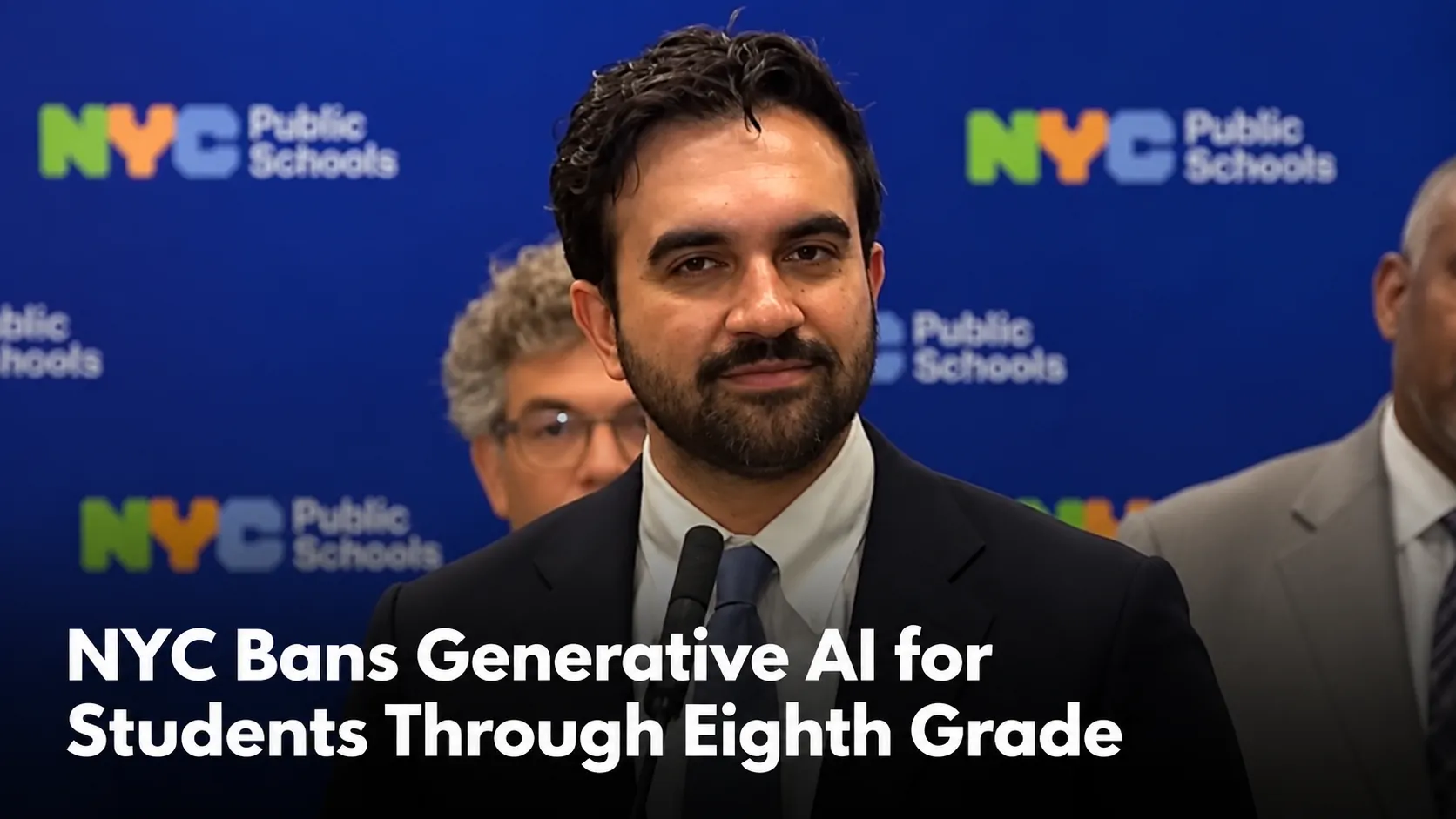
New York City has moved to bar the use of artificial intelligence tools by students through eighth grade, citing concerns about the technology's potential impact on child development at a formative stage of learning. The policy places one of the largest public school systems in the United States among a growing number of education authorities globally wrestling with how, and whether, to permit AI tools within classrooms serving younger students, even as AI adoption accelerates rapidly across nearly every other sector of society.
The restriction reflects mounting concern among educators, child development specialists and policymakers that reliance on AI tools during critical early years of cognitive and academic development could undermine the development of foundational skills, including critical thinking, independent problem-solving and writing ability, that are traditionally built through unassisted practice and repetition during elementary and middle school years. These concerns have grown more pronounced as generative AI tools have become dramatically more capable and accessible over a very short period of time.
For a school district of New York City's scale, serving hundreds of thousands of students across a highly diverse set of schools and communities, implementing and enforcing a restriction on AI tool use presents significant practical challenges, given the proliferation of AI capabilities embedded within widely used consumer software and devices that students may access outside formal school-issued technology. The policy's effectiveness will likely depend heavily on how clearly it is communicated to teachers, students and parents, and how consistently it is enforced across the district's many individual schools.
The move arrives amid a broader, increasingly urgent global conversation about the appropriate role of AI tools in education, with different jurisdictions adopting notably divergent approaches. Some school systems internationally have embraced AI tools as valuable pedagogical aids intended to support differentiated, personalised learning, while others, echoing New York City's approach, have moved toward restriction, particularly for younger age groups, reflecting genuine scientific uncertainty about the technology's longer-term developmental effects on children still building foundational cognitive skills.
Child development researchers have pointed to a lack of longitudinal data on how sustained AI tool use during elementary and middle school years affects long-term academic and cognitive outcomes, given how recently these tools have become widely accessible and capable enough for meaningful use within educational contexts. This evidentiary gap has left policymakers largely reliant on precautionary reasoning, drawing on broader child development principles, rather than direct empirical evidence specific to AI tool use, when crafting policy in this rapidly evolving area.
For technology companies developing AI tools marketed toward educational use cases, policies of this nature, restricting access for a significant proportion of the school-age population, represent a meaningful commercial constraint, potentially prompting greater investment in age-appropriate product design and more robust safety features specifically targeted at addressing the developmental concerns driving policies like New York City's restriction, in an effort to eventually demonstrate suitability for younger student populations.
The policy also highlights the broader tension facing educational institutions worldwide as they attempt to prepare students for a future in which AI fluency will likely be an important professional skill, while simultaneously protecting the foundational learning processes that have traditionally underpinned strong academic development. Striking the right balance between these two objectives remains a genuinely unresolved challenge, one that is likely to generate continued policy experimentation and revision across school districts globally as more evidence emerges over time.
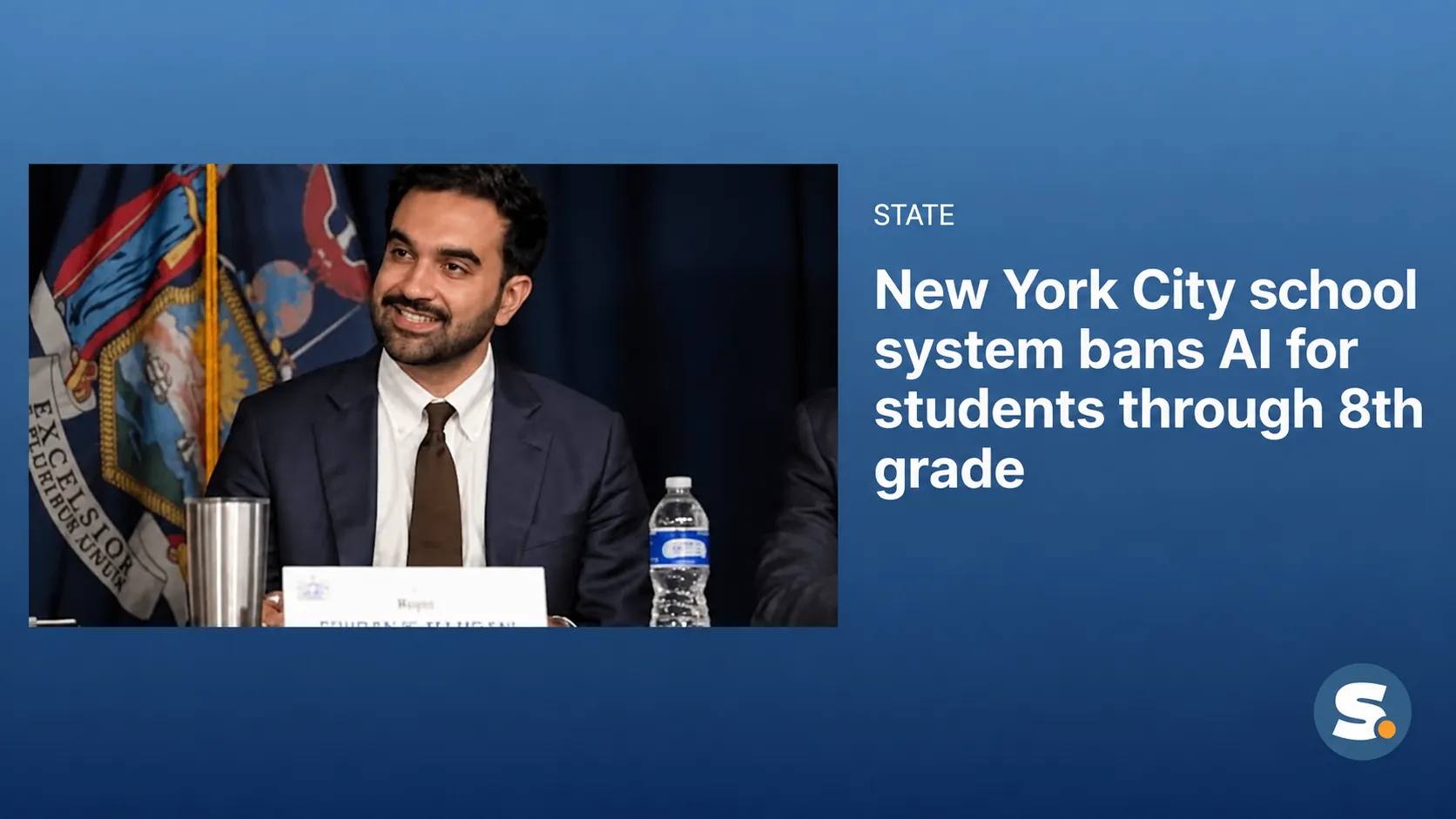
As New York City implements its restriction and other major school districts continue to evaluate their own approaches to classroom AI policy, the coming years are likely to produce a valuable, if unintentional, natural experiment in how different regulatory approaches to student AI access affect educational outcomes, offering policymakers globally an increasingly rich evidence base to draw upon as they navigate one of the more consequential technology policy questions currently facing education systems worldwide.
Education technology companies and school administrators alike are likely to closely monitor how New York City's restriction is enforced in practice, given the practical difficulty of preventing student access to AI capabilities embedded within widely used consumer devices and applications that exist well outside the direct control of school-issued technology and network infrastructure.
The policy also raises important equity considerations, as students with greater access to personal devices and home internet connectivity may find it comparatively easier to access AI tools outside school hours despite the in-school restriction, potentially widening rather than narrowing existing gaps in how differently resourced student populations engage with the technology.
As other major school districts globally continue evaluating their own classroom AI policies, New York City's approach, and its measurable educational outcomes over the coming years, will offer an important reference point for policymakers attempting to balance the genuine benefits of AI literacy against legitimate concerns about the technology's impact on foundational skill development among younger students.
Looking ahead, New York City's policy is likely to face continued evaluation and potential revision as more evidence emerges about its practical effectiveness and educational impact, offering other major school districts globally a closely watched early case study as they navigate their own decisions about how, and whether, to regulate AI tool access for younger students.
For education policymakers and parents globally, New York City's restriction offers an early, closely watched test case in one of the more consequential open questions currently facing school systems worldwide: how to prepare students for an AI-integrated future without compromising the foundational skill development that has traditionally underpinned strong academic outcomes.
It is also worth noting that several US states and international jurisdictions have adopted markedly different approaches to classroom AI policy over the past year, ranging from active encouragement and integration to outright restriction, creating a genuinely varied policy landscape that researchers are likely to study closely as a natural experiment in how different regulatory philosophies affect both AI literacy and foundational skill development outcomes among comparable student populations.
Ultimately, New York City's decision to restrict AI tool use for younger students adds an important, closely watched data point to the still-unresolved global debate over how education systems should approach classroom AI integration, a debate likely to generate continued policy experimentation and revision as more evidence accumulates over the coming years.