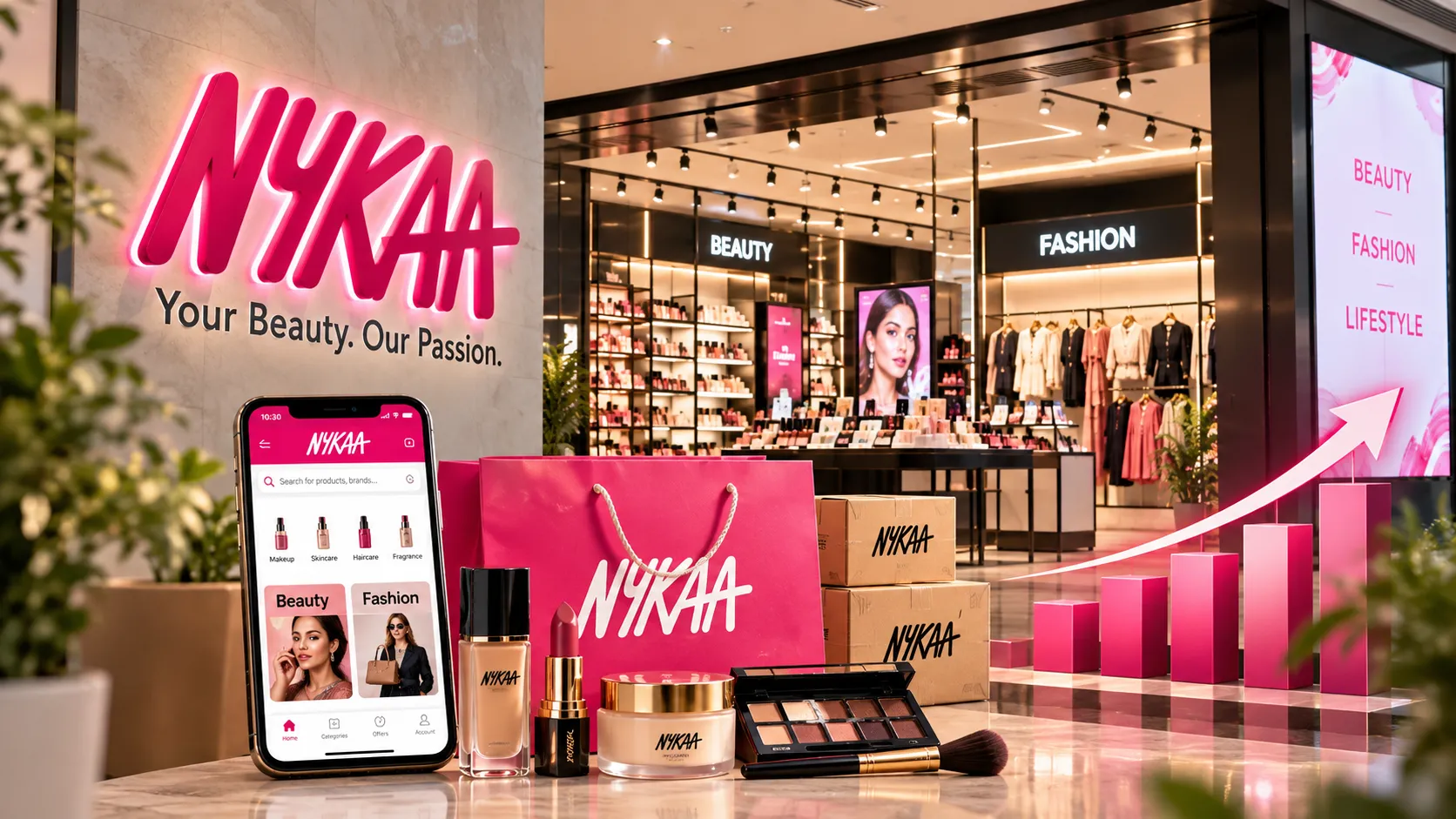
Nykaa, the beauty and fashion retailer founded by Falguni Nayar, expects consolidated gross merchandise value to grow close to 30% year on year in the quarter ended September 2026, according to a business update released by its parent, FSN E-Commerce Ventures, over the weekend.
The update, issued ahead of the company's formal quarterly results, points to growth across both of its main verticals. Consolidated net sales value (NSV) is expected to grow in the early thirties in percentage terms, while net revenue is projected to rise in the late twenties. The company said the growth was driven by continued momentum in beauty and the increasing scale of its fashion business.
For investors, the numbers suggest that one of India's most closely watched consumer internet companies has kept its growth rate in a range few listed peers can match, at a time when broader consumption trends have been uneven and equity markets have been under heavy selling pressure.
Beauty: steady growth, stronger stores
The beauty vertical, which built Nykaa's brand and still anchors its economics, is expected to report NSV and net revenue growth in the late twenties.
Physical retail is becoming a larger part of that story. Nykaa added 14 net new stores during the quarter, taking its total network to 338 stores as of 30 September. The company said like-for-like store sales growth was the strongest it has recorded in six quarters, a sign that new stores are not simply cannibalising existing ones and that mature locations are drawing more spending.
Like-for-like growth is closely followed by retail analysts because it strips out the effect of new openings and measures whether customers are spending more at stores that have been trading for a full comparison period. For an omnichannel business, it also indicates whether the offline network is pulling its weight alongside the app and website.
Fashion: the faster engine
The bigger shift is in fashion. Nykaa's fashion vertical is expected to post NSV growth in the late forties and net revenue growth in the early forties. The business added more than 250 new brands during the quarter and said new customer acquisition was a key driver.
The company also pointed to early success from its partnership with Nike, an important signal in a category where access to sought-after international brands can determine whether a platform is seen as a destination or an afterthought.
Fashion has been the harder business for Nykaa. Competition from larger marketplaces and specialist apps is intense, customer acquisition is expensive, and return rates in apparel are structurally higher than in beauty. A sustained acceleration in fashion growth, if it comes with improving unit economics, would change the way investors value the company as a whole.
The festive calendar effect
Nykaa cautioned that the timing of festivals has shifted some demand. Part of the festive-season buying that would ordinarily have fallen in the September quarter is expected to move into the December quarter this year. That means the second-quarter numbers may understate underlying demand, and the third quarter will have a higher base of expectations to meet.
A woman-led company at scale
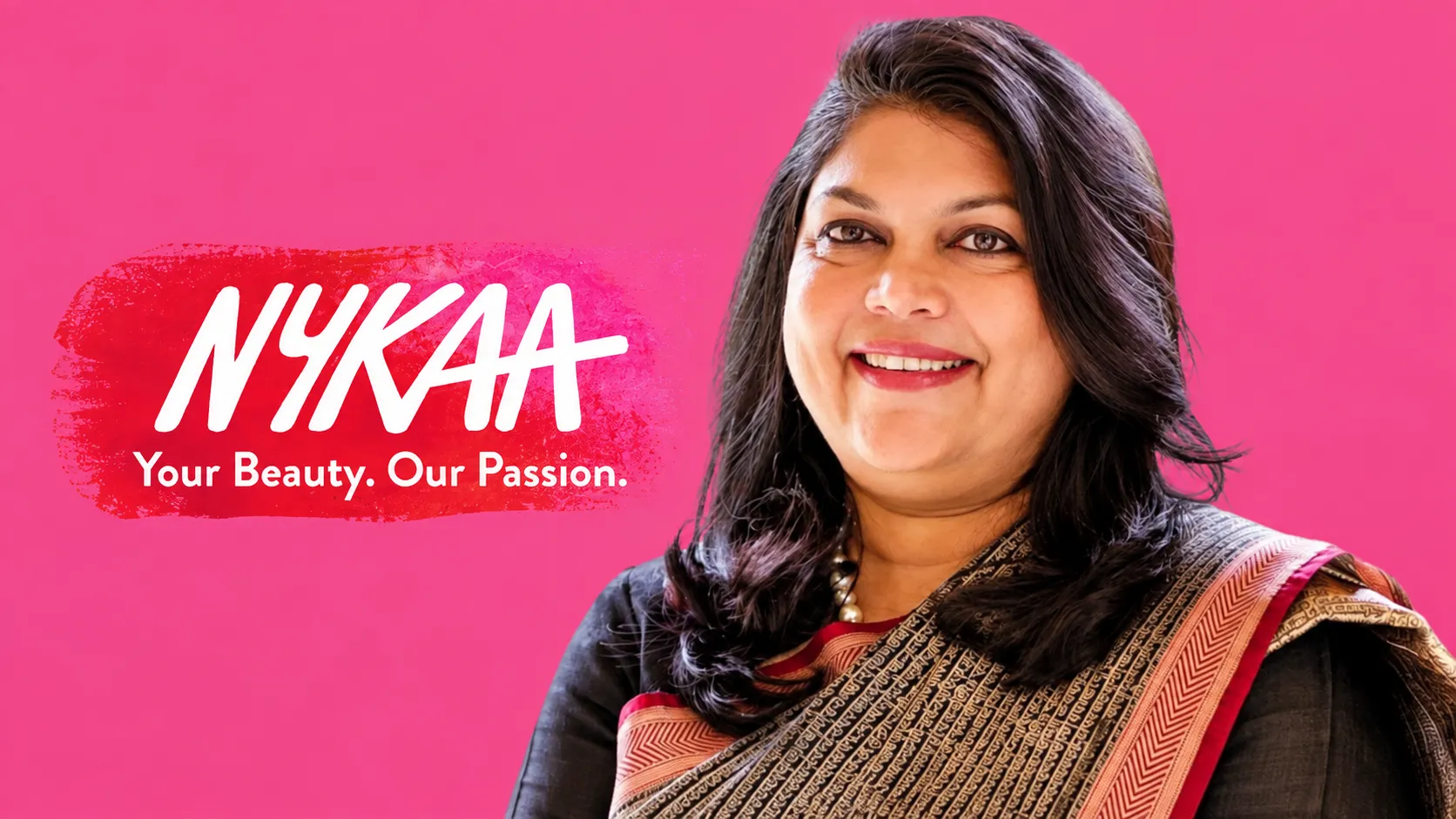
Nykaa occupies an unusual place in Indian business. Founded in 2012 by Falguni Nayar after a long career in investment banking, it became one of the most prominent consumer technology listings of the 2021 IPO wave and made Nayar one of India's best-known self-made women entrepreneurs.
That profile matters beyond the company itself. Data from industry trackers consistently show that women-led startups in India receive a small fraction of total venture funding, and that the gap widens sharply after the seed stage. A woman-founded company that has listed, scaled its retail footprint to hundreds of stores and continues to post high growth is a rare reference point for investors weighing later-stage bets on women founders.
Nykaa has also become a leadership pipeline in its own right. Its experience building private-label brands, store operations and an omnichannel platform has made its alumni sought after across India's consumer sector.
What the market will look for
The business update is provisional. Investors will look to the full results for profitability, which is where the debate around Nykaa has usually focused. Key questions include whether fashion losses are narrowing as the business scales, how marketing spending is trending as a share of revenue, and how much the store network is contributing to operating margins. ## Why stores still matter in beauty
The emphasis on physical retail runs against the assumption, common a decade ago, that Indian beauty shopping would move almost entirely online. In practice, many consumers still want to test shades, textures and fragrances before committing, particularly at higher price points. Stores also serve as showcases for brands and as places where beauty advisers can introduce customers to new products, which they may later reorder through the app.
For Nykaa, the store network also supports its own brands. House of Nykaa labels, including homegrown lines such as Kay Beauty and Nykaa Cosmetics and acquired brands such as Dot & Key, typically earn higher margins than third-party products. Giving them prominent shelf space in hundreds of stores helps build awareness that online listings alone cannot easily match.
The strongest like-for-like performance in six quarters suggests the format is maturing. As stores move beyond their opening period, fixed costs are spread over higher sales, which is where retail networks begin to contribute meaningfully to profits.
Retail analysts are also likely to focus on four markers flagged by the update itself: whether reported net revenue growth matches the late-twenties guidance, whether fashion NSV sustains growth near the late forties, whether like-for-like store growth holds up, and whether the store count continues to climb from 338.
The update arrives during a weak period for Indian equities, with benchmark indices having recorded eight consecutive weekly declines. In that environment, companies able to demonstrate consistent operating momentum have tended to separate themselves from the broader sell-off.
For Nayar, the numbers support a long-held thesis: that Indian consumers will pay for curated, trusted beauty and fashion across both screens and stores, and that an omnichannel model can compete with much larger marketplaces. The September quarter suggests that thesis is still holding. The December quarter, with its festive spillover, will offer a sharper test.