Odisha, the mineral-rich eastern state, has secured a large slate of investment commitments in chemicals, energy and manufacturing, as it seeks to transform its economy from one built on mining into a diversified industrial hub.
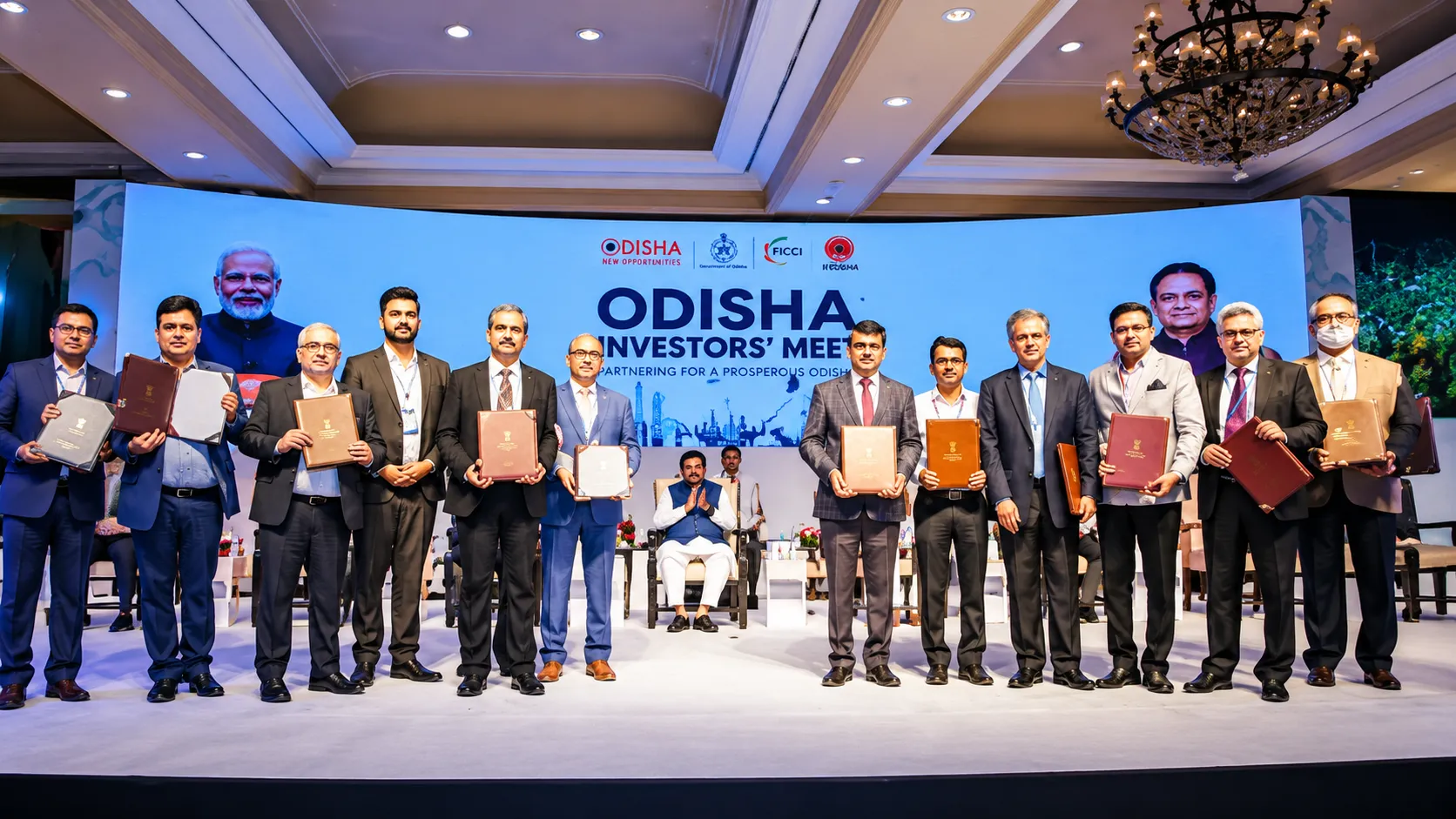
At the India Chem 2026 exhibition and conference in Mumbai, the Odisha government signed nine memoranda of understanding (MoUs) worth ₹51,443.51 crore and received four investment intents worth ₹2,450 crore, bringing the total to ₹53,894 crore. The projects are expected to create 20,210 jobs.
The biggest commitments
NLC India, the state-owned power and mining company, accounted for the largest share, with a proposal worth ₹37,000 crore. Larsen & Toubro committed ₹8,100 crore, and Paradeep Phosphates, a fertiliser producer, ₹4,750 crore.
Labour-intensive projects featured prominently in the employment estimates. Shivaraj Spinning proposed an investment of ₹200 crore expected to create 5,000 jobs, and Bodycare a ₹250 crore project expected to create 4,000 jobs. Together, these two relatively modest investments account for almost half of the total expected employment, illustrating how textile and apparel projects generate jobs far more efficiently than capital-intensive industries.
A steel giant in the making
Beyond the chemicals proposals, the state is in discussions on a large integrated steel plant with capacity of 5 million tonnes, involving JSW and South Korea's POSCO, at an estimated investment of ₹35,000 crore. JSW Steel separately announced on Monday a 5 million tonnes per annum expansion at its Sambalpur plant in Odisha.
Odisha's industrial strategy
Odisha holds a large share of India's reserves of iron ore, coal, bauxite and chromite, and has historically relied on mining and metals. The state government, led by Chief Minister Mohan Charan Majhi of the Bharatiya Janata Party since 2024, has sought to attract investment in downstream industries, including chemicals, petrochemicals, textiles, food processing and technology.
The state's coastline and ports, particularly Paradip, provide access to imported raw materials and export markets. Paradip already hosts a large refinery operated by Indian Oil Corporation and several fertiliser and chemical plants, forming the core of a petrochemicals cluster.
India's chemical ambitions
India's chemical industry is one of the largest in the world and has grown rapidly, but the country still imports significant quantities of chemicals and petrochemicals. The government has sought to expand domestic production to reduce imports, support manufacturing and capture opportunities as global companies diversify supply chains away from China.
India Chem, organised by the Federation of Indian Chambers of Commerce and Industry with the government's Department of Chemicals and Petrochemicals, is one of the industry's major events and a platform for states to pitch for investment.
From MoUs to investment
Investment commitments announced at such events do not always translate into actual projects. MoUs are non-binding, and many proposed investments are delayed, scaled back or abandoned because of changing market conditions, financing difficulties or problems with land acquisition and approvals.
The real test for Odisha will be the conversion of these commitments into factories and jobs. The state has set up mechanisms to track and facilitate investments, including single-window clearance systems.
Social and environmental considerations
Large industrial projects in Odisha have sometimes faced resistance from local communities, particularly where they involve land acquisition in tribal areas or affect forests and water resources. Past projects, including a proposed POSCO steel plant near Paradip in the 2000s, were abandoned after years of protests and delays.


