ImpactImpact in Motion Diaspora5 MIN READ

Ofwat Proposes £240 Million Net Cut to Water Bills as Thames and Yorkshire Face Largest Penalties

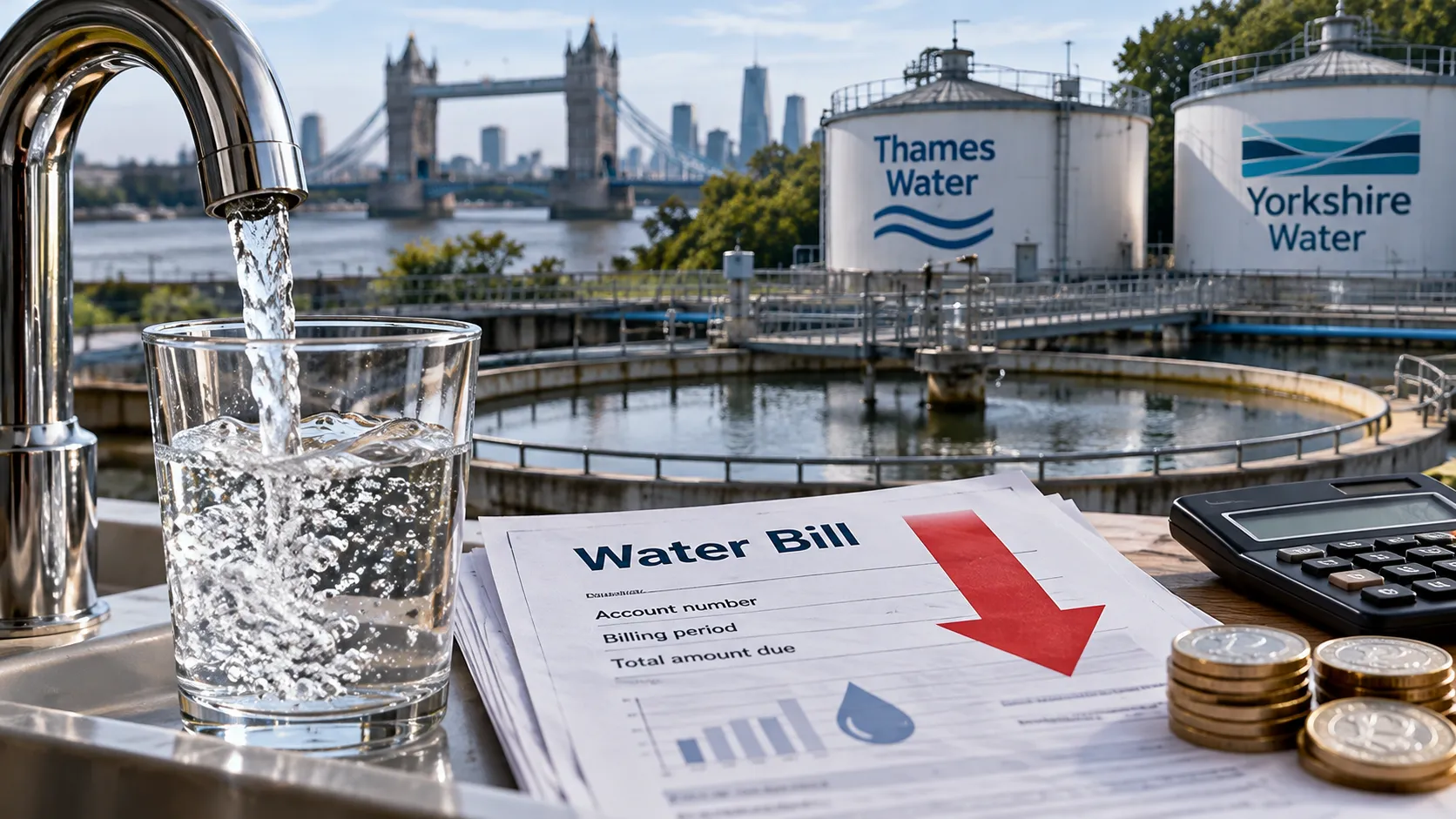
England and Wales water regulator Ofwat has proposed that companies return a net £240 million to customers through lower bills for missing 2025-26 service targets, with Yorkshire Water and Thames Water facing the largest penalties and Severn Trent and Northumbrian earning the biggest rewards.

By Prathista Lazar · Author15 October 2026New
Ofwat Proposes £240 Million Net Cut to Water Bills as Thames and Yorkshire Face Largest Penalties

Water companies in England and Wales should return a net £240 million to customers through lower bills after failing to meet a range of service targets, the industry regulator Ofwat proposed on 14 October.

The draft decisions, covering companies' performance in the 2025-26 financial year, would see £107 million of that sum returned through customer bills in 2027-28. Yorkshire Water and Thames Water face the largest penalty payments, which would be applied in April 2027, while Severn Trent Water and Northumbrian Water would receive the largest rewards for beating their targets.

The figures are provisional. Ofwat said they "do not mean every household will see the same change", because the effect on bills varies by company and customer type. Final decisions are due by 15 December 2026 and will affect bills from 1 April 2027.

How the Penalties and Rewards Work

The adjustments stem from targets that Ofwat set for each company at its 2024 price review, the five-yearly process that determines how much water companies can charge customers and what they must deliver in return.

Most of those targets carry financial incentives known as Outcome Delivery Incentives. Companies that beat their targets, for example by reducing leakage faster than required or improving customer service, earn outperformance payments, which allow them to collect more revenue. Companies that fall short face underperformance payments, which reduce the revenue they can collect from customers.

The targets cover areas including leakage, customer service and the experience of business customers. The net £240 million figure is the balance of penalties and rewards across the industry, meaning some companies will be allowed to increase bills slightly while others must reduce them.

Final determinations will also reflect decisions on changes to allowed revenue resulting from these incentive payments, as well as Ofwat's process for handling changes in costs since the price review.
5a5dba17-7fe4-4693-9ca2-991ee7e21da3.png

A Sector Under Intense Scrutiny

The proposals arrive at a time of deep public anger with the water industry in England and Wales. Sewage spills into rivers and seas, persistent leakage, rising bills and the financial difficulties of some companies have made water one of the most politically charged sectors in the UK economy.

Thames Water, the country's largest water company, which serves around 16 million customers in London and the Thames Valley, has faced prolonged financial strain and repeated criticism over its environmental performance. Its position among the companies facing the largest penalties is likely to add to scrutiny of its operations.

The government has signalled it will take a hard line. "This Government won't allow customers to be treated as a blank cheque," a government spokesperson said, adding that ministers are committed to protecting households from cost-of-living pressures and will challenge companies that try to pass unnecessary costs on to customers.

In 2025, the government announced plans to overhaul water regulation, including replacing Ofwat with a single new regulator, following an independent review of the sector.

The £104 Billion Investment Challenge

The performance penalties sit alongside a vast investment programme. At the 2024 price review, Ofwat approved an initial £104 billion of upgrades to water and wastewater services over the five years to 2030. The money is intended to expand sewage treatment capacity, replace ageing pipes and networks, and build resilient infrastructure to meet growing demand for water.


“This Government won't allow customers to be treated as a blank cheque.”
— UK Government spokesperson

"The responsibility now sits with water companies to deliver it," Ofwat said.

That investment comes at a cost to customers. Bills in England and Wales have risen substantially as a result of the price review, which allowed companies to increase charges to fund their spending plans. The performance-based adjustments announced this week are therefore one of the few mechanisms through which customers can see some money returned when companies fall short.

Mixed Performance Across the Industry

The draft decisions highlight the wide gap in performance between the best and worst water companies. Severn Trent, which serves the Midlands, and Northumbrian Water, which serves the north-east of England and parts of the south-east, have been among the industry's stronger performers and stand to receive the largest rewards.

At the other end, Yorkshire Water and Thames Water face the largest penalties. Ofwat will publish a fuller assessment of company performance later in October in its Operational Performance Report, formerly known as the Water Company Performance Report.

Critics of the incentive regime argue that the sums involved are small relative to the size of the companies and the scale of their investment programmes, and that a net £240 million spread across millions of households amounts to only a modest reduction for each bill payer. Supporters counter that the mechanism gives companies a direct financial reason to improve everyday services such as fixing leaks and answering customer complaints, and that the system rewards better performers rather than only punishing failures. The debate matters for the design of any successor regulator: whether to strengthen financial incentives, rely more heavily on direct enforcement and fines, or shift towards tougher requirements on how companies are financed and governed.

Why It Matters Beyond the UK

The UK water sector offers lessons for policymakers and investors elsewhere. Its model of privatised utilities regulated through incentive-based price controls has been studied around the world. The difficulties it now faces, from underinvestment and environmental damage to stretched company balance sheets, have prompted debate about whether the model balanced investor returns, customer bills and long-term infrastructure needs effectively.

For countries such as India, which are investing heavily in water infrastructure through programmes such as the Jal Jeevan Mission and urban water and sanitation schemes, the British experience underlines the importance of strong regulation, transparent performance measurement and sustained investment in maintenance as well as new assets.

What Happens Next

Ofwat's draft decisions are open for consultation, giving companies and other stakeholders an opportunity to respond before final determinations in December. Companies facing penalties may challenge aspects of the assessment, and the final figures could change.

For households, the immediate impact will be modest and will vary by region. But the decisions send a clear signal: in a sector where customers are paying more to fund a record investment programme, failing to meet service standards will carry a financial cost. Whether those penalties are large enough to change company behaviour remains a central question in the debate over the future of water in England and Wales.

TagsOfwatWater IndustryThames WaterYorkshire WaterSevern TrentNorthumbrian WaterUtilities RegulationWater BillsLeakageInfrastructureESGUKCustomer ServicePrice Review

Reader reviews

Sign in to rate and review this article.
Loading reviews…