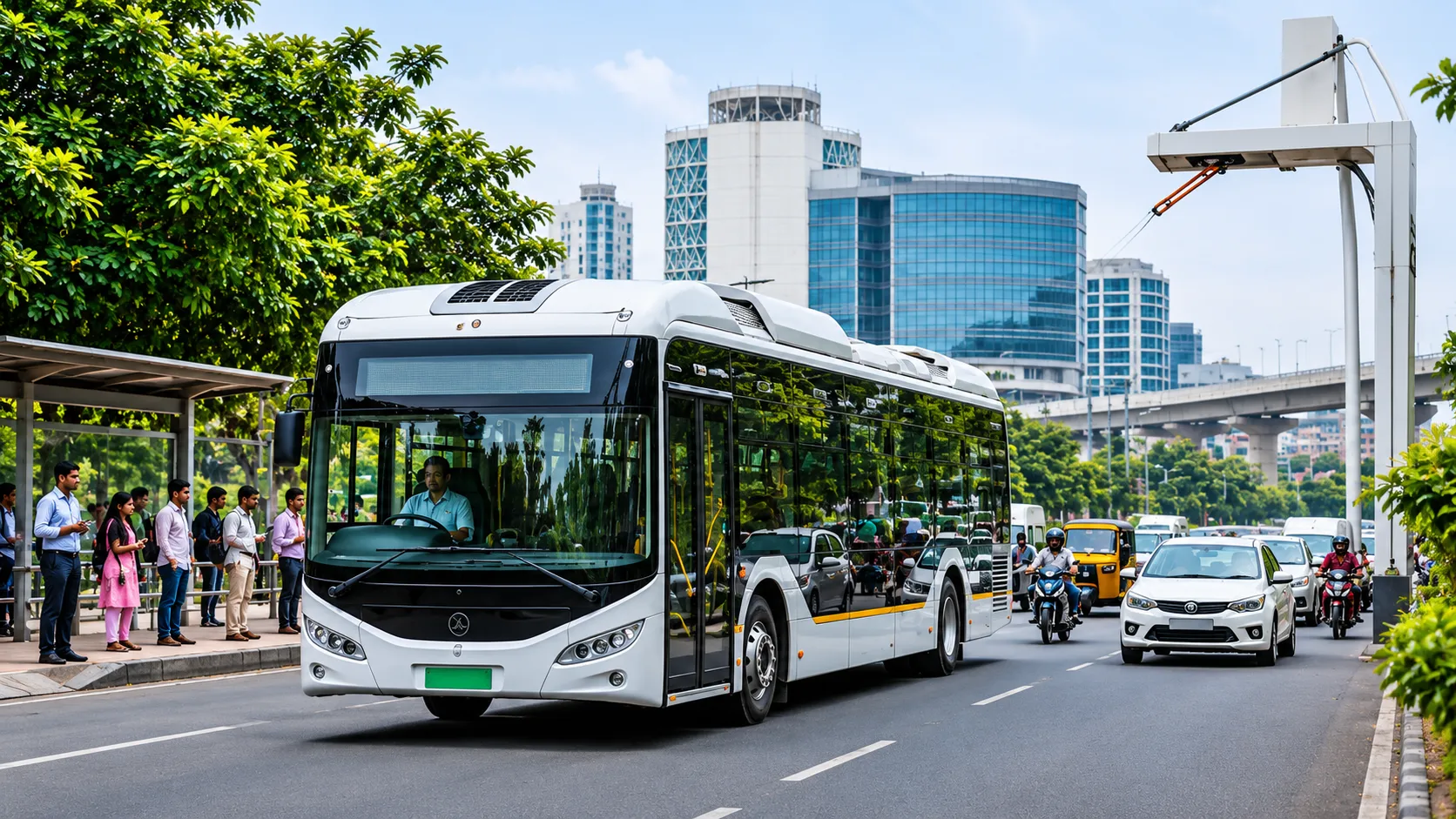
Olectra Greentech, a Hyderabad-based manufacturer of electric buses, reported modest growth in quarterly profit as it ramps up production to meet a large backlog of orders from cities and state transport authorities across India.
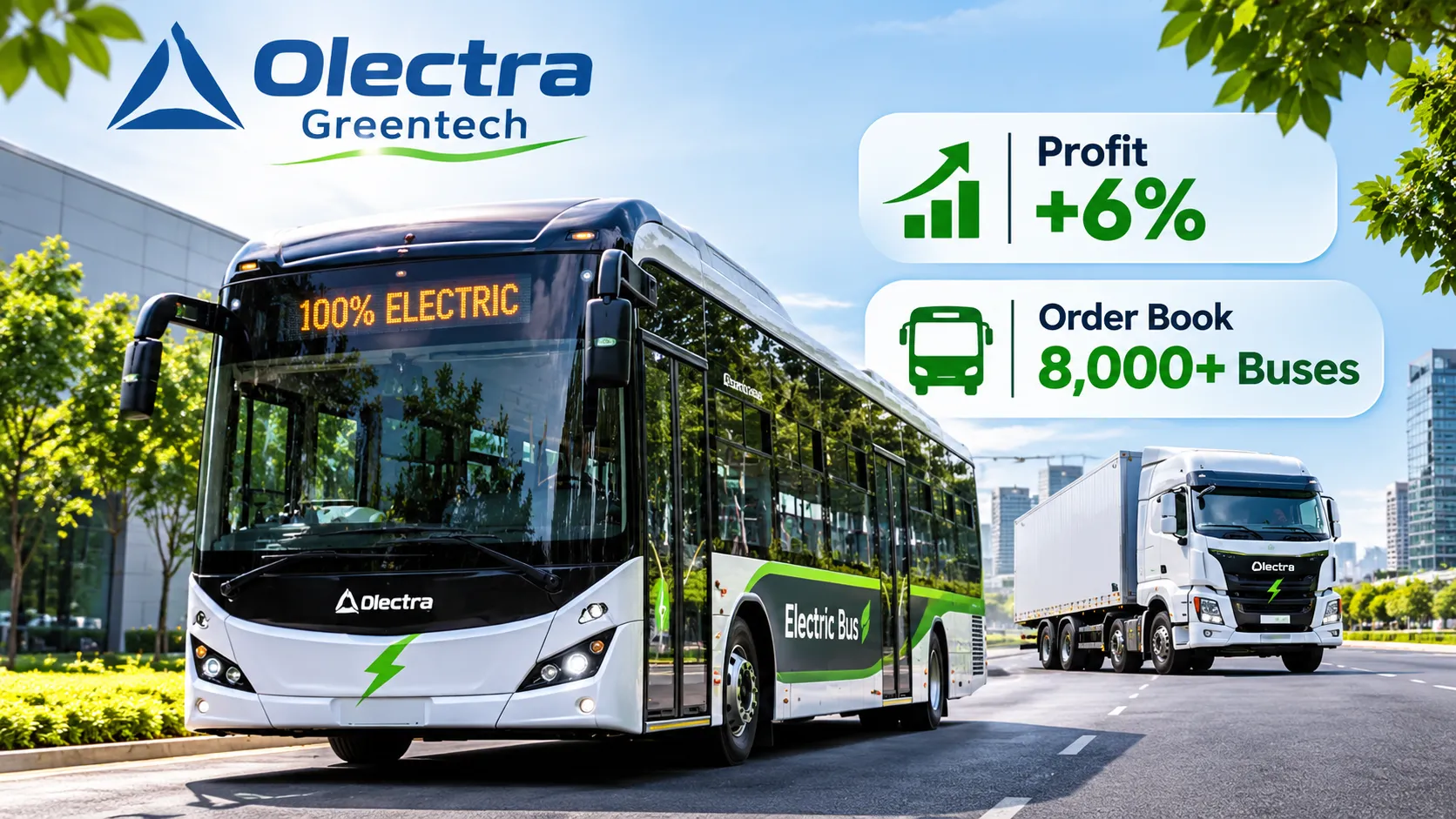
The company's consolidated net profit rose 6% to ₹53 crore for the July-September quarter, the second quarter of the 2026-27 financial year, from ₹50 crore a year earlier, according to Upstox, citing results announced on Monday, November 9. Revenue rose 5% to ₹687 crore from ₹657 crore, and EBITDA increased 3% to ₹92 crore, giving an EBITDA margin of about 13.4%.
A large order book
Olectra's growth is underpinned by a substantial order book. The company had an order backlog of more than 8,000 electric buses, scheduled for execution over the next two years, according to Sahi Markets. It has set a target of delivering 2,000 to 2,500 electric buses in the 2026-27 financial year.
The company planned a quarterly ramp-up, from 358 buses delivered in the first quarter to a target of 500 in the second quarter and 600 to 700 in the fourth quarter, according to Sahi Markets. It has guided for an EBITDA margin of 12% to 15%.
In the first quarter, Olectra's consolidated revenue rose 65.75% year-on-year to ₹575.51 crore, while its EBITDA margin was 12.67%, down from 16.12% a year earlier. The second quarter's revenue of ₹687 crore represents strong sequential growth of about 19%, and the margin improved from the first quarter.
About Olectra
Olectra Greentech is part of the Megha Engineering & Infrastructures (MEIL) group, one of India's largest infrastructure companies. It manufactures electric buses, and also produces composite polymer insulators for the power sector. The company has been one of the pioneers of electric buses in India, supplying buses to state transport undertakings and city bus operators, including in Telangana, Maharashtra and other states.
Olectra's electric buses have been used in some of India's largest electric bus fleets, including in Mumbai and Hyderabad.
Into electric trucks
Olectra plans to enter the heavy-duty electric truck segment, covering vehicles of 28 to 55 tonnes, by the fourth quarter of the 2026-27 financial year, according to Sahi Markets. The company will invest ₹400 crore over two years, targeting applications such as haulage, mining and concrete mixers. Its parent, MEIL, which operates large construction and infrastructure projects, is expected to provide demand.
Heavy trucks are a significant source of emissions and air pollution, and electrifying them is a priority for India's climate goals. However, electric trucks face challenges, including high battery costs and the need for charging infrastructure that can handle heavy vehicles.
India's electric bus push
India has made electric buses a central part of its strategy to reduce air pollution in cities and cut dependence on imported oil. The PM e-Bus Sewa scheme aims to deploy thousands of electric buses in cities across the country, and the PM E-DRIVE scheme supports the purchase of electric buses by state transport undertakings.
Many state governments and cities have tendered large orders for electric buses, often through a gross cost contract model, in which manufacturers or operators supply and operate buses and are paid per kilometre. This model reduces upfront costs for cities and shifts responsibility for operations and maintenance to the operator.
Olectra's managing director has previously said that India's electric bus market could reach 8,000 units in the 2026-27 financial year, according to EV Reporter.
Competition
Olectra competes with several other electric bus manufacturers, including Tata Motors, JBM Auto, PMI Electro Mobility, Switch Mobility (part of Ashok Leyland) and EKA Mobility. Competition for large government tenders is intense, and pricing can be aggressive.
Execution is a key challenge. Manufacturers must deliver buses on time and maintain them reliably over long contracts. Delays in delivery can affect revenue recognition and relationships with transport authorities.
Environmental impact
Electric buses produce no tailpipe emissions, improving air quality in cities that suffer from some of the worst air pollution in the world. Each electric bus replacing a diesel bus can significantly reduce emissions of particulate matter and nitrogen oxides, as well as carbon dioxide, depending on the electricity mix. As India adds more renewable energy to its grid, the climate benefits of electric buses will grow.
Public transport is also crucial to reducing congestion and emissions from private vehicles. Modern, comfortable electric buses can encourage more people to use public transport rather than cars and two-wheelers.
Funding the transition
Financing electric buses remains a challenge for many state transport undertakings, which often face financial difficulties. Electric buses are more expensive to buy than diesel buses, although they cost less to operate because electricity is cheaper than diesel and electric motors require less maintenance. The gross cost contract model and central government subsidies help bridge the gap, but timely payments to manufacturers and operators are crucial to the model's sustainability.
Charging infrastructure at bus depots is another requirement, adding to the cost and complexity of transitioning to electric fleets.
Make in India
Olectra manufactures its buses in India, supporting the government's push for domestic manufacturing of electric vehicles and components. Localising batteries, motors and electronics can reduce costs and dependence on imports, particularly from China, which dominates the global supply of battery materials. The government's production-linked incentive schemes for advanced battery chemistry cells and automotive components aim to build a domestic supply chain.
Olectra's results also come as India's broader electric vehicle market gathers pace. Electric two-wheelers and three-wheelers have led adoption, while electric car sales are rising from a low base. Electric buses are a particularly visible part of the transition in cities, where they replace older diesel buses that contribute to air pollution. Cities such as Delhi, Mumbai, Bengaluru and Hyderabad have deployed large fleets of electric buses, and more cities are following. For manufacturers such as Olectra, the challenge is to scale production, maintain quality and manage costs while meeting the delivery schedules set by transport authorities.
What comes next
Investors will watch whether Olectra can accelerate deliveries to meet its full-year target, maintain margins within its guidance and successfully enter the electric truck market. With a large order book and strong government support for electric public transport, the company is well positioned to benefit from India's shift to clean mobility, provided it can execute at scale.