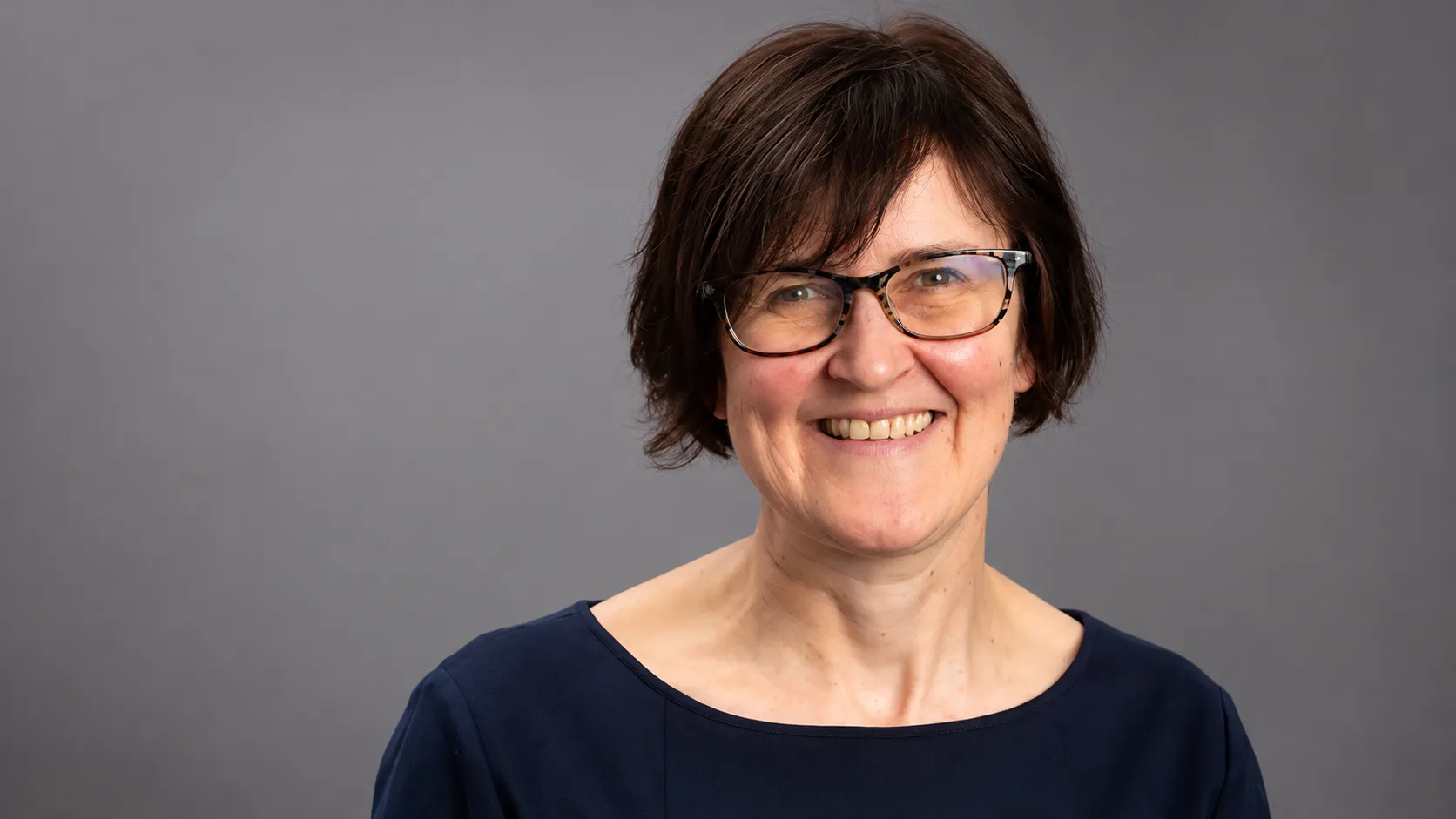
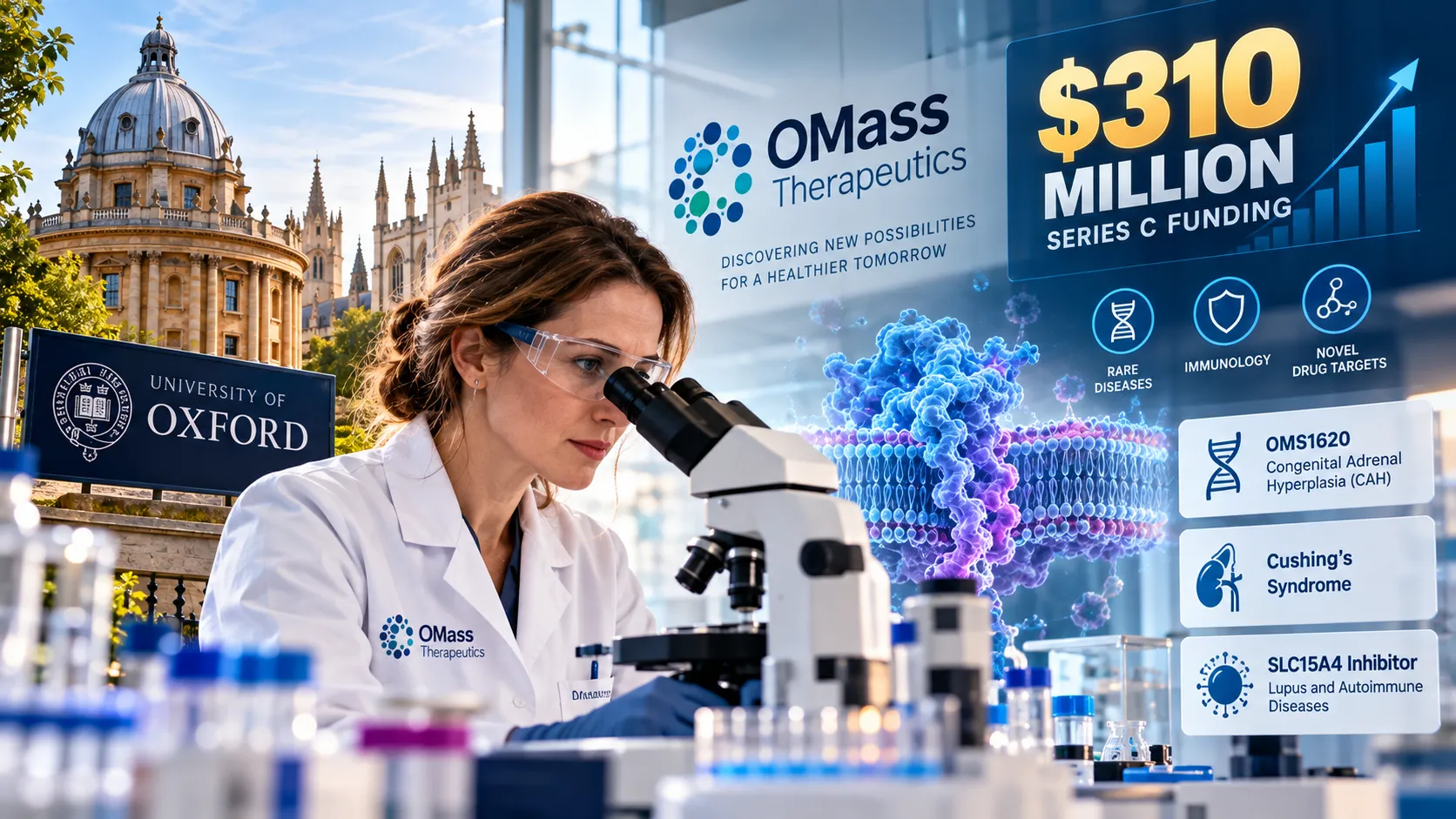
OMass Therapeutics, a University of Oxford spinout led by chief executive Ros Deegan, has raised $310 million in an oversubscribed Series C round, one of the largest private financings for a British biotech company and a sign that investors are again willing to back drug developers at scale.
The round, worth about £230 million, was co-led by Bain Capital Life Sciences, Forbion and Novo Holdings, according to an announcement on 15 October by Syncona, one of the company's largest shareholders. Janus Henderson Investors, SV Health Investors and Jefferson Life Sciences also participated, alongside all existing investors, including Oxford Science Enterprises, GV, Northpond Ventures, Sanofi Ventures, British Patient Capital and the University of Oxford.
The financing brings OMass's total capital raised to about $475 million, or £360 million.
A Woman at the Helm of a Biotech Scale-Up
Deegan's leadership of OMass places her among a relatively small group of women running heavily funded biotechnology companies. Women remain significantly underrepresented in chief executive roles at venture-backed life sciences companies, particularly at the growth stage, where rounds of hundreds of millions of dollars are raised.
Deegan said the financing comes as OMass advances its lead programme into the clinic, with a second candidate poised to follow, giving the company the "resources to translate that progress into a portfolio of clinically differentiated medicines."
The Science: Seeing Drug Targets Differently
OMass develops small-molecule medicines for rare diseases and immunological conditions using its OdyssION platform, which is built on native mass spectrometry. The technology allows researchers to study proteins, particularly membrane proteins, in a state closer to their natural environment inside cells, which can reveal opportunities to design drugs against targets that have proved difficult with conventional methods.
Many important drug targets, including receptors and transporters embedded in cell membranes, are hard to study because they lose their structure or interactions when removed from their natural setting. Platforms that can preserve those interactions may open up new classes of medicines.
The Pipeline
The lead programme, OMS1620, is being developed as a potential best-in-class treatment for congenital adrenal hyperplasia (CAH), a group of inherited disorders that affect the adrenal glands' ability to produce hormones such as cortisol. Patients often require lifelong steroid treatment, which can cause significant side effects. The new funding will take OMS1620 into the clinic and through Phase 2 development.
The round will also support development in ACTH-dependent Cushing's syndrome, a condition caused by excess cortisol production.
OMass is also developing an inhibitor of SLC15A4, a protein involved in immune signalling, for lupus and related autoimmune diseases. The funding will support early clinical data for this next candidate. All of the company's programmes are investigational and have not been approved by regulators.
Investor Confidence in British Biotech
The size and composition of the syndicate are notable. Bain Capital Life Sciences, Forbion and Novo Holdings are among the most active and experienced specialist investors in the sector, and their decision to co-lead a $310 million round signals strong conviction in OMass's science and management.
Edward Hodgkin, managing partner of Syncona Investment Management and an OMass board director, said: "It is encouraging to see high-quality UK early-stage companies attract capital at scale in areas of high innovation." He described the syndicate as an external validation of the company's technology.
Syncona committed $10.1 million to the round. It said its holding was written up by £4.7 million, a 9.4 per cent uplift on its June valuation, and that it will own 16.1 per cent of OMass once the Series C is fully drawn down.
Why It Matters
The United Kingdom has a strong record in life sciences research, anchored by universities such as Oxford and Cambridge, but has often struggled to grow its biotech companies into large, independent businesses. Many promising British companies have been acquired early or have moved key operations abroad in search of capital.
Large late-stage private rounds such as OMass's suggest that capital is available for UK companies with strong science and clinical momentum, potentially allowing them to grow further before considering an acquisition or public listing.
For patients with rare endocrine and autoimmune diseases, the funding could accelerate the development of treatments for conditions where options remain limited.
Why Rare Diseases Attract Capital
OMass's focus on rare diseases reflects a broader trend in biotechnology investment. Rare diseases often have clearly defined patient populations, well-understood biology and significant unmet medical need, which can make drug development more targeted. Regulators in the United States and Europe offer incentives for so-called orphan drugs, including market exclusivity and support during development, and successful treatments can command premium prices.
Congenital adrenal hyperplasia is an example of a condition where existing treatment is effective but imperfect. Patients typically take steroids to replace the hormones their bodies cannot make and to suppress the excess production of other hormones, but finding the right dose is difficult and long-term steroid use can cause side effects ranging from weight gain to bone loss. New mechanisms that address the underlying hormonal imbalance more precisely could improve patients' quality of life, which helps explain investor interest in programmes such as OMS1620.
Oxford's role in OMass's story also illustrates the growing commercial strength of British university spinouts. Oxford Science Enterprises, which backs companies emerging from the university, has invested in a series of life sciences and technology spinouts, and several have raised large rounds in recent years. Strong links between academic research, specialist investors and experienced management teams have become central to the UK's strategy for building a globally competitive life sciences industry.
Lessons for India's Biotech Ecosystem
For India, which is seeking to move its pharmaceutical industry from generics manufacturing towards novel drug discovery, the OMass story offers a template. University spinouts with differentiated platform technologies, supported by patient specialist capital over many years, are the foundation of successful biotech ecosystems. Building that combination of deep science, experienced investors and long-term funding remains one of the key challenges for India's life sciences ambitions.
As OMass moves its lead drug into human trials, the coming years will determine whether its platform can deliver on its promise. With $310 million in fresh funding and one of the strongest investor syndicates in European biotech behind it, the company now has the resources to find out.