Agrifood startups backed by venture capital firm Omnivore have reached 20.81 million smallholder farmers and 61,711 rural micro, small and medium enterprises across India, according to the firm's 2026 impact reports, which cover two of its funds.
The reports, released on 29 September 2026, estimate that portfolio companies have generated $5.64 billion in combined economic value for smallholder farmers, directly and indirectly. They also record 11.55 million hectares brought under sustainable agriculture, $2.18 billion in insurance coverage for rural households and $63.62 million in loans to rural MSMEs.
The figures offer one of the most detailed attempts to quantify the impact of venture-backed innovation on Indian agriculture, a sector that employs a large share of the country's workforce but has historically attracted only a small fraction of its startup investment. They also arrive at a moment when investors are asking harder questions about whether agritech can deliver both returns and meaningful change for farmers.
A portfolio built around the farm
Omnivore has invested in India's agriculture and food economy since 2011 and currently manages $295 million across two active venture funds. Its portfolio spans businesses in farmer services, rural finance, consumer brands and deep technology.
Among its better-known companies are DeHaat, which provides farmers with inputs, advisory services and market linkages; Arya.ag, a grain commerce platform that offers storage and finance to farmers and traders; Sid's Farm, a dairy brand focused on quality and traceability; Varaha, a climate technology company working on carbon removal and regenerative agriculture; Farmley, a healthy snacking brand that sources dry fruits and nuts from farmers; and Pixxel, a hyperspectral satellite imaging company whose data can be used to monitor crops and land.
The diversity of the portfolio reflects Omnivore's thesis that improving farmer livelihoods requires progress on several fronts at once: access to better inputs and advice, fairer and more efficient markets, affordable credit and insurance, and new technologies that make farming more productive and resilient.
Reading the numbers
Impact measurement in venture capital is notoriously complex, and the figures should be read with that in mind. "Reach" typically refers to the number of farmers who have interacted with a portfolio company's products or services, which can range from a single transaction to a long-term relationship. Economic value estimates depend on assumptions about how much a service improves incomes or reduces costs, and "indirect" value may include benefits that are difficult to attribute precisely.
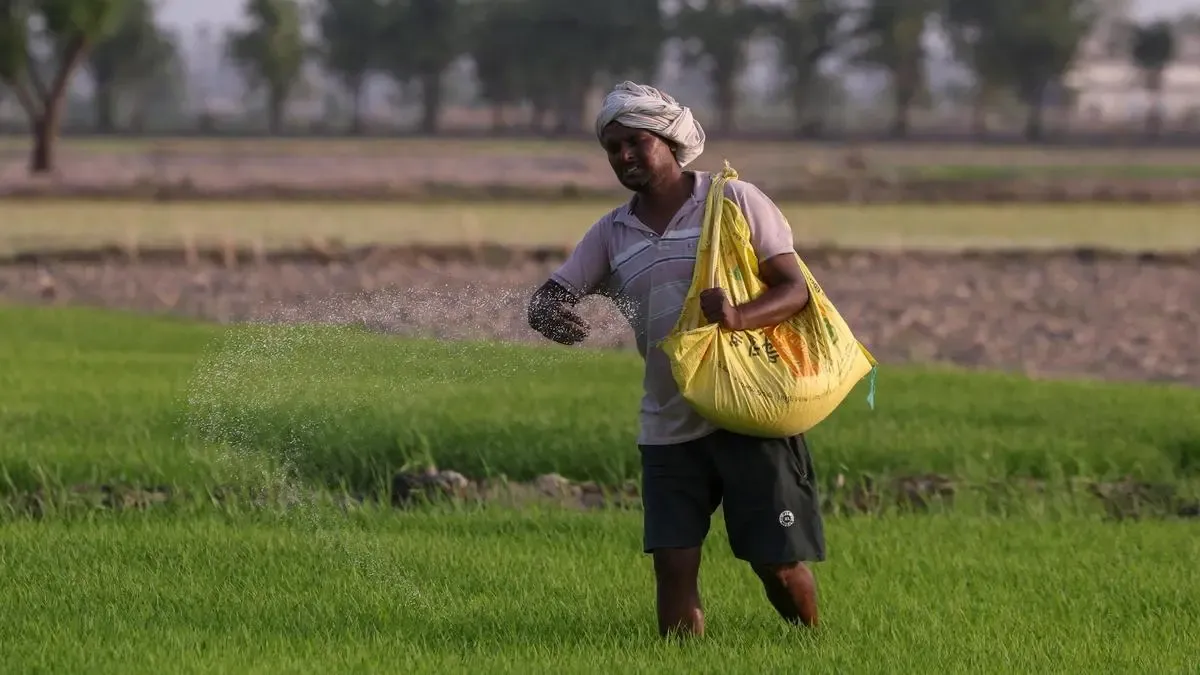
Even so, the scale is significant. India has an estimated 140 million or more farm holdings, the large majority of them small and marginal. Reaching more than 20 million farmers means Omnivore's portfolio companies are touching a meaningful share of the country's agricultural households. The 11.55 million hectares under sustainable agriculture, if the practices are maintained, would represent a substantial contribution to soil health and emissions reduction.
The insurance and credit figures highlight another dimension. Smallholder farmers are acutely exposed to weather shocks, price swings and health emergencies. Access to insurance and working capital can determine whether a bad season is a setback or a catastrophe. The $2.18 billion in insurance coverage and $63.62 million in MSME loans point to efforts to build financial resilience in rural communities.
Agritech's tough decade
The reports come after a turbulent period for Indian agritech. The sector attracted a surge of investment between 2019 and 2022, as investors bet that digital platforms could transform the farm-to-fork supply chain. Some companies raised large rounds at high valuations, only to struggle with thin margins, high operating costs and the complexity of serving millions of dispersed customers.
Several business-to-business agri-commerce startups have since restructured, cut staff or pivoted. Investors have become more cautious, favouring companies with clear paths to profitability and defensible advantages. In that environment, the ability to demonstrate measurable outcomes for farmers has become a way for agritech investors to differentiate their approach and attract capital from impact-focused limited partners.
Omnivore's long history in the sector gives it a vantage point. Having invested through several cycles, the firm has seen which models work and which do not. Its emphasis on impact reporting also reflects the expectations of its investors, many of whom are development finance institutions and foundations that require evidence of social and environmental outcomes alongside financial returns.
Climate and agriculture
The sustainability figures carry particular weight. Agriculture is both a contributor to and a victim of climate change. Farming practices such as flooding rice paddies, burning crop residue and overusing fertilisers generate greenhouse gas emissions and degrade soils. At the same time, rising temperatures, erratic monsoons and extreme weather events threaten yields and livelihoods.
Companies such as Varaha, which works with farmers to adopt practices such as direct seeding of rice, reduced tillage and agroforestry, aim to address both sides of the equation. By generating carbon credits from verified emissions reductions and removals, they seek to create a new income stream for farmers while contributing to climate goals. The model depends on robust measurement and on buyers willing to pay for high-quality credits, both of which remain works in progress globally.
## Why impact reporting is gaining ground
Omnivore's decision to publish detailed impact data also reflects a shift in how venture investors in emerging markets are held accountable. Limited partners such as development finance institutions increasingly require standardised reporting on outcomes, often aligned with frameworks such as the Impact Management Project or the IRIS+ metrics catalogue. Transparent reporting allows them to compare portfolios and to justify allocations to their own stakeholders.
For founders, the discipline of measuring impact can sharpen strategy. Tracking how many farmers use a service repeatedly, how their incomes change and which products deliver the greatest benefit can reveal what customers value most, and where a business should focus its resources.
What the reports mean
For India's agriculture sector, the Omnivore reports provide evidence that venture-backed companies can operate at meaningful scale in rural India. For investors, they offer a template for measuring and communicating impact in a way that goes beyond anecdotes.
The challenge ahead is to translate reach into durable improvements in farmer incomes. India's farmers continue to face low productivity, small and fragmented landholdings, volatile prices and limited bargaining power. Technology and better markets can help, but they operate within a policy environment shaped by minimum support prices, subsidies and state-level regulations.
What the reports make clear is that the ambition of agritech has matured. The early promise of disrupting agriculture has given way to a more grounded focus on specific problems: access to credit, fair prices, better inputs, climate resilience. Omnivore's portfolio numbers suggest that progress is possible. The next decade will show whether it can be sustained, deepened and turned into lasting prosperity for the millions of families who grow India's food.