Parallel Systems, a start-up founded by former SpaceX engineers, has raised $100 million in a Series C round to scale production of a battery-powered, driverless rail vehicle that it hopes will win short-distance freight back from trucks.
The round, reported by TechCrunch on 7 October, was led by AVP, with participation from Hillspire, Agility Global, Cobalt Capital, Anthos Capital, Congruent Ventures, Riot Ventures and Collaborative Fund. The company said the money would go towards building more of its third-generation vehicle, called the Panther, and speeding up its commercial rollout.
The raise roughly doubles the capital the company has attracted. When it closed a $38 million Series B led by Anthos Capital in April 2025, Progressive Railroading reported that its total funding stood at $100 million.
A rail car that behaves more like a truck
Parallel was founded in 2020 by Matt Soule, its chief executive, together with co-founders who had worked at SpaceX designing avionics systems for rockets. The company is based in Los Angeles, according to FreightWaves.
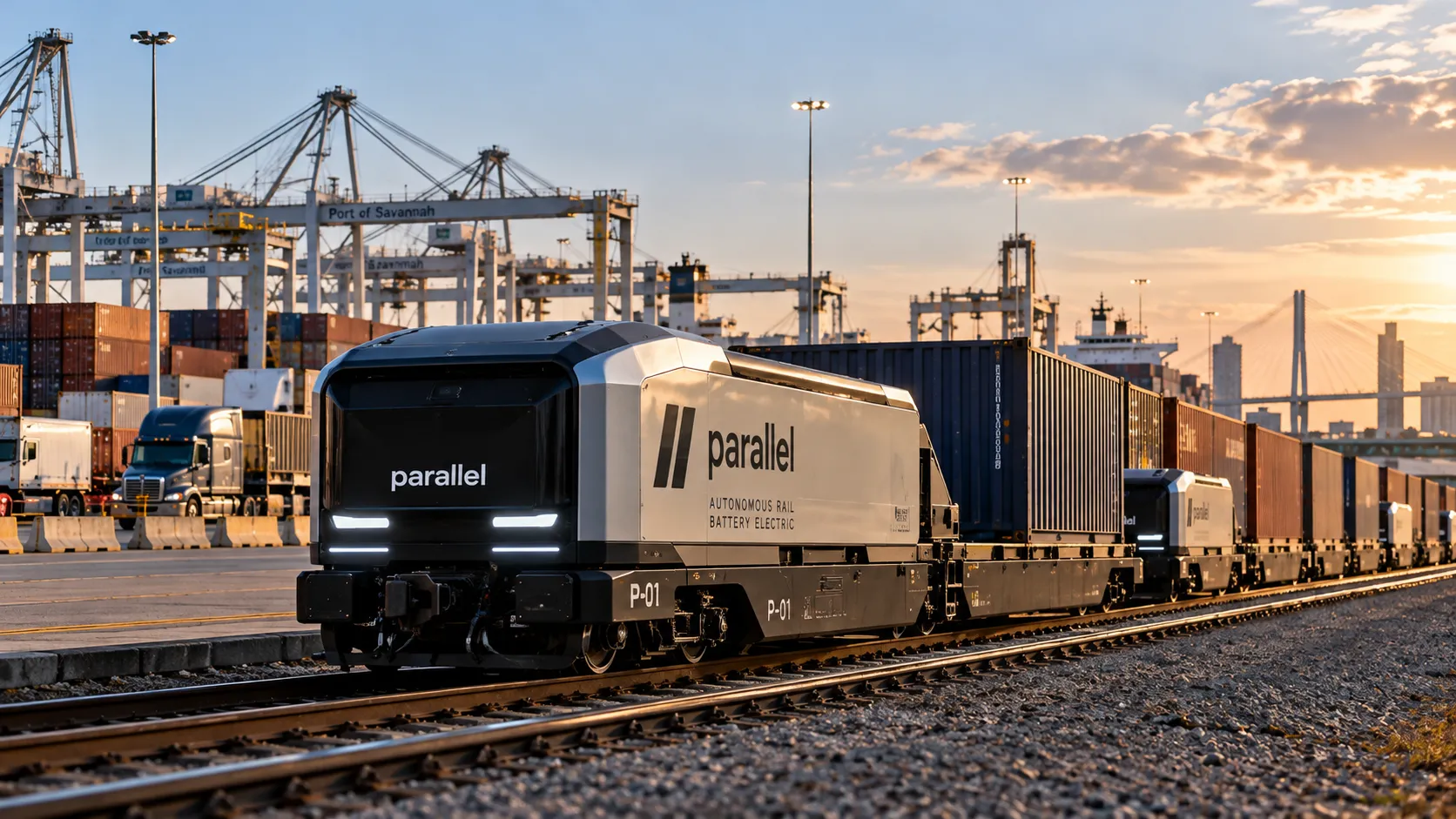
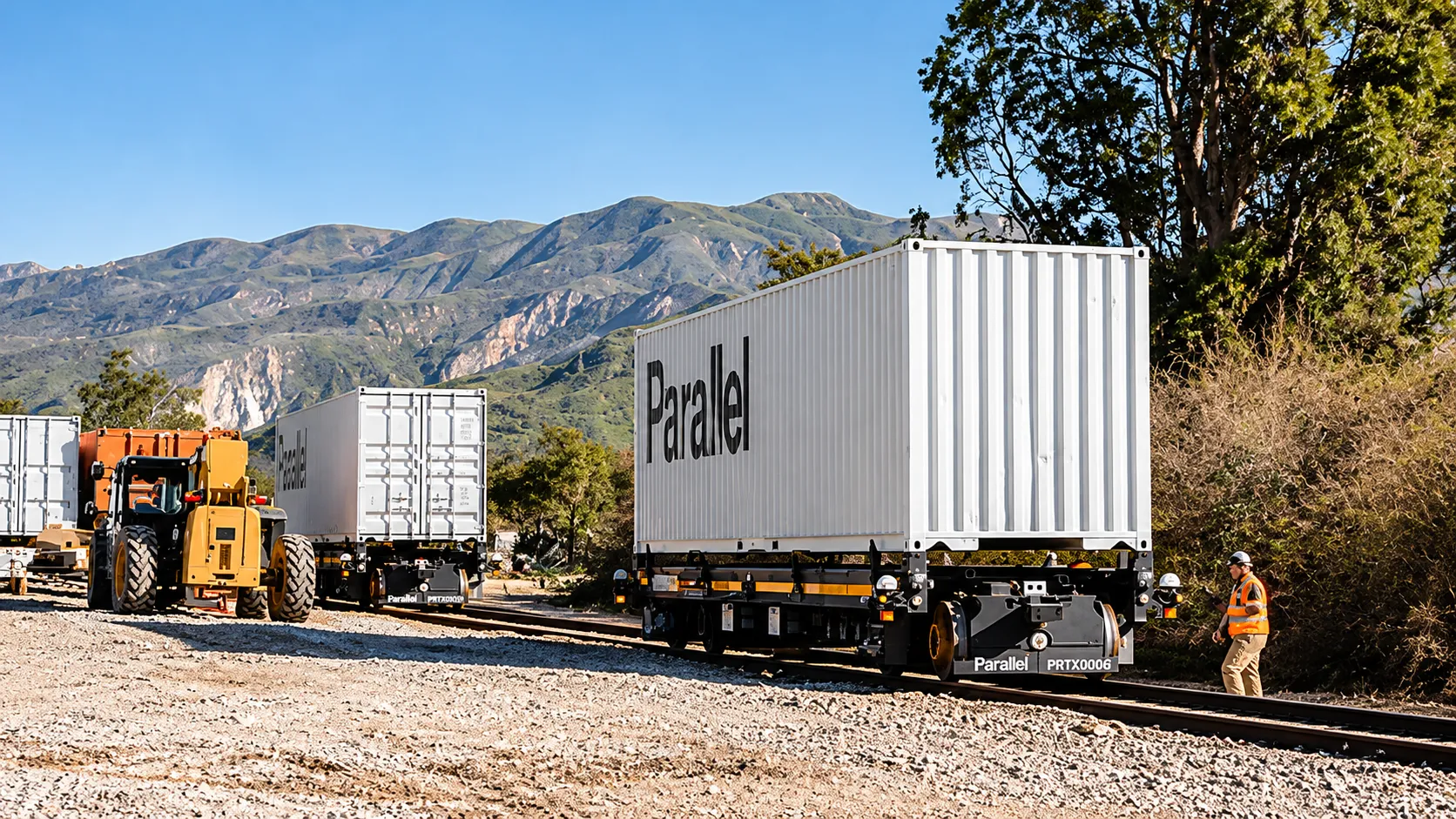
The Panther is an autonomous, battery-electric rail vehicle that runs without an operator and has a maximum range of 500 miles. Each unit carries freight on its own, and vehicles can also travel together in platoons that are much shorter than conventional freight trains. Because the vehicles have no couplers, a platoon can split up in a rail yard without anyone stepping in. Once a Panther is cleared to run on a section of track, onboard sensors scan ahead for obstacles.
That design is aimed squarely at a gap in American logistics. US surface freight is roughly a $1 trillion market, TechCrunch reported, and around 60% of freight trips in the country cover less than 500 miles. Trucks carry most of those loads, because railroads have largely retreated from shorter routes.
“Less than 500 miles is hard for railroads to do competitively,” Soule told TechCrunch. Big railroads have spent years pursuing so-called precision railroading, which favours longer trains and fixed schedules. Those trains are efficient over long distances but poorly suited to the frequent, smaller moves that ports and distribution centres need.
Parallel's argument is that small, self-driving electric units can offer the flexibility of a truck with the efficiency of steel wheels on steel rails. In April 2025 the company said groups of 10 to 30 vehicles could operate together in a platoon without couplings, and pitched the system as a way to cut shipping costs, pollution and highway congestion.
The funding is earmarked for what FreightWaves called the Generation 3 vehicle, which TechCrunch identified as the Panther. Moving from prototypes to production is often the most expensive phase for any hardware company, and the size of the Series C reflects the cost of building vehicles in numbers rather than one at a time.
Testing on 160 miles of Georgia track
Regulators have allowed the company to prove its case on real track. In April 2025 the Federal Railroad Administration approved Parallel's first commercial pilot, a 160-mile stretch across two Genesee & Wyoming short-line railroads in Georgia that connects the Port of Savannah to distribution operations further inland.
The pilot is being run in stages. FreightWaves reported in September that the programme is divided into seven phases, each of which needs federal sign-off before the next can begin. The first covered a two-mile segment of the Heart of Georgia Railroad. A later phase extends over 30 miles between Vidalia and an area east of Helena, crossing 43 public grade crossings that are protected by flaggers. The company said on social media that the key advance in that phase was moving to remote supervision rather than line-of-sight supervision in the field.