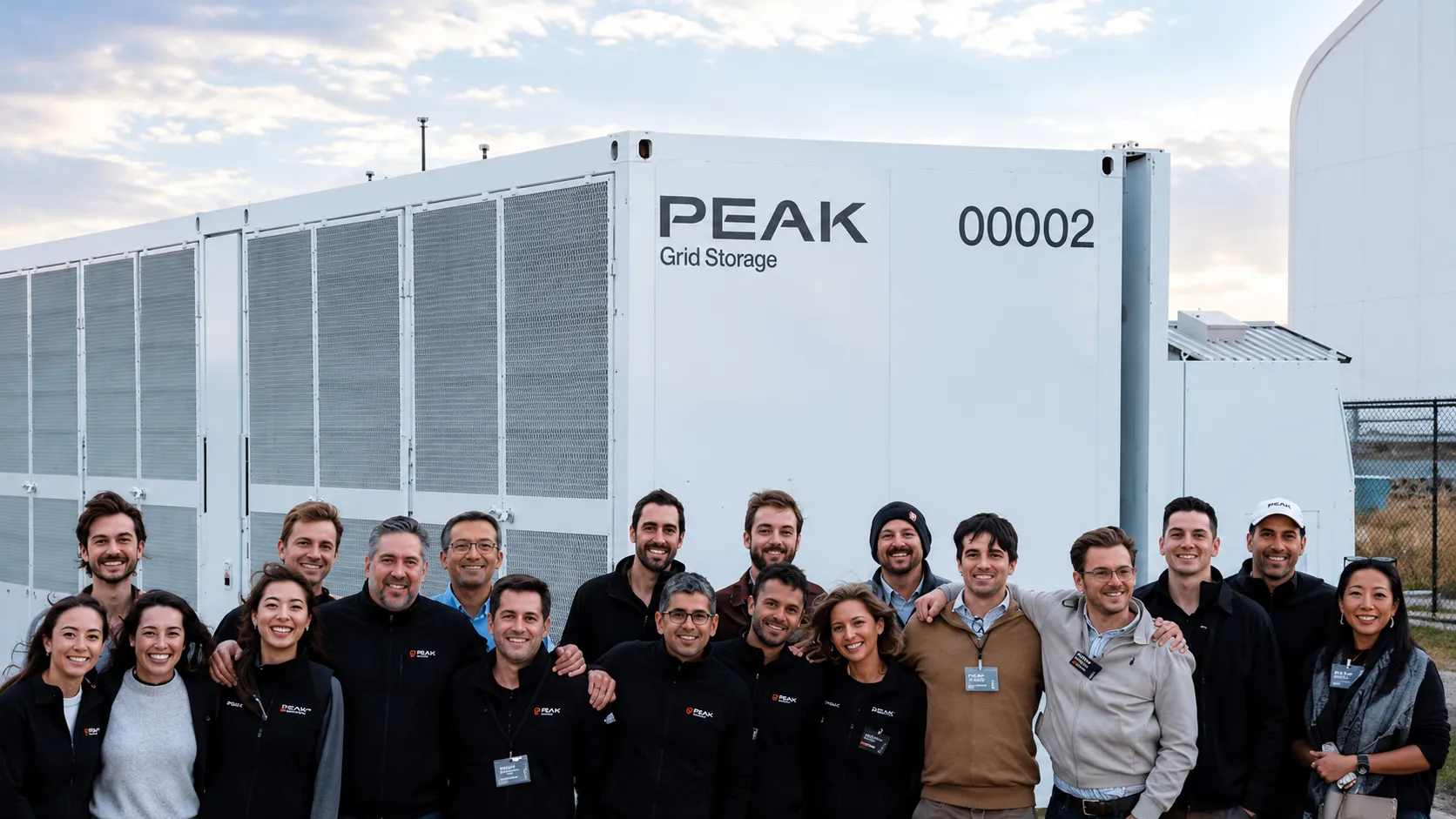
Peak Energy, a US startup building energy storage systems based on sodium-ion batteries, has raised $108 million to expand into one of the fastest-growing markets for electricity: data centres powering artificial intelligence.
The Series B round, announced on Thursday, October 22, was led by General Motors Ventures, the carmaker's venture capital arm, with participation from Maverick Silicon, Infinite Capital, Eclipse, Xora Innovation and LG Technology Ventures, ESG Today reported.
The California-based company, founded in 2023, said it would use the funds to enter the data centre market, scale domestic manufacturing and fulfil more than $1 billion in existing customer orders.
Why sodium-ion
Most grid-scale batteries today use lithium-ion chemistry, particularly lithium iron phosphate. Sodium-ion batteries replace lithium with sodium, one of the most abundant elements on Earth, found in common salt. That offers potential advantages in cost, supply security and safety.
Lithium supply chains are concentrated in a few countries, and China dominates the processing of battery materials and the manufacturing of cells. Sodium-ion technology could reduce dependence on these supply chains, an attractive prospect for US companies and policymakers seeking to build domestic manufacturing.
Sodium-ion batteries typically have lower energy density than lithium-ion, making them less suitable for applications where weight and size matter, such as long-range electric cars. But for stationary storage, where space is less constrained, cost, safety and longevity matter more.
A simpler design
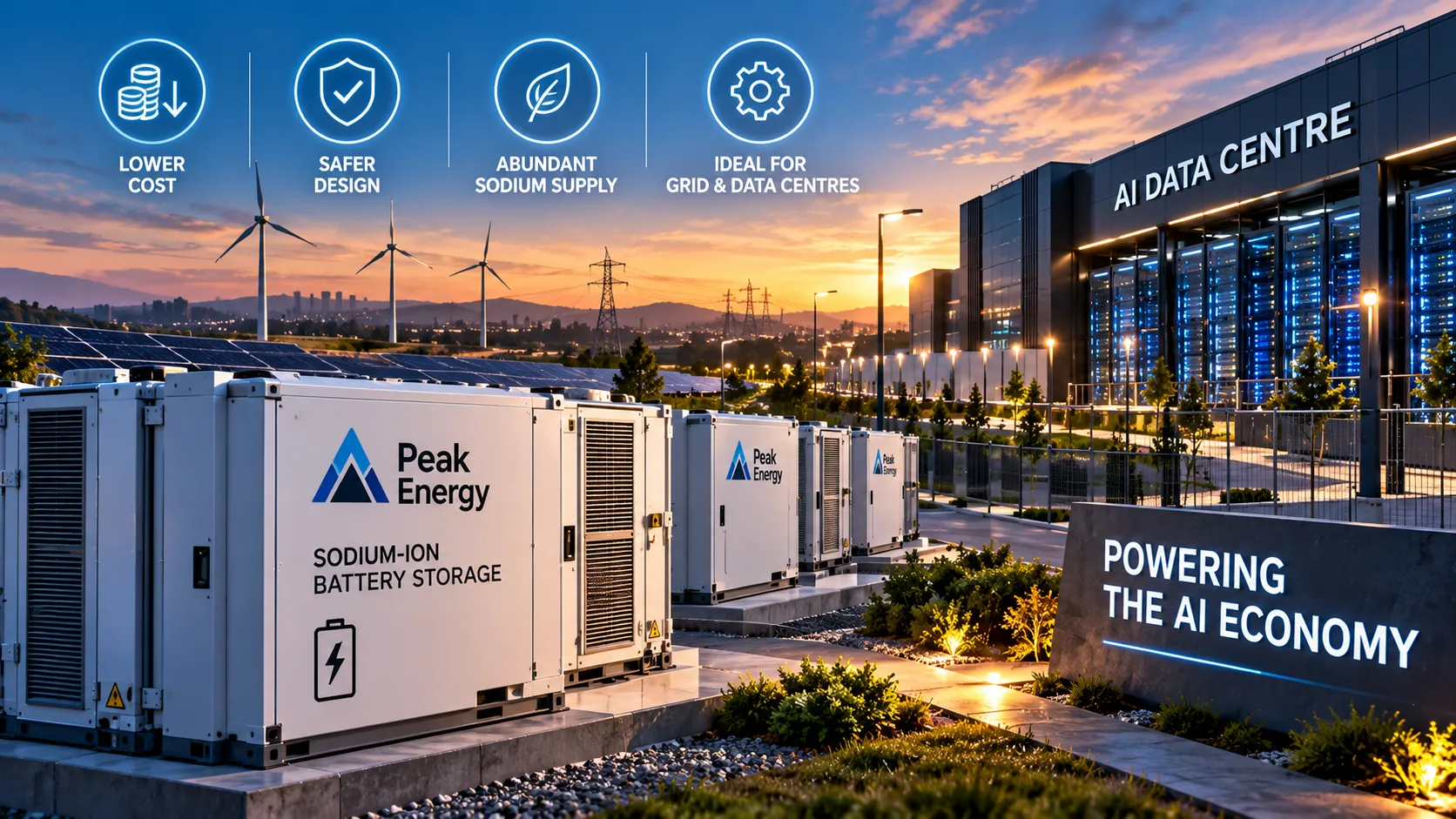
Peak Energy's storage system uses passively cooled sodium-ion batteries, eliminating the need for conventional active cooling systems that use fans, pumps or liquid coolant. The company claims this can cut energy costs by up to 20% compared with conventional storage, with longer operating life and lower lifetime ownership costs.
The system requires no planned maintenance and no water, runs quietly and is designed to reduce the risk of battery fires, according to the company. Fire safety is a significant concern for battery storage, and several high-profile fires at lithium-ion facilities have prompted local opposition to new projects.
The GM connection
GM's investment builds on an existing relationship. In June, Peak Energy announced a partnership with GM to co-develop next-generation sodium-ion battery cells, drawing on GM's experience in industrialising battery cell production in the United States. In July, Peak announced a 4 GWh factory in Sacramento, California, expected to begin production in the first quarter of 2027.
"GM Ventures is investing to help Peak Energy continue to scale this innovative technology," said Kevin McCabe, president of GM Ventures.
"The investment we announce today will supercharge Peak's ability to scale and deliver," said Landon Mossburg, co-founder and chief executive of Peak Energy.
For GM, the investment offers exposure to a battery chemistry that could have applications beyond grid storage, including potentially in lower-cost vehicles, as well as a stake in the booming energy storage market.
The data centre opportunity
The decision to target data centres reflects the dramatic growth in electricity demand from AI. Data centres require large amounts of reliable power, and operators are increasingly turning to on-site batteries to manage peak loads, provide backup power and integrate renewable energy.
Battery storage can help data centres operate more flexibly, drawing power from the grid when it is cheap and plentiful and using stored energy when demand peaks. That can reduce costs and ease strain on grids that are struggling to keep up with new connections.
The growth of AI data centres has created a race among energy companies, from utilities to startups, to supply clean, reliable power. Peak Energy's raise was one of several climate tech deals this week tied to data centre power, alongside Optivolt's $32 million raise for smart solar panels.
The competitive landscape
Sodium-ion technology is attracting investment around the world. Chinese battery giants, including CATL and BYD, have developed sodium-ion cells and are beginning to commercialise them, potentially at large scale. Several US and European startups are also working on the technology.
Peak Energy's emphasis on passively cooled system design and domestic manufacturing is intended to differentiate it in a market where Chinese manufacturers have significant cost advantages.
What it means for India
India is rapidly expanding battery energy storage to support its target of 500 GW of non-fossil power capacity by 2030. Storage is essential to address the evening peak in electricity demand, when solar generation falls, a challenge highlighted by recent power shortages in several states.
Sodium-ion technology is of particular interest to India, which has limited domestic lithium resources and imports most battery cells and materials. Indian companies, including Reliance Industries, which acquired UK-based sodium-ion company Faradion, are exploring the technology. Lower-cost, safer storage could accelerate India's energy transition while reducing import dependence.
The storage boom
Battery storage has become one of the fastest-growing segments of the energy industry. As solar and wind power expand, storage is needed to balance supply and demand, storing surplus energy when generation is high and releasing it when needed. Global installations have grown rapidly, and costs have fallen significantly over the past decade, largely due to Chinese manufacturing scale.
In the United States, policies supporting domestic manufacturing and concerns about reliance on Chinese supply chains have encouraged investment in alternative battery chemistries and US-based production. Trade restrictions and tariffs on Chinese batteries have increased the attractiveness of domestic alternatives, though they also raise costs for project developers.
Utilities, independent power producers and large energy users, including technology companies, are deploying storage at increasing scale. Data centres, in particular, are exploring storage not just for backup but to provide grid services and manage energy costs.
What comes next
Peak Energy's priorities are completing its Sacramento factory, delivering on its order backlog and winning data centre customers. Its progress will be watched as a test of whether sodium-ion batteries can compete at scale with established lithium-ion technology.
For the energy storage industry, the round signals growing investor confidence that alternative chemistries will play a significant role in powering the grid and the AI economy. If sodium-ion storage proves cheaper and safer at scale, it could also open new opportunities for manufacturers and developers in emerging markets such as India, where cost and safety are critical considerations for widespread deployment of grid batteries. The company's ability to deliver on its order book will be the clearest measure of its success.