ImpactHealthcare5 MIN READ

Shanghai's Phrontline Biopharma Raises Nearly $40 Million in Series A to Advance Bispecific and Dual-Payload Cancer Drugs

Chinese biotech Phrontline Biopharma has raised nearly $40 million in a Series A round co-led by Yuanhe Origin and Decheng Capital, with Longpan, Jifeng and others participating, according to a funding roundup published on November 13. The company develops bispecific and dual-payload antibody-drug conjugates, a new generation of targeted cancer therapies, and its lead drug TJ101 is in first-in-human trials in China and the US.

By Prathista Lazar · Author14 November 2026New
Shanghai's Phrontline Biopharma Raises Nearly $40 Million in Series A to Advance Bispecific and Dual-Payload Cancer Drugs

China's rapid rise as a source of innovative cancer drugs is attracting a steady flow of capital, and one of the newest beneficiaries is a young company developing a sophisticated class of targeted therapies.

Phrontline Biopharma has raised nearly $40 million in a Series A funding round co-led by Yuanhe Origin and Decheng Capital, with participation from Longpan, Jifeng and other investors, according to TechStartups, which listed the deal in its funding roundup published on Friday, November 13. The announcement fell on November 12 in US Eastern time and November 13 in China.

The round follows a $60 million Pre-A+ round announced in November 2025, led by Lapam Investment, with participation from Samsung Venture Investment Corporation, Sino Biopharmaceutical and others, according to Pulse 2.0. Decheng Capital was an existing investor that increased its commitment in that round.

What Phrontline develops

Phrontline, founded in 2022 by chief executive Tony Chen, focuses on bispecific and dual-payload antibody-drug conjugates (ADCs), according to Pulse 2.0. Its platform covers antibody discovery, linker and payload engineering, site-specific conjugation and functional testing.

Nearly ten ADC candidates have emerged from the platform. The lead programme, TJ101, is a bispecific ADC targeting two proteins found on cancer cells, EGFR and B7-H3, and is enrolling patients in first-in-human clinical trials in China and the United States.

How ADCs work

Antibody-drug conjugates are sometimes described as "guided missiles" for cancer treatment. They combine an antibody, which recognises and binds to a specific protein on the surface of cancer cells, with a potent cell-killing drug, known as the payload, connected by a chemical linker. The antibody delivers the drug directly to cancer cells, aiming to kill them while sparing healthy tissue and reducing the side effects of traditional chemotherapy.

Several ADCs have become blockbuster drugs, including AstraZeneca and Daiichi Sankyo's Enhertu, used to treat breast and other cancers.

The next generation

Phrontline is working on two advances in ADC technology. Bispecific ADCs use antibodies that recognise two different targets on cancer cells, which can improve how specifically they bind to tumours and help overcome the ability of cancers to evade single-target drugs. Dual-payload ADCs carry two different cell-killing drugs, which could make them more effective against tumours that develop resistance to one drug.

Both approaches are technically complex, and they are being pursued by many large pharmaceutical companies and biotech startups worldwide.

Global partnerships

Phrontline has already struck partnerships with larger companies. In October 2025, it began a collaboration with South Korea's Samsung Bioepis to co-develop two bispecific and dual-payload ADC candidates, according to Pulse 2.0. Also in October 2025, Sino Biopharmaceutical licensed exclusive rights to TJ101 in mainland China and Hong Kong.

Such partnerships provide funding and validation for young biotech companies, and are a common route for Chinese biotechs to commercialise their drugs.

China's biotech boom

China has become a major source of innovative drugs, particularly in oncology and ADCs. Global pharmaceutical companies have struck a growing number of licensing deals with Chinese biotechs, paying large upfront and milestone payments for the rights to develop drugs outside China. Chinese companies can often run clinical trials faster and at lower cost, and they have built strong capabilities in antibody engineering and ADC chemistry.
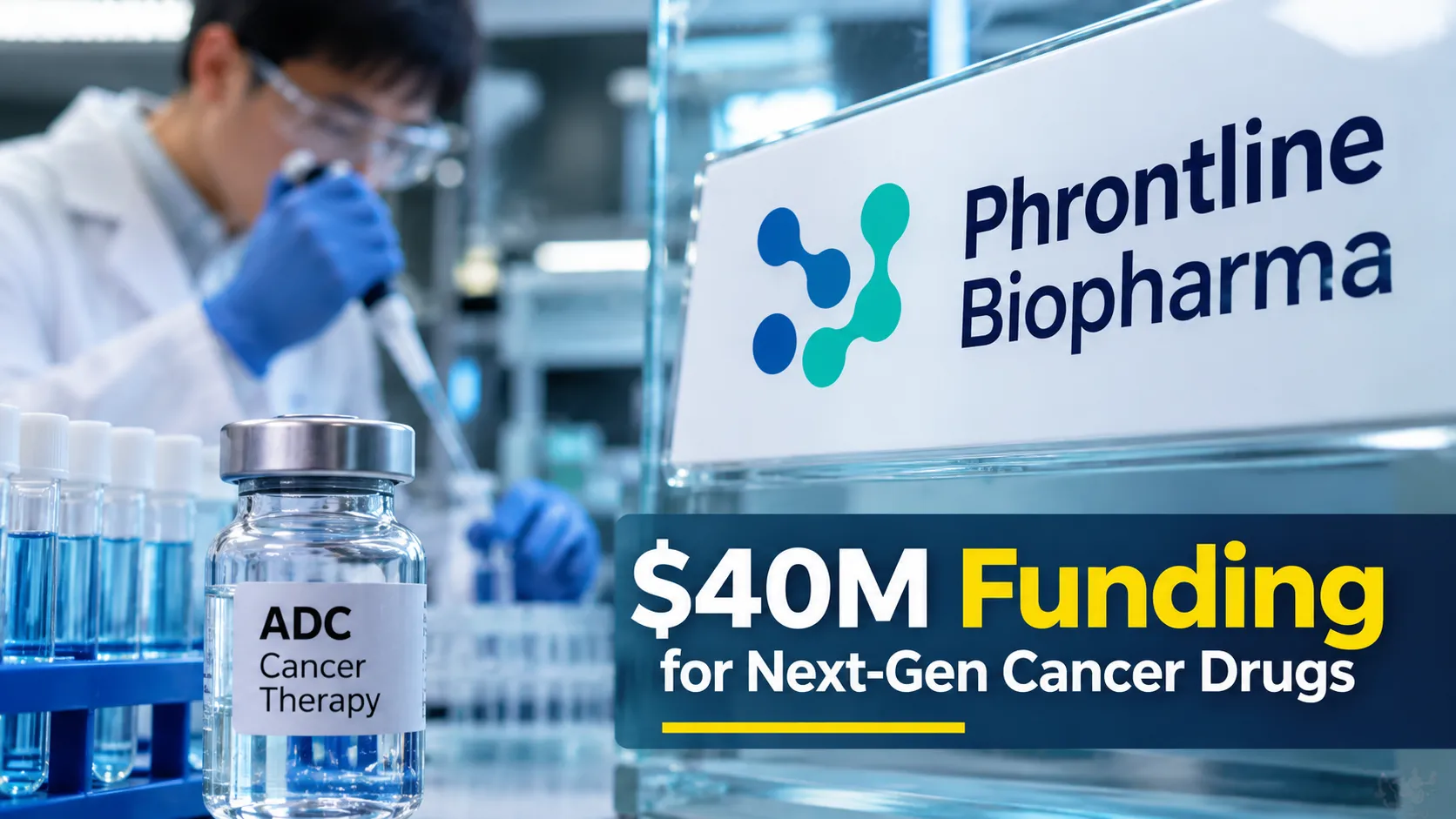

“China's biotech labs are becoming a source of the world's next cancer drugs, and global pharma is paying attention.”
— TIGI Healthcare Desk

However, the trend has drawn scrutiny in the United States, where some lawmakers have raised concerns about dependence on Chinese biotech and proposed legislation to restrict certain Chinese companies' involvement in US healthcare supply chains.

The funding environment

Biotech funding has been selective in recent years, with investors favouring companies that have clinical data or strong partnerships. Phrontline's ability to raise a Series A shortly after its Pre-A+ round reflects investor confidence in its platform and pipeline, particularly its partnership with Samsung Bioepis and early clinical progress.

What it means for India

India is a global leader in generic drug manufacturing and biosimilars, but has a smaller presence in novel drug discovery compared with China. Indian companies, including Biocon, Sun Pharma, Glenmark, Zydus and Dr Reddy's, have been investing in innovative medicines, including antibodies and ADCs, and some have entered licensing deals for novel drugs.

China's success in attracting global partners for its biotech innovations offers lessons for India, which is seeking to move up the value chain in pharmaceuticals through policies such as the Promotion of Research and Innovation in Pharma MedTech scheme. Cancer is a growing health burden in India, and new targeted therapies could eventually benefit Indian patients, although affordability remains a major challenge.

9f20cc02-1902-474c-bcb3-3169fd393e09.png

The risks in drug development

Drug development is a long and risky process. Most drug candidates that enter clinical trials never reach the market, failing because of safety concerns or insufficient effectiveness. First-in-human trials, like those under way for TJ101, are designed primarily to establish safety and appropriate dosing, with later trials testing whether the drug works in larger groups of patients.

For ADCs, a key challenge is balancing effectiveness with side effects, since the potent payloads can damage healthy tissue if they are released before reaching cancer cells. Advances in linker technology and target selection aim to reduce these risks.

Competition in ADCs

The ADC field has become one of the most competitive areas in oncology, with large pharmaceutical companies spending billions of dollars on acquisitions and licensing deals. Bispecific and dual-payload approaches are seen as the next frontier, and many companies are racing to produce clinical data that could differentiate their programmes.

Early results from first-in-human trials will be closely watched by potential partners, who may seek to license promising candidates for markets outside China.

Investors in Chinese biotech have also had to weigh geopolitical risks, including the possibility of US restrictions on partnerships with Chinese companies. So far, licensing deals between Chinese biotechs and Western pharmaceutical companies have continued at a strong pace, reflecting the value that large drugmakers see in China's innovation. However, companies are increasingly structuring deals to reduce exposure to potential policy changes, for example by running trials in multiple countries.

What comes next

Phrontline will use the funding to advance TJ101 and its other ADC candidates through clinical trials. Investors will watch for early clinical data, new partnerships and progress on its collaboration with Samsung Bioepis. The company's progress will be another test of whether China's biotech sector can deliver drugs that reach patients worldwide.

TagsPhrontline BiopharmaTony Chenantibody-drug conjugatesADCbispecific antibodiesdual-payload ADCcancer drugsoncologyTJ101EGFRB7-H3Decheng CapitalYuanhe OriginSamsung BioepisSino BiopharmaceuticalChina biotechbiotech fundinglicensing dealsIndia pharmainvestors

Reader reviews

Sign in to rate and review this article.
Loading reviews…