Quest Diagnostics, one of the largest medical laboratory testing companies in the United States, has confirmed that hackers stole patients' personal and health information in a cyberattack, the latest in a string of breaches to hit the healthcare industry this year.
In a legally required filing with the US Securities and Exchange Commission, Quest disclosed a cyberattack and data breach affecting "an as-yet unspecified amount of sensitive patient information," TechCrunch reported on Friday, October 23.
The attack targeted Quanum, a lab-testing platform that allows doctors' offices, hospitals and healthcare practices to order laboratory tests and handle billing. Quest said the unauthorised access included "certain patient records."
What was taken
On its website, Quest said some patients' protected health information was taken, including "personal information and patient records." The company said it is still determining the specific kinds of data that were stolen.
Quanum stores patient health and medical records, as well as diagnostic and billing data, according to TechCrunch. Quest says the platform is used by about half a million clinicians across thousands of locations in North America, though it is unclear how many health records Quanum holds.
Quest has not said how many patients or healthcare customers were affected, or when the breach began. The company learned of the attack on a Wednesday, notified law enforcement and is investigating. It has not said whether a hacking group has made contact or demanded payment.
A Quest spokesperson did not respond to TechCrunch's request for comment. TechCrunch noted that the company's website notice about the breach contained code that prevents search engines from listing it.
A second major breach
This is Quest's second known major breach in a decade. In 2019, a cyberattack on a third-party billing company, American Medical Collection Agency, exposed 11.9 million Quest patient records, along with data from other laboratory companies. That breach led to lawsuits, regulatory scrutiny and the bankruptcy of the billing company.
The repeat incident is likely to raise questions about Quest's security practices and those of the broader healthcare industry.
Healthcare under siege
The healthcare sector has become one of the most targeted industries for cybercriminals. TechCrunch listed several other healthcare companies hit by cyber incidents in 2026, including Stryker, Boston Scientific, CareCloud, Craneware and McKesson.
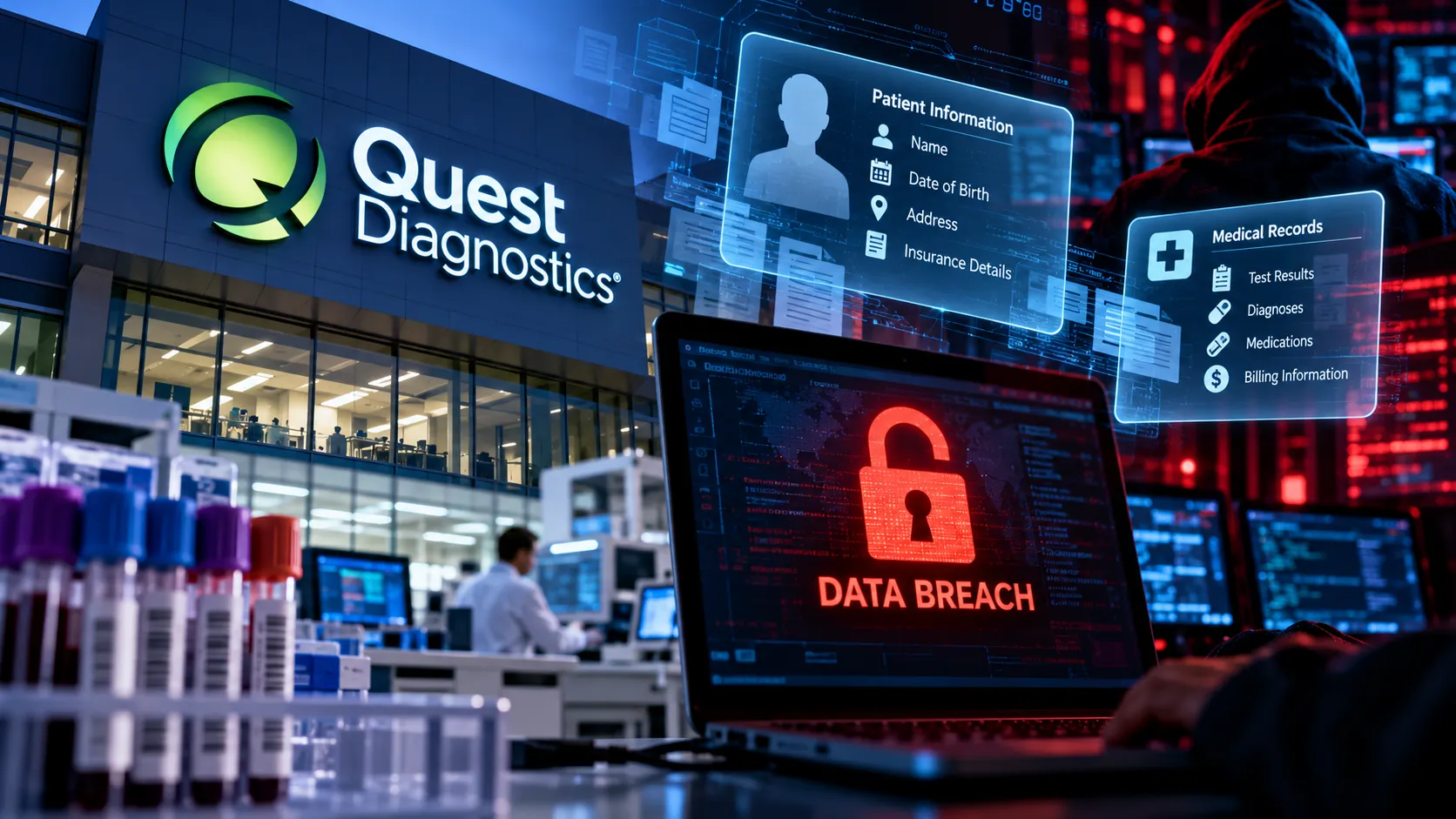
Healthcare data is especially valuable to criminals. Medical records contain names, addresses, dates of birth, insurance details and sensitive health information, which can be used for identity theft, insurance fraud and extortion. Unlike a credit card number, health information cannot be changed once stolen.
Ransomware gangs frequently target healthcare organisations, knowing that disruptions to patient care create pressure to pay. The 2024 attack on Change Healthcare, a unit of UnitedHealth Group, disrupted payments and prescriptions across the United States and affected the data of about 190 million people, making it the largest healthcare data breach in US history.
The wider cyber crisis
The Quest breach comes during an extraordinarily turbulent period for cybersecurity. This week, critical vulnerabilities in the PHP programming language triggered millions of hacking attempts worldwide, forcing banks, airlines and governments to take systems offline. Microsoft said Chinese state-aligned hackers used AI agents to target about 2,250 organisations after breaching IT firm ConnectWise.