ImpactSustainability6 MIN READ

Reliance Plans ₹1 Lakh Crore Biogas Push in Andhra Pradesh, Betting That Farm Waste Can Power India's Energy Transition

Anant Ambani says Reliance will invest ₹1 lakh crore in compressed biogas plants across Andhra Pradesh, projecting more than 3 lakh jobs and about ₹60,000 crore in state revenue over the coming decades.

3 October 2026New
Reliance Plans ₹1 Lakh Crore Biogas Push in Andhra Pradesh, Betting That Farm Waste Can Power India's Energy Transition

Reliance Industries plans to invest ₹1 lakh crore in Andhra Pradesh to build compressed biogas (CBG) plants, a commitment that ties India's largest private company's clean-energy ambitions directly to the farm economy of one of the country's most agriculture-dependent states.

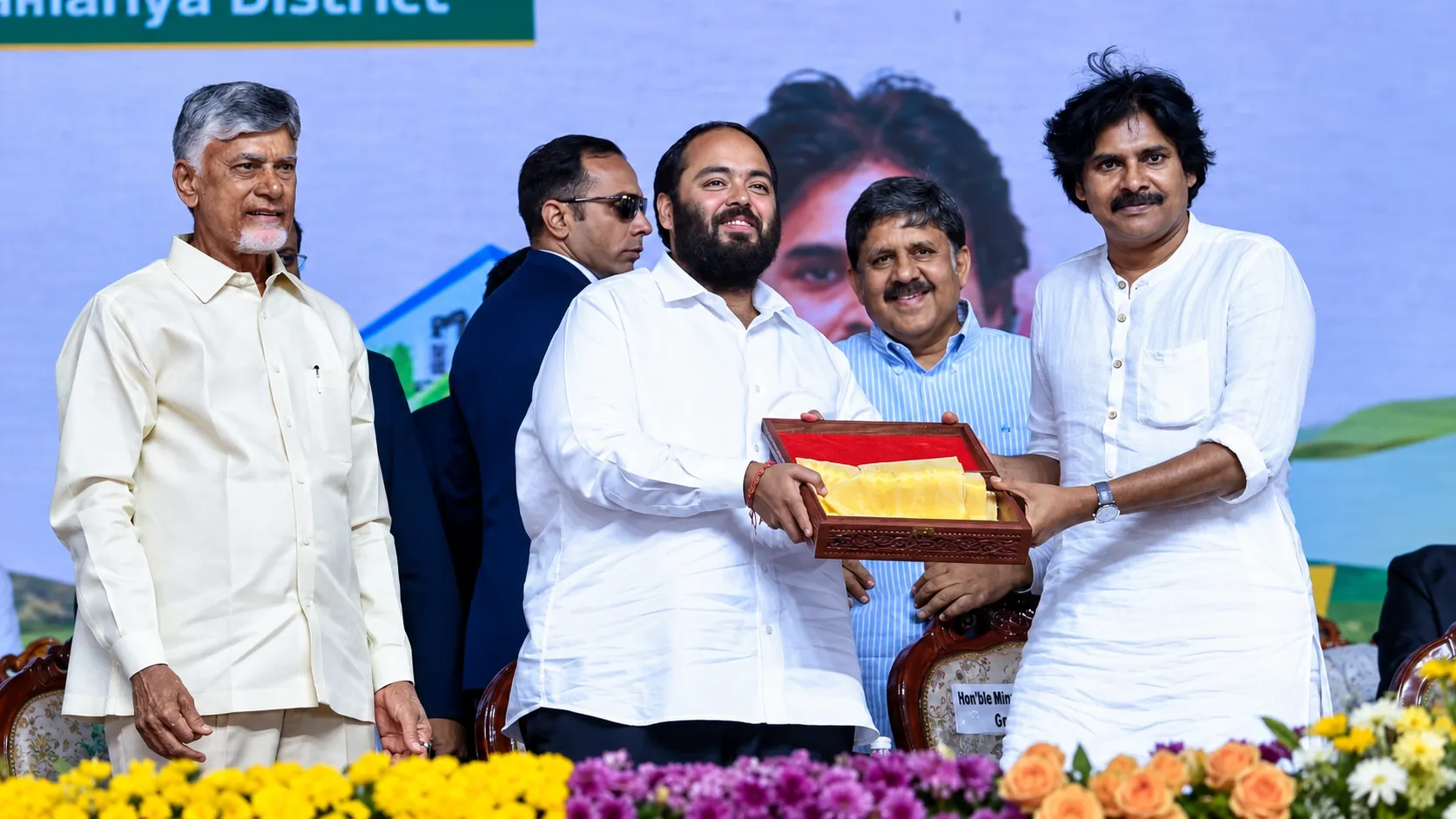
Announcing the plan on Friday, 2 October, at Madanapalle in the state's Rayalaseema region, Reliance executive director Anant M. Ambani said the projects were expected to create more than 3 lakh jobs and generate nearly ₹60,000 crore in revenue for Andhra Pradesh over the coming decades. He spoke at the unveiling of foundation plaques for a Global Horticulture Hub and the Indian School of Agriculture, with Chief Minister N. Chandrababu Naidu in attendance.

"That is why Reliance Industries is grateful to the Government of Andhra Pradesh for the opportunity to invest ₹1 lakh crore in the state to set up compressed biogas (CBG) plants," Ambani said.

The figures are projections rather than commitments already on the ground, and the company did not set out a construction timeline, plant count or capacity target at the event. Even so, the size of the pledge places it among the larger single-state clean-energy commitments announced by an Indian corporate this year, and it signals how seriously Reliance is treating biogas as a pillar of its energy business alongside solar, batteries and green hydrogen.

From food growers to energy producers

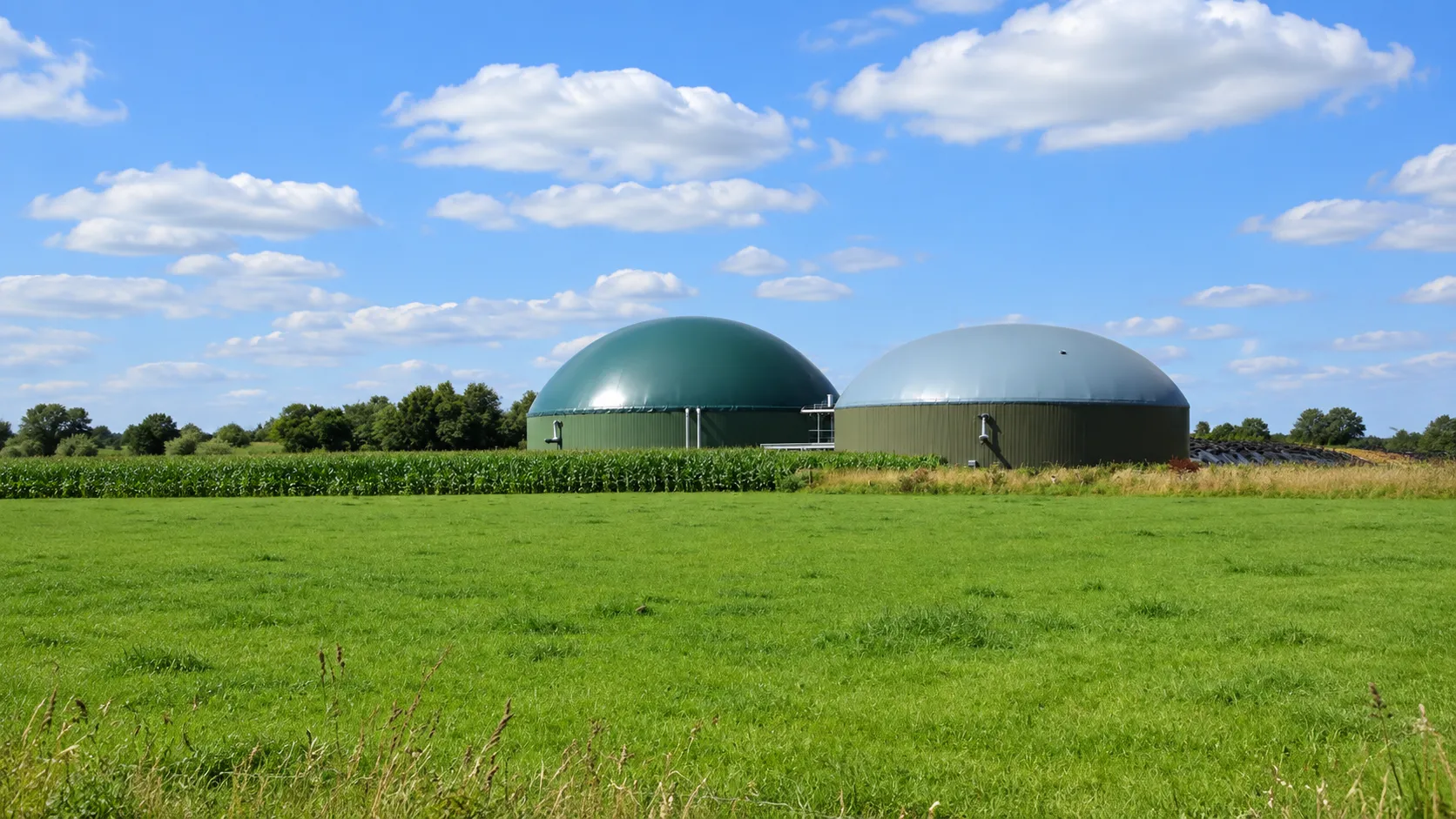
The central idea behind the plan is that agricultural residue, which is frequently burned or left to rot, can be turned into a saleable fuel. Compressed biogas is produced by breaking down organic material such as crop stubble, press mud, cattle dung and food waste in anaerobic digesters, then purifying and compressing the resulting methane. The upgraded gas has properties similar to compressed natural gas and can be used in vehicles, industry and city gas networks. The digestate left behind can be processed into organic fertiliser.

Ambani framed this as a change in the role of the farmer. He said the aim was to help cultivators move from being "Anna Daatas", or food providers, to also becoming "Urja Daatas", providers of energy. In practical terms, that means farmers would have a paying buyer for biomass that today has little or no value, adding a second income stream to crops whose prices are often volatile.

The model also has an environmental logic. Open burning of crop residue is a recurring source of air pollution in parts of India, and methane released from decomposing organic waste is a potent greenhouse gas. Capturing that gas and using it as fuel addresses both problems while reducing demand for imported natural gas, a priority for a country that buys a large share of its energy from abroad.

Skills, technology and the next generation of farmers

Reliance tied the investment to a broader push on agricultural education. Ambani said the company would support the Indian School of Agriculture through strategic investment, digital capabilities, technical expertise and industry partnerships. He also said Reliance would explore cooperation between the school and a proposed university for wildlife and veterinary sciences linked to Vantara, the animal rescue and rehabilitation centre run by the Reliance Foundation in Gujarat.

The company intends to use digital training, virtual classrooms and tools including artificial intelligence and its Jio Krishi platform so that rural youth can support farmers with better data and advice. Ambani argued that this could make agriculture a more attractive career for young Indians who might otherwise migrate to cities.

"Let us give them the skills, technology and enterprise to build successful futures in their own villages," he said.

“Let us give them the skills, technology and enterprise to build successful futures in their own villages.”
— Anant M. Ambani, Executive Director, Reliance Industries
Ceremonial Award Presentation on Stage.png

Why Andhra Pradesh

The choice of Rayalaseema is significant. The region, which includes districts such as Anantapur, Chittoor, Kadapa and Kurnool, is drought-prone and has historically lagged the state's coastal belt in industrial investment. Biogas plants are typically located close to their feedstock because biomass is bulky and expensive to transport, so a large CBG programme naturally spreads investment into rural districts rather than concentrating it in a few industrial corridors.

Citing state government data, Ambani said Andhra Pradesh had approved 388 mega projects since June 2024, with investment commitments exceeding ₹14 lakh crore and the potential to employ nearly 11 lakh people. The Naidu government, which returned to power in 2024, has made large-ticket investment announcements central to its economic pitch, and a Reliance commitment of this size strengthens that narrative.

For Reliance, the state offers a combination of farmland, available biomass and a government eager to facilitate land and approvals. Large CBG networks also depend on dependable offtake, and India's policy framework has been moving in that direction. The government's GOBARdhan initiative promotes waste-to-energy projects, and policymakers have pushed for compressed biogas to be blended into the city gas distribution network over time, creating a market for producers.

The execution test

Biogas has a mixed track record in India. Many earlier projects struggled with inconsistent feedstock supply, seasonal availability of crop residue, logistics costs and the difficulty of selling fermented organic manure at scale. Plants that cannot secure year-round biomass often run well below capacity, which undermines their economics.

Reliance's scale may help it tackle some of these problems. A company of its size can invest in aggregation networks, storage and collection systems that smaller developers cannot afford, and it can use its retail, telecom and digital platforms to coordinate with farmers. Its existing fuel retail network, through its joint venture with BP, also offers potential outlets for compressed biogas as a transport fuel.

Still, the projected job numbers will depend heavily on how the supply chain is organised. Much of the employment in a CBG economy sits outside the plant gate, in collecting, baling, transporting and storing biomass, and in distributing fertiliser. Converting those activities into stable, decently paid work will be the real measure of the programme's social impact.

A wider bet on bioenergy

The Andhra Pradesh announcement fits a pattern. Reliance has repeatedly identified bioenergy as part of its new energy strategy, and it has signed large investment memoranda with several states in recent years that include renewable and bioenergy components. A commitment of ₹1 lakh crore to a single technology in a single state, however, is an unusually concentrated bet.

For investors, the key questions will be capital phasing, returns on individual plants and the pricing framework for the gas produced. For the state, the questions are about land, water, feedstock contracts and how quickly projects move from foundation stone to commissioning.

For India's broader energy transition, the plan is a reminder that decarbonisation is not only about solar panels and wind turbines in remote parks. It can also run through village fields, cattle sheds and sugar mills, provided the economics work for the farmers at the start of the chain. If Reliance can make that model pay at scale, the Rayalaseema project could become a template other states and companies try to copy.

TagsReliance IndustriesAnant AmbaniCompressed BiogasCBGAndhra PradeshClean EnergyBioenergyRural EconomyAgricultureRayalaseemaEnergy TransitionIndiaSustainabilityJobs

Reader reviews

Sign in to rate and review this article.
Loading reviews…