ImpactSustainability6 MIN READ

RoadGrid Secures Rs 13 Crore Government Grant to Manufacture India's Patented Universal EV Charger

Indore-based RoadGrid India has received Rs 13 crore from the government's Technology Development Board to build a manufacturing facility for its patented 140 kW Universal EV Charger, a project expected to produce 2,000 chargers annually and create over 100 direct jobs.

By Shaym Kumar · Author12 August 2026New
RoadGrid Secures Rs 13 Crore Government Grant to Manufacture India's Patented Universal EV Charger

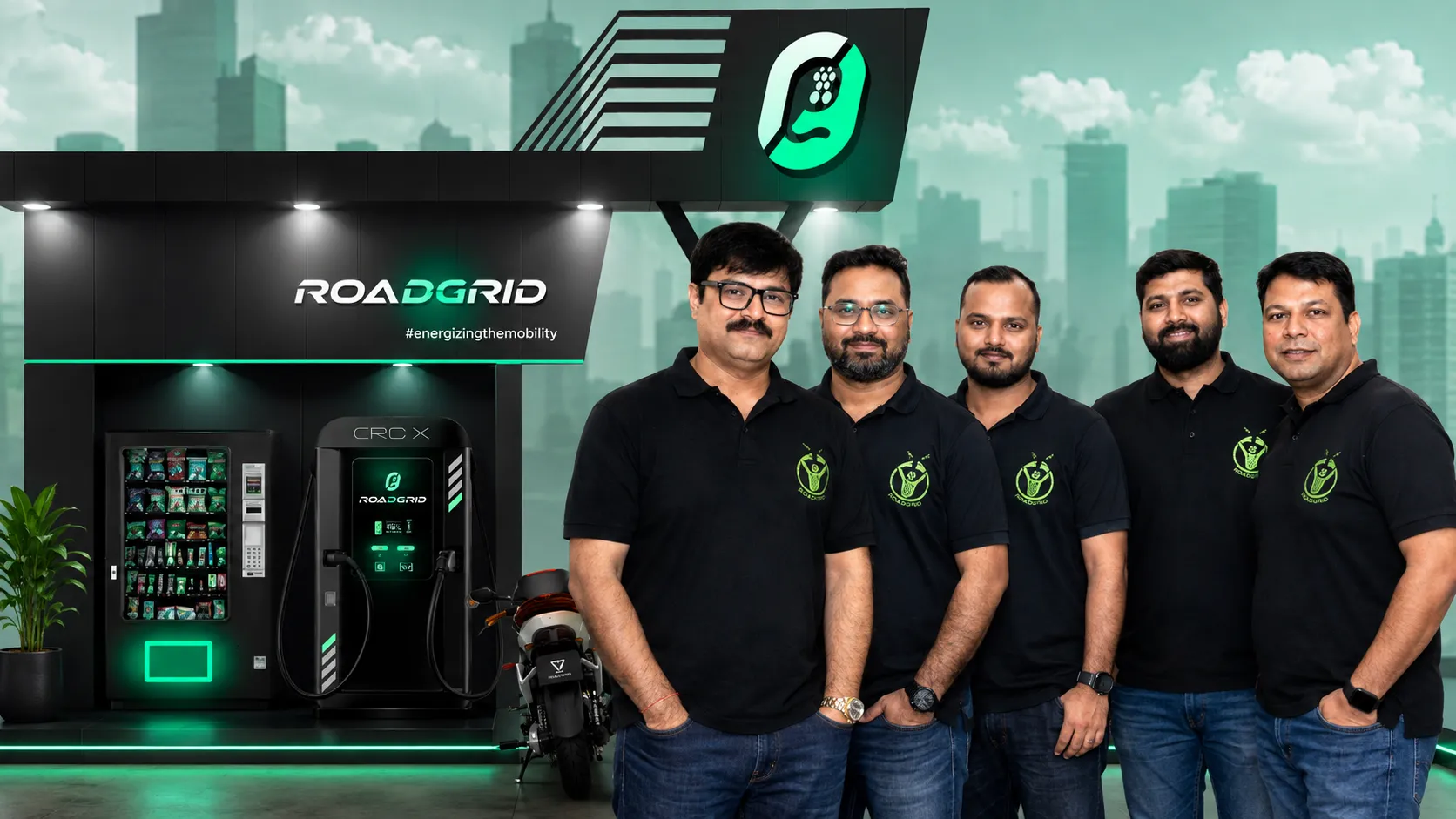
RoadGrid India Private Limited has received financial assistance of Rs 13 crore from the Technology Development Board, under the Department of Science and Technology, Government of India, to fund a Rs 27.5 crore project establishing a manufacturing and assembly facility for the commercialisation of its patented Universal EV Charger, the company announced.

The support marks a significant milestone for RoadGrid and reinforces India's broader push to build indigenous technologies for electric mobility rather than relying on imported charging hardware, a category where domestic manufacturing capacity has historically lagged the pace of India's electric vehicle adoption targets. RoadGrid's Universal EV Charger integrates a 140 kW dual DC charging system supporting both CCS2 and Type 6 connectors alongside AC charging capability, designed as a single integrated platform that enables charging across multiple vehicle segments, electric two-wheelers, three-wheelers, passenger vehicles and commercial EVs, rather than requiring operators to install separate, segment-specific charging infrastructure.

The upcoming manufacturing facility, being developed with a total investment of Rs 27.5 crore including Rs 18 crore toward manufacturing infrastructure, will have an annual production capacity of 2,000 Universal EV Chargers, with commercial production expected to commence in March 2027. The project is expected to create more than 100 direct jobs, and the company estimates the facility could generate annual revenues of around Rs 100 crore at an initial production level of 1,000 chargers.

"The Technology Development Board's support is a strong validation of our vision to build advanced EV charging technology in India," said Shashank Narayan, co-founder and chief technology officer of RoadGrid India. "It will help us scale manufacturing of our patented Universal EV Charger, strengthen our engineering capabilities and accelerate the deployment of reliable, interoperable charging infrastructure. We believe India has the opportunity to build globally competitive charging technologies that can power the country's transition to electric mobility."

Rajesh Kumar Pathak, Secretary of the Technology Development Board, framed the grant within the government's broader electric mobility priorities, noting that expanding reliable and interoperable charging infrastructure is essential for accelerating electric vehicle adoption in India, a country expected to require more than four lakh public EV chargers by 2030 to support projected growth in electric vehicle sales across passenger, commercial and two- and three-wheeler segments.

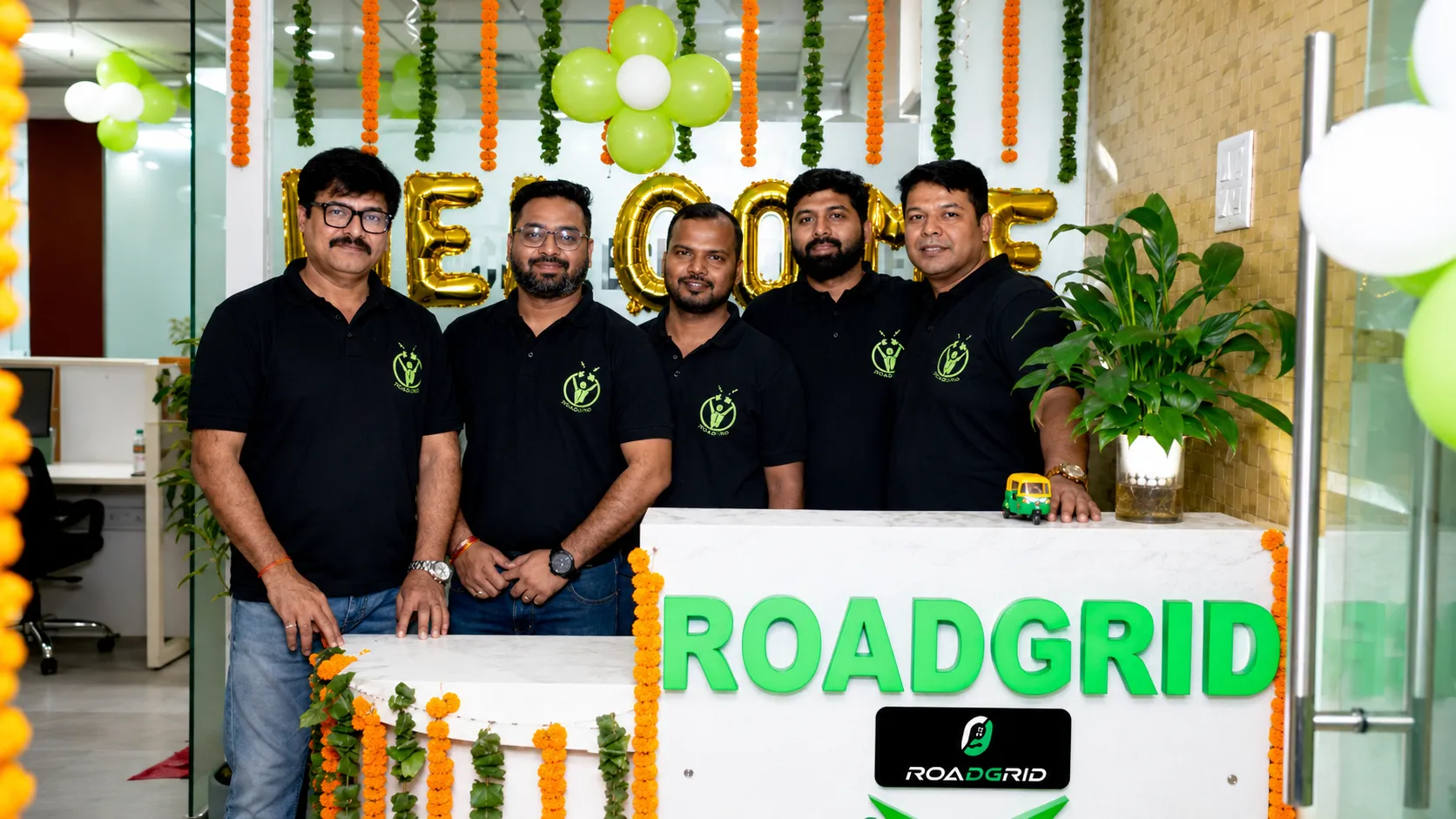
Founded in 2020 and headquartered in Indore, RoadGrid develops EV charging hardware, software platforms and energy management solutions, and currently employs more than 40 people. The company holds two patents related to EV charging technology, has deployed over 100 EV chargers, manages more than 200 charging points, and serves six enterprise customers across Indore, Mumbai and Kolkata, with existing partnerships including VinFast, HPCL and IOCL. Earlier this year, RoadGrid raised Rs 12 crore in a pre-Series A funding round led by Venture Catalysts, giving the government's TDB grant additional credibility as a milestone following genuine institutional venture investment rather than functioning as a company's sole source of external validation.

The grant fits within a broader pattern of Indian government support for domestic EV-charging manufacturing, complementing schemes such as PM E-DRIVE, which allocates Rs 10,900 crore toward accelerating electric vehicle adoption through 2028. For India's still-nascent EV charging manufacturing base, government co-funding of this kind, targeted at specific companies with demonstrated patents and commercial traction rather than broad, untargeted subsidies, represents an increasingly common policy tool intended to de-risk early manufacturing capital expenditure for companies attempting to compete against established, often import-reliant charging equipment suppliers.

We believe India has the opportunity to build globally competitive charging technologies that can power the country's transition to electric mobility.
Shashank Narayan, Co-founder & CTO, RoadGrid India

RoadGrid's interoperability-first approach also addresses a specific, well-documented friction point in India's early EV charging rollout: the proliferation of incompatible charging standards and connector types across different vehicle manufacturers and charging operators, which has historically forced charge-point operators to install multiple separate charging units to serve different vehicle segments, driving up both capital costs and the physical footprint required for a single charging location. By integrating dual DC fast-charging support for both CCS2, the standard increasingly favoured by passenger and commercial EVs, and Type 6, more common among two- and three-wheelers, alongside AC charging in a single platform, RoadGrid's charger is designed specifically to let a single physical installation serve a far broader range of vehicle types than most existing charging infrastructure, a design choice with direct implications for how quickly and cost-effectively charging networks can be built out in space-constrained urban locations.

ChatGPT Image Aug 12, 2026, 03_10_58 PM.png

Whether RoadGrid succeeds in hitting its March 2027 commercial production target and its ambitious revenue projections will offer an early signal of how effectively this kind of targeted government co-investment can accelerate India's push toward genuinely indigenous, interoperable EV charging infrastructure at the scale the country's electrification targets ultimately demand. With India requiring an estimated four lakh additional public chargers by 2030 and existing domestic manufacturing capacity still well short of that trajectory, RoadGrid's planned 2,000-unit annual output, while modest relative to overall national demand, represents precisely the kind of incremental, government-backed domestic manufacturing capacity that policymakers are betting will collectively close that gap company by company rather than through any single large-scale intervention.

RoadGrid's path to this grant, built on two years of pre-Series A venture backing, deployed hardware across three Indian cities and existing partnerships with major fuel-retail players such as HPCL and IOCL, also illustrates how Indian government co-funding programmes for deep-tech manufacturing increasingly favour companies that have already demonstrated commercial and technical viability rather than funding purely conceptual research. That sequencing, private venture capital first and government manufacturing support second, offers a template other Indian hardware startups working across clean energy, mobility and industrial technology are likely to study closely as they weigh their own paths toward securing similar public co-investment for capital-intensive domestic manufacturing expansion, particularly in categories like EV charging where import substitution carries both commercial and strategic significance for policymakers.

The broader charging-infrastructure gap RoadGrid is targeting also reflects a structural mismatch that has quietly constrained India's EV adoption curve even as vehicle sales have accelerated: manufacturers have generally scaled electric two-wheeler, three-wheeler and passenger-vehicle production faster than charging networks have kept pace, particularly outside India's largest metros, leaving range anxiety and charging access as persistent barriers to adoption in Tier-2 and Tier-3 cities. A domestically manufactured, interoperable charger priced and engineered for the Indian market, rather than adapted from chargers designed primarily for European or North American vehicle fleets and grid conditions, addresses that gap directly, and RoadGrid's ability to combine indigenous engineering with government-backed manufacturing scale positions the company as a genuine contender in closing it over the next several years.

TagsRoadGridEV chargingTechnology Development Boardelectric mobilitygovernment grantsustainabilitymanufacturing

Reader reviews

Sign in to rate and review this article.
Loading reviews…