Rice is a staple for more than half of the world's population, and India is one of its largest producers. But the way rice is traditionally grown, in fields kept flooded for months, makes it a significant source of methane, a greenhouse gas far more potent than carbon dioxide in the short term. A new agreement between a global technology company and a climate startup aims to change farming practices across tens of thousands of Indian farms.
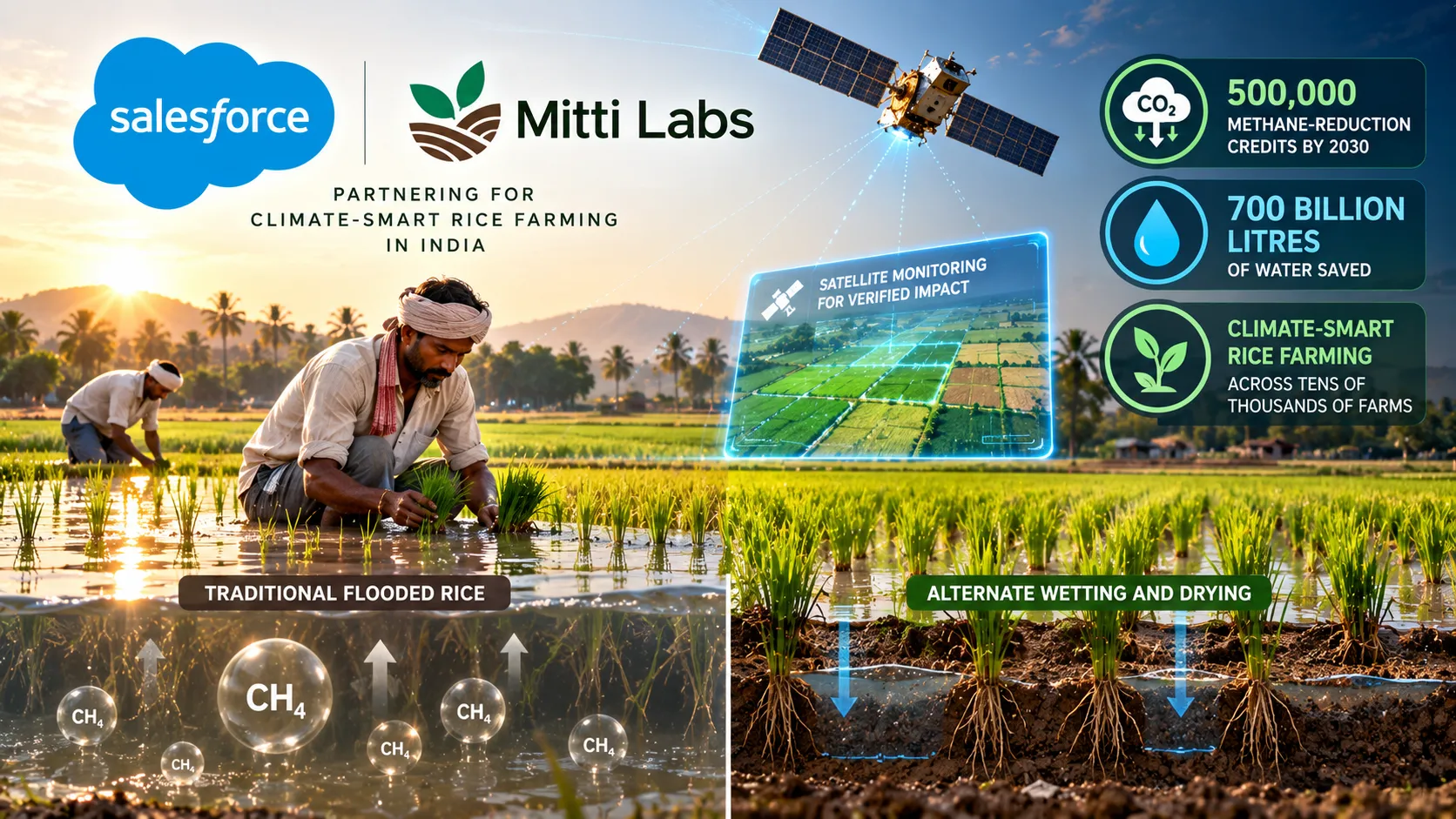
Salesforce has signed a five-year carbon credit agreement with Mitti Labs under which it will purchase 500,000 methane-reduction credits by 2030, according to SustainabilityOnline on Thursday, October 29. The deal will support climate-smart rice farming across tens of thousands of smallholder farms in India.
The project uses a technique known as alternate wetting and drying, with satellite data used to verify results. Mitti Labs estimates the partnership could save 700 billion litres of water.
Why rice emits methane
When rice paddies are flooded, the water cuts off oxygen to the soil. Microbes that thrive in these oxygen-free conditions break down organic matter and produce methane, which escapes into the atmosphere through the water and the rice plants themselves. Rice cultivation is estimated to account for about a tenth of global man-made methane emissions.
Methane is a powerful greenhouse gas, trapping much more heat than carbon dioxide over a 20-year period, although it remains in the atmosphere for a shorter time. Because of this, cutting methane emissions is seen as one of the fastest ways to slow near-term warming. More than 150 countries have joined the Global Methane Pledge, which aims to cut methane emissions significantly by 2030, though India has not signed it.
Alternate wetting and drying
Alternate wetting and drying is a water management technique in which farmers allow their paddies to dry out periodically, rather than keeping them continuously flooded. When the water level falls below a certain point, farmers re-flood the field. The periodic drying allows oxygen into the soil, reducing the activity of methane-producing microbes.
Research has shown that the technique can cut methane emissions from rice fields substantially while also reducing water use, often without significantly affecting yields. It has been promoted by agricultural research organisations, including the International Rice Research Institute, as a practical climate solution for rice farmers.
However, adoption has been limited, partly because farmers need training, reliable irrigation and confidence that their yields will not suffer. Financial incentives, such as payments from carbon credits, can encourage farmers to change their practices.
How the carbon credits work
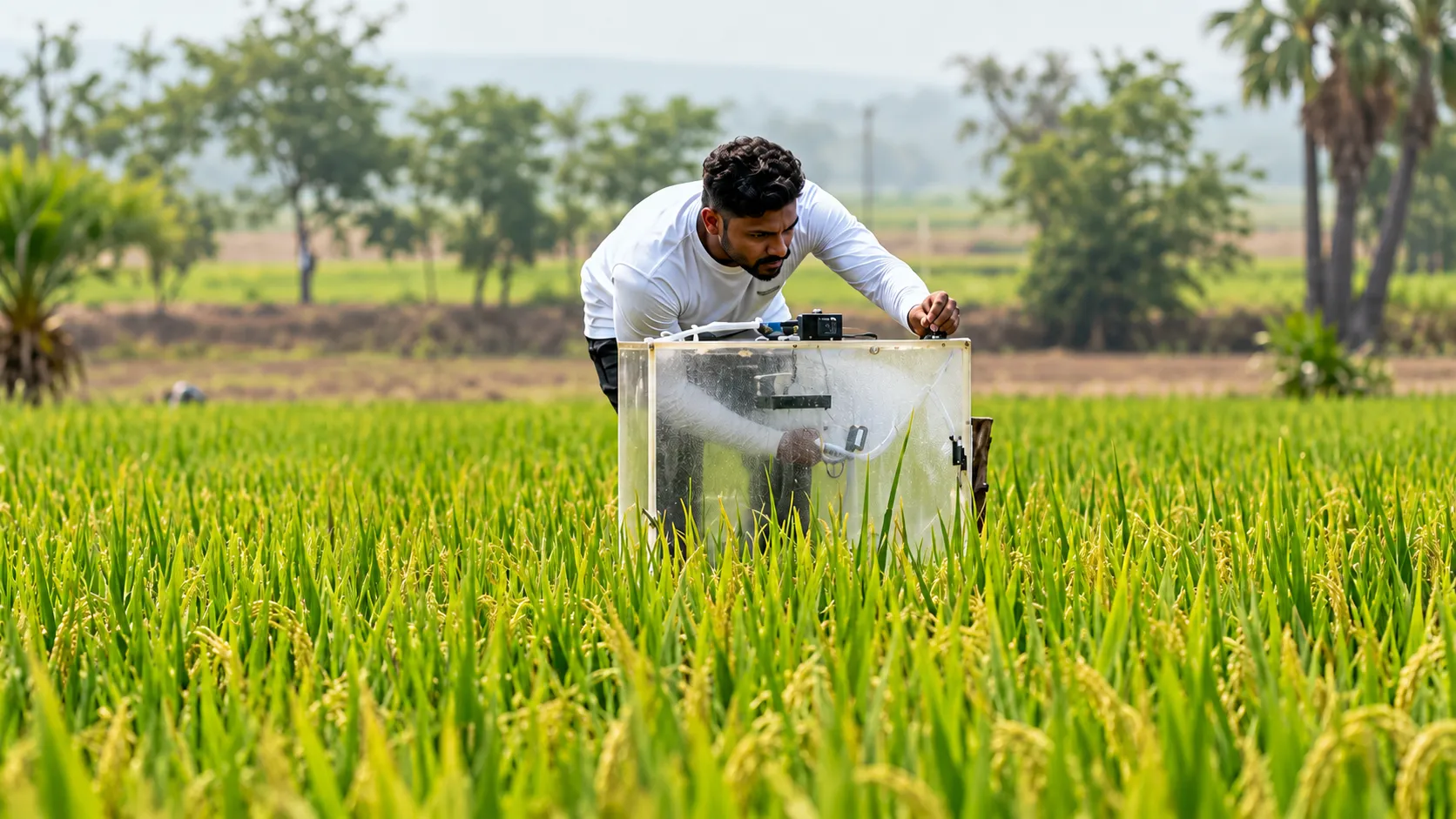
Under the agreement, Mitti Labs works with farmers to adopt alternate wetting and drying and measures the resulting reduction in methane emissions. Each credit represents a verified reduction of greenhouse gas emissions, typically one tonne of carbon dioxide equivalent. Salesforce buys these credits to help meet its own climate commitments, providing revenue that can be shared with farmers.
Satellite monitoring is central to the model. By using satellite imagery to track whether fields are flooded or dry, Mitti Labs can verify that farmers are following the practice across large numbers of farms, without relying solely on manual inspections. This addresses one of the main challenges of agricultural carbon credits: verifying that claimed emission reductions actually occur.
Water savings
The estimated savings of 700 billion litres of water could be significant for India, where agriculture accounts for the vast majority of freshwater use and groundwater levels are falling in many regions. Rice is one of the most water-intensive crops, and in states such as Punjab and Haryana, the cultivation of rice has contributed to severe depletion of groundwater.