ImpactHealthcare5 MIN READ

Science Corp Raises $400 Million to Bring Its Sight-Restoring Retinal Implant to More Patients and Push the Frontier of Brain-Computer Interfaces

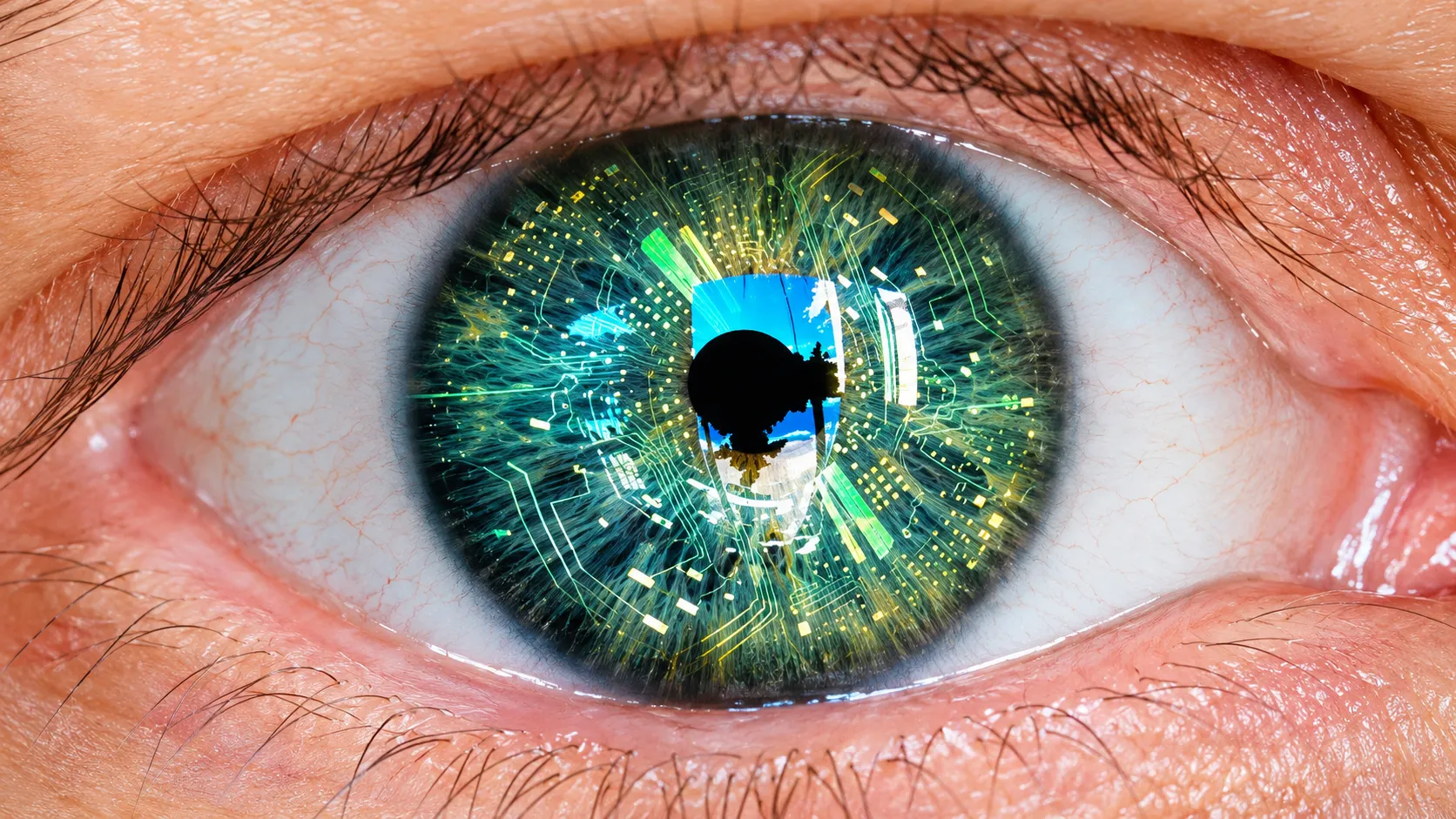
Science Corporation, an Alameda, California-based neurotechnology company, has raised a $400 million Series D from investors including Khosla Ventures, the Ackman Oxman Institute and Tenet Healthcare, it said on November 17. Its PRIMA implant, which helps some people with late-stage retinal disease perceive visual forms, is CE-marked and sold in parts of Europe, and the company is seeking US authorisation.

By Prathista Lazar · Author19 November 2026New
Science Corp Raises $400 Million to Bring Its Sight-Restoring Retinal Implant to More Patients and Push the Frontier of Brain-Computer Interfaces

For people who have lost their central vision to an incurable eye disease, a small implant and a pair of special glasses are offering something that once seemed impossible: the ability to see shapes and letters again.

Science Corporation, a neurotechnology company based in Alameda, California, announced a $400 million Series D funding round on Tuesday, November 17, according to Tech Startups. Investors include Khosla Ventures, the Ackman Oxman Institute, Tenet Healthcare, 885 Capital, Y Combinator and PLC Neurotech. No lead investor was named.

TechCrunch, citing a person familiar with the deal, reported that the round values the company at $3.5 billion. The company did not disclose a valuation. Science, founded in 2021, says it has raised more than $900 million since its founding.

How PRIMA works

Science's main product is PRIMA, a system designed to help some people with late-stage retinal disease perceive visual forms, according to Tech Startups. It combines a tiny wireless photovoltaic chip implanted under the retina with a pair of glasses fitted with a camera.

The camera captures images and projects them onto the implant using near-infrared light. The implant converts the light into electrical signals that stimulate the remaining retinal cells, which pass the signals to the brain. Patients learn to interpret these signals as visual forms.

PRIMA is aimed at patients with geographic atrophy, an advanced form of age-related macular degeneration that destroys the light-sensing cells in the central retina, causing loss of central vision. The condition affects millions of older people worldwide, and there has been no way to restore lost vision.

Clinical evidence

Results from a clinical trial of PRIMA, published in the New England Journal of Medicine in 2025, showed that many patients with geographic atrophy were able to read letters and words after receiving the implant and undergoing training, a significant improvement over their previous vision.

PRIMA has a European CE mark and is commercially available in parts of Europe, according to Tech Startups. In the United States, Science is seeking authorisation from the Food and Drug Administration through the Humanitarian Device Exemption pathway and does not claim existing FDA clearance.

Beyond the eye

Science is also developing biohybrid neural interfaces, which combine engineered neurons with electronics, according to Tech Startups. The approach differs from conventional brain-computer interfaces, which use electrodes implanted in the brain to record or stimulate neural activity.

The idea is to grow living neurons on a device that can then integrate with the brain, potentially creating more natural and scalable connections between the brain and computers. This research is at an early stage but could eventually be used to treat neurological conditions or restore lost functions.

The founder

Science was founded by Max Hodak, a co-founder and former president of Neuralink, Elon Musk's brain-computer interface company. Hodak left Neuralink in 2021 to start Science, which has taken a different approach by focusing first on vision restoration, an area with clear medical need and a path to commercialisation.

Investors' interest in neurotechnology

The $400 million round reflects growing investor interest in neurotechnology. Neuralink has raised large sums and begun human trials of its brain implant, while companies such as Synchron, Precision Neuroscience and Paradromics are developing devices to help people with paralysis communicate and control computers.
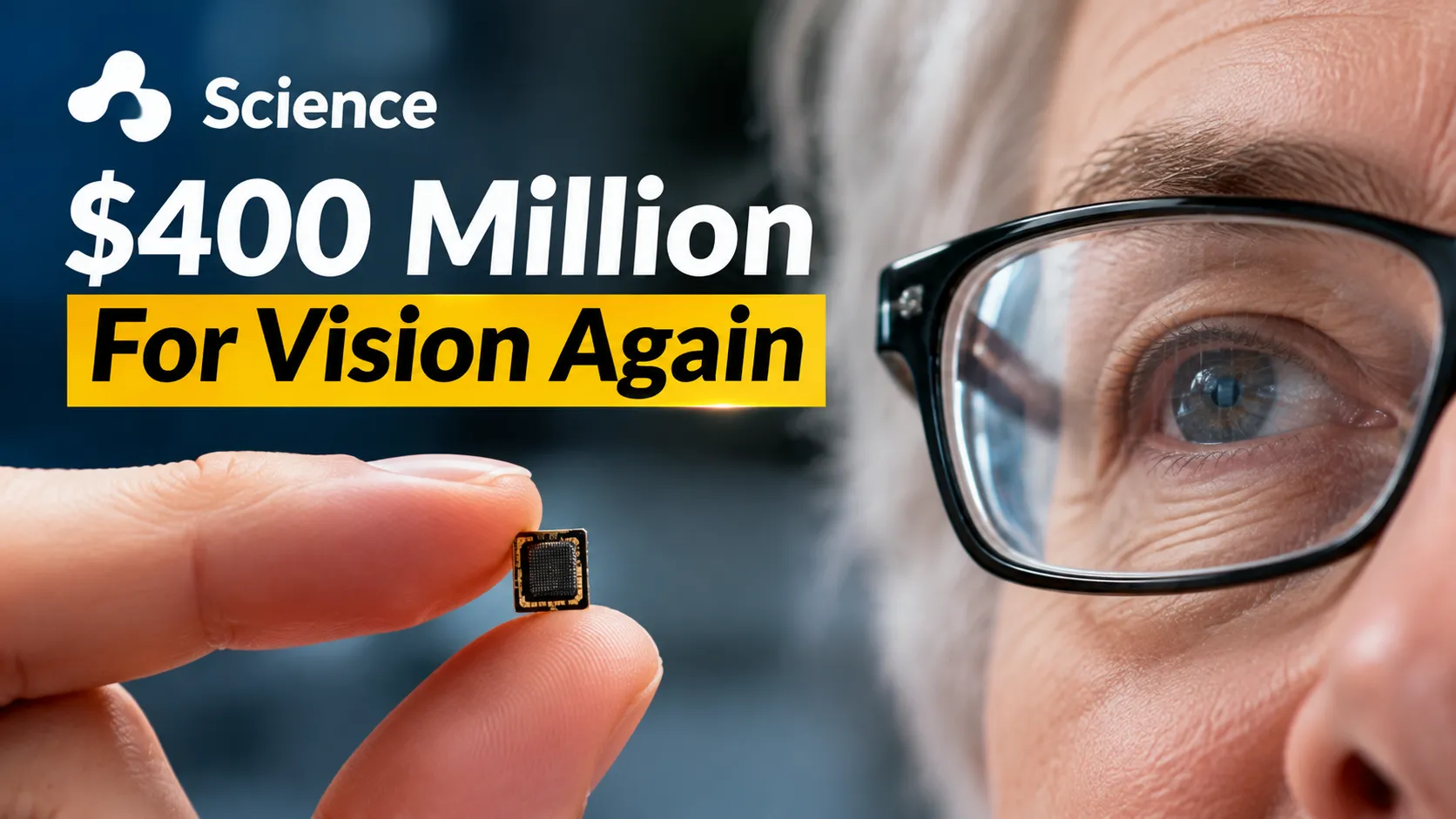

“For patients who had lost hope of seeing again, a device that restores even partial vision can change daily life.”
— TIGI Healthcare Desk

The participation of Tenet Healthcare, a major US hospital operator, suggests interest from healthcare providers in bringing such technologies to patients. The Ackman Oxman Institute, associated with billionaire investor Bill Ackman and his wife Neri Oxman, has also backed the company.

The patient impact

For patients with geographic atrophy, losing central vision means losing the ability to read, recognise faces and perform everyday tasks. A device that restores even partial vision can dramatically improve independence and quality of life. The ability to read again, even slowly, was described as life-changing by participants in clinical trials.

Scaling access will require regulatory approvals in more countries, training for surgeons and patients, and reimbursement from health systems and insurers.

The challenges

Medical devices face lengthy regulatory processes, and implants carry surgical risks. Long-term safety and durability must be demonstrated. Costs will also be a concern, as advanced implants are expensive and health systems must decide whether to pay for them.

For biohybrid interfaces, the scientific challenges are even greater, and commercial products may be many years away.

0a3d947d-47c0-40db-b0d6-61b5d844766d.png

What it means for India

India has a large and ageing population, and age-related macular degeneration is a growing cause of vision loss. India also has strong ophthalmology institutions, such as the L V Prasad Eye Institute and Aravind Eye Care System, known for high-volume, affordable eye care. Technologies like PRIMA could eventually be adopted in India, although cost and access would be significant challenges.

India's medtech sector is also growing, with startups developing affordable devices for local and global markets.

How retinal implants have evolved

Earlier attempts at retinal implants, such as the Argus II system, demonstrated that electrical stimulation could produce visual sensations but offered limited resolution and were eventually discontinued. Newer approaches, including PRIMA's wireless photovoltaic design, aim to provide higher resolution and better integration with patients' remaining natural vision.

Progress in this field has been slow, making PRIMA's clinical results particularly significant for patients and researchers.

Reimbursement and access

Even approved medical devices can struggle to reach patients if health systems and insurers do not pay for them. Companies typically need to demonstrate not only safety and effectiveness but also value, showing that the benefits justify the cost. For a condition affecting millions of older people, the potential market is large, but so is the potential cost to health systems.

Researchers in the field say the success of PRIMA could also encourage investment in other approaches to restoring vision, including gene therapies, stem cell treatments and optogenetics, which uses light-sensitive proteins to make surviving retinal cells respond to light.

Patient advocacy groups have welcomed progress in the field, noting that people living with advanced macular degeneration have had few options beyond low-vision aids such as magnifiers and specialised lighting. Any treatment that restores functional vision is seen as a significant step forward for a large and growing population of older adults.

What comes next

Science will use the funding to expand commercial availability of PRIMA in Europe, pursue US authorisation and advance its neural interface research. Its progress will be watched closely as a test of whether neurotechnology can move from experimental science to widely available treatments.

TagsScience CorporationPRIMAretinal implantmacular degenerationgeographic atrophyblindnessbrain-computer interfaceneural interfacebiohybridneurotechnologyMax HodakKhosla VenturesAckman Oxman InstituteTenet HealthcareY CombinatorFDAHumanitarian Device ExemptionCE markmedtechinvestors

Reader reviews

Sign in to rate and review this article.
Loading reviews…

