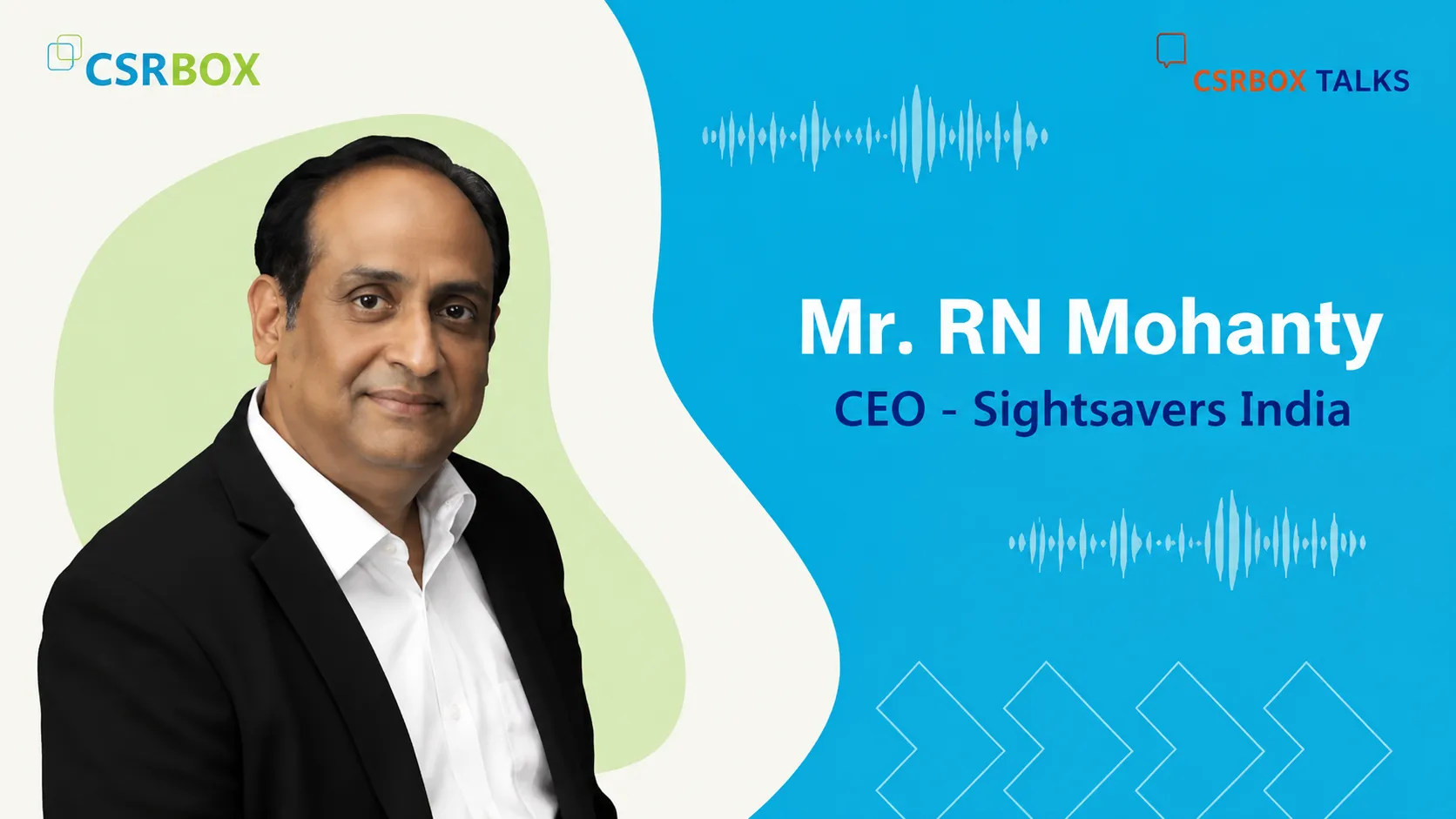
India's approach to corporate social responsibility in the eye-health and disability-inclusion space needs to move decisively beyond one-time donations toward strategic, outcome-oriented investment, according to RN Mohanty, CEO of Sightsavers India, writing on August 25, 2026. Mohanty's argument arrives at a moment when Indian companies collectively deploy billions of rupees annually through mandated CSR spending, yet questions persist over whether that capital is being directed toward interventions capable of producing lasting, measurable impact.
India holds a distinctive position in the global history of blindness prevention, having become the first country in the world to launch a national programme specifically dedicated to blindness control. The National Programme for Control of Blindness was established by the Government of India in 1976 as a centrally sponsored initiative, and the country has subsequently built a robust legislative framework around disability rights through the Rights of Persons with Disabilities Act of 2016 — one of the more comprehensive disability rights statutes among large developing economies.
Despite this strong policy foundation, Mohanty's analysis points to a persistent gap between legislative intent and on-the-ground outcomes, particularly for India's population living with avoidable blindness and visual impairment, conditions that remain heavily concentrated among lower-income and rural communities with limited access to eye-care infrastructure. The core challenge, according to this analysis, is not an absence of policy or capital, but rather a disconnect between the scale of available CSR funding and the strategic discipline required to convert that funding into durable outcomes.
Central to Mohanty's argument is a set of questions increasingly being asked across India's broader CSR ecosystem: how can an intervention create genuine impact, and will that impact last beyond the funding period itself? These questions echo findings from a broader industry reflection on the past decade of Indian CSR activity, which identified a persistent tension between the scale of corporate social spending and the durability of the outcomes it produces once initial funding cycles conclude.
The eye-health sector offers a particularly instructive case study for this broader tension, given the field's unique combination of measurable clinical outcomes — cataract surgeries performed, vision restored, screening coverage achieved — and the longer-term infrastructure and workforce investments required to sustain eye-care access in underserved communities well beyond any single CSR-funded programme cycle. Mohanty's analysis suggests that companies seeking genuine impact in this space need to think beyond funding individual surgical camps or screening drives, toward supporting the underlying systems — trained ophthalmic personnel, functioning primary eye-care infrastructure, and referral pathways — that determine whether initial interventions translate into lasting community-level change.
This systems-oriented framing aligns with a broader shift observed across India's CSR landscape in 2026, as companies increasingly seek to move from donation-driven philanthropy toward what industry practitioners describe as a more strategic, evidence-based approach to social investment — one that draws on AI-powered impact measurement tools and closer partnership structures with established implementing organisations such as Sightsavers, rather than one-off grant disbursements to a wide and loosely coordinated set of recipients.
As India's mandated CSR spending continues to grow in scale, Mohanty's intervention adds to a growing chorus within the country's social sector calling for a more disciplined, outcomes-focused approach — one capable of finally closing longstanding gaps in areas like eye health and disability inclusion that, despite decades of policy attention, continue to disproportionately affect India's most vulnerable communities.