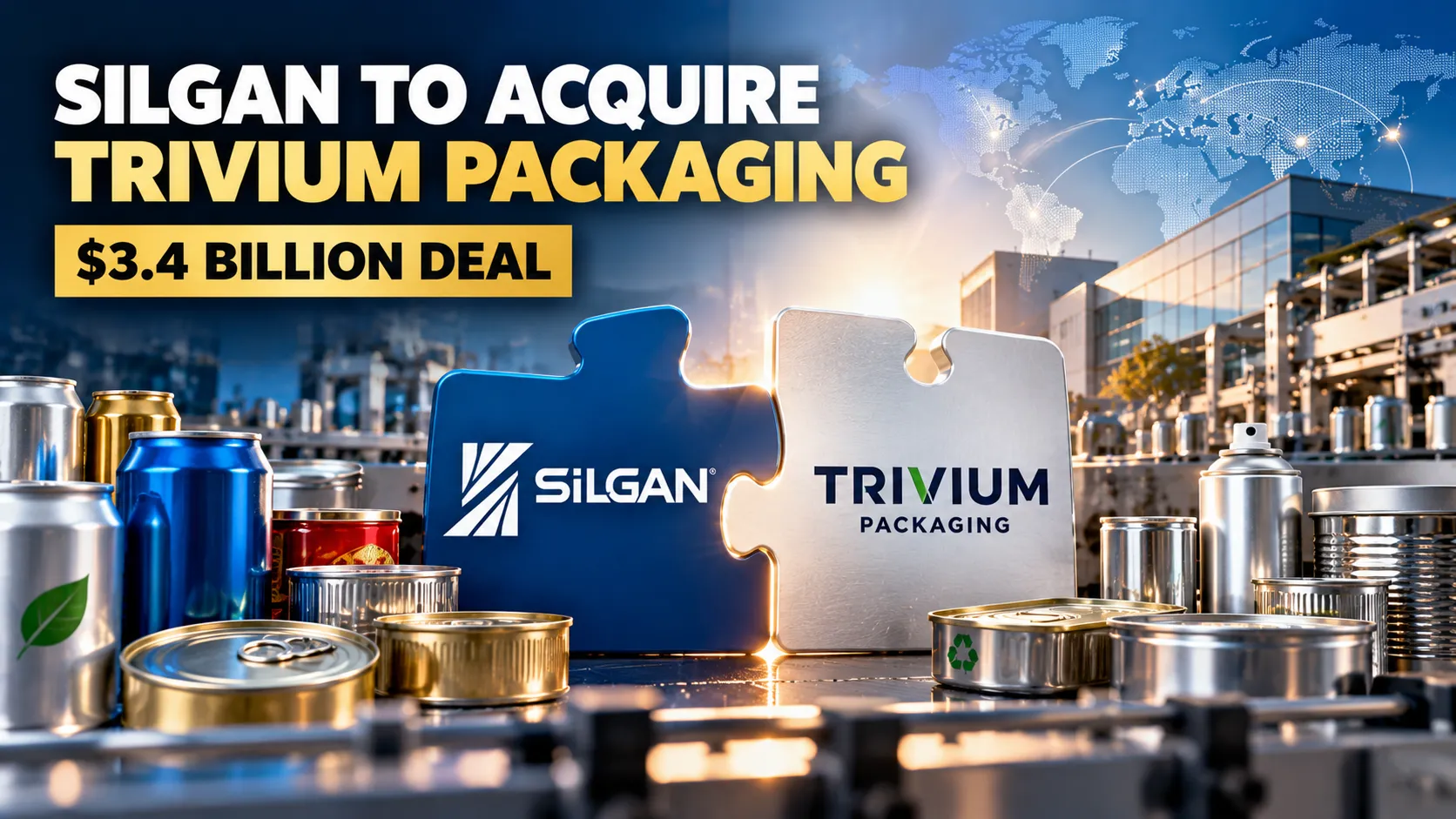
Silgan Holdings, one of the world's largest makers of metal containers and closures for food and consumer products, has agreed to buy Trivium Packaging in a deal that values the European company at $3.4 billion including debt, according to a report by Bloomberg Law on October 19.
The sellers are Ontario Teachers' Pension Plan, one of Canada's largest pension funds, and Ardagh Group, the Luxembourg-based packaging company. Silgan confirmed the deal in a statement on Monday, following an earlier report by Bloomberg News.
The acquisition is Silgan's largest ever. Silgan shares rose in early trading after the announcement.
What Trivium brings
Trivium Packaging is a leading supplier of metal packaging, including cans and containers for food, beverages, household products, cosmetics and personal care items. The company was created in 2019 through the combination of Ardagh's food and specialty metal packaging business with Exal, a US-based maker of aluminium containers owned by Ontario Teachers'.
Under the deal, Trivium will be combined with Silgan's metal containers segment and its food and beverage flat cap closures unit, creating a larger business with greater scale across Europe and North America.
The companies did not disclose detailed terms of the financing in the initial report, and further details are expected in regulatory filings.
Why metal packaging is in demand
Metal packaging has been enjoying renewed interest from consumer goods companies and investors, driven largely by sustainability. Aluminium and steel cans can be recycled repeatedly without losing quality, and recycling rates for metal packaging are high in many developed markets. That gives metal an advantage over many plastics, which are harder to recycle and have come under growing regulatory pressure.
Governments in Europe and elsewhere have introduced rules to reduce plastic waste, including targets for recycled content, restrictions on single-use plastics and extended producer responsibility schemes that make companies responsible for the packaging they put on the market. These rules have encouraged some brands to switch from plastic to metal or glass containers.
Beverage cans have also benefited from changing consumer preferences, including growth in canned water, sparkling drinks, ready-to-drink cocktails and energy drinks. Food cans remain essential for preserved foods, pet food and other products with long shelf lives.
Scale in a consolidating industry
The packaging industry has been consolidating as companies seek scale to manage costs, invest in new technology and serve global customers. Large consumer goods companies prefer suppliers that can provide consistent quality and supply across multiple countries.
For Silgan, the acquisition strengthens its position in Europe, where Trivium has a significant manufacturing footprint, and adds capabilities in specialty and aerosol containers. Combining the businesses could create opportunities for cost savings in procurement, manufacturing and logistics.
The deal also illustrates how private equity and pension fund owners are using strategic buyers to exit investments. Ontario Teachers' and Ardagh have owned Trivium since its creation, and selling to a larger industry player provides them with a significant return of capital. Ardagh has been under pressure to reduce its substantial debt load, which makes the sale strategically significant for the group.
The broader M&A picture
The Silgan-Trivium deal was one of several significant transactions announced on October 19. Tradeweb Markets agreed to acquire electronic bond trading platform Trumid for about $1.97 billion, while in the pharmaceutical sector, China's Hansoh Pharmaceutical signed a licensing deal with Roche worth more than $15 billion. Over the preceding weekend, Swedish investment firm EQT agreed to buy Australian waste company Cleanaway for about A$9.3 billion including debt.