
ImpactHealthcare5 MIN READ

Sofina in Talks to Lead $32 Million Round in Online Pharmacy PlatinumRx at Up to $200 Million Valuation, Inc42 Reports

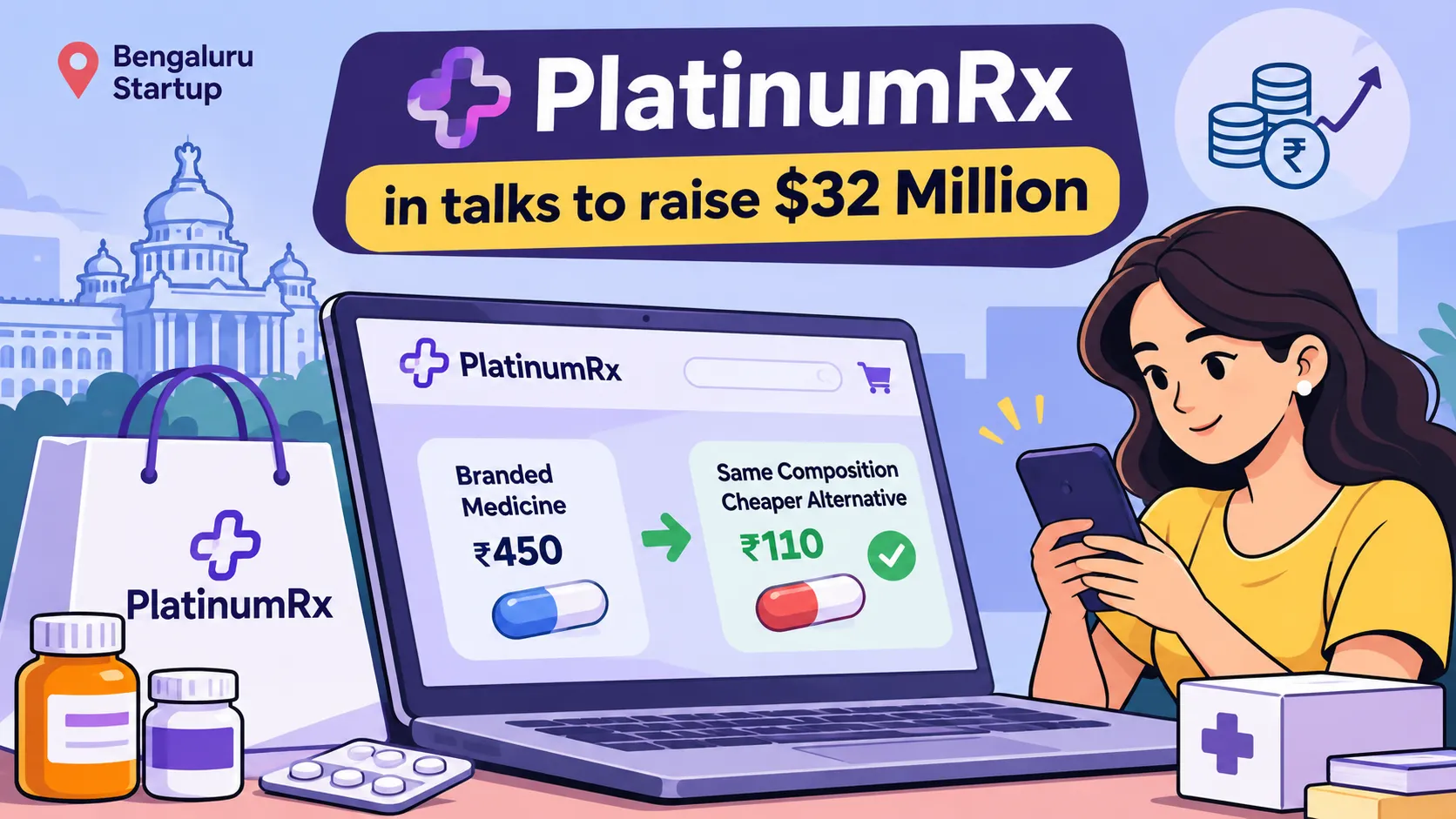
Bengaluru-based online pharmacy PlatinumRx, which recommends lower-cost substitute medicines with the same composition, is in talks to raise about $32 million in a round led by Belgium's Sofina Ventures at a valuation of $150 million to $200 million, Inc42 reported on November 12. Founded in 2023, the startup says it has served more than 10 lakh customers and raised a $6 million Series A in September 2025.

By Prathista Lazar · Author13 November 2026New
Sofina in Talks to Lead $32 Million Round in Online Pharmacy PlatinumRx at Up to $200 Million Valuation, Inc42 Reports

A young Bengaluru startup that helps Indians save money on medicines by recommending cheaper alternatives is set to raise a significant new round of funding, according to a report.

PlatinumRx, an online pharmacy, is in talks to raise about $32 million, or more than ₹300 crore, in a round led by Belgium-based Sofina Ventures, Inc42 reported on Thursday, November 12, citing people familiar with the discussions. The deal is expected to value the company at between $150 million and $200 million.

Discussions are ongoing, and the valuation and list of investors could change, according to Inc42. PlatinumRx and Sofina did not respond to Inc42's questions at the time of publication.

A rapid rise

PlatinumRx was founded in 2023 by Ashutosh Pandey and Piyush Kumar, according to Inc42. It raised a seed round of about $800,000 in April 2024, led by India Quotient, and a $6 million Series A in September 2025, backed by Stellaris Venture Partners and India Quotient.

The Series A was intended to strengthen the company's supply chain, expand fulfilment and build its product and technology teams, including five additional fulfilment centres. If the new round closes at the reported valuation, PlatinumRx's value will have risen sharply in just over a year.

The substitution model

PlatinumRx's business is built on a simple idea: many branded medicines in India have cheaper alternatives with exactly the same active ingredients and composition. The company recommends these lower-cost substitutes to customers, primarily for recurring and chronic medication needs, according to Inc42.

It sources medicines directly from pharmaceutical companies, which helps it keep costs down. The company says it has served more than 10 lakh (1 million) customers.

The model addresses a long-standing problem in India's healthcare system. Doctors often prescribe branded medicines, and patients may not know that cheaper versions with the same composition are available. The price differences between brands can be large, particularly for common drugs.

Why chronic care matters

Chronic conditions such as diabetes, hypertension, heart disease and thyroid disorders affect hundreds of millions of Indians and require long-term medication. For families, the cost of these medicines is a recurring monthly expense, often paid out of pocket, since health insurance in India typically does not cover outpatient medicines.

Saving even a portion of these costs can make a meaningful difference to household budgets, particularly for older people and families on lower incomes. Chronic care customers also tend to be loyal, ordering regularly, which makes them valuable for pharmacy businesses.

Sofina's healthcare bets

Sofina is a Brussels-based investment company controlled by the Boël family, with a long history of investing in growth-stage companies in India and elsewhere. It has backed Indian consumer and healthcare companies such as HealthKart, and has been an active investor in the Indian startup ecosystem.

A lead investment from Sofina would bring both capital and the credibility of an experienced international investor to PlatinumRx.

A competitive market

India's online pharmacy market is crowded. Rival Truemeds, which also promotes affordable substitute medicines, raised $85 million last year, and Plazza raised $15 million in a Series A in July 2026, co-led by Accel, Elevation Capital and Nexus Venture Partners, according to Inc42. Larger players include Tata 1mg, PharmEasy, Apollo 24/7 and Netmeds, owned by Reliance.

Quick-commerce companies have also begun delivering medicines, intensifying competition for customers who want fast delivery.

“For millions of Indian families managing chronic illness, the cost of medicine is a monthly worry.”
— TIGI Healthcare Desk

The regulatory backdrop

Online pharmacies in India have operated for years without a comprehensive regulatory framework. Draft rules for e-pharmacies were proposed in 2018 but have not been finalised, and traditional chemists' associations have repeatedly opposed online sales of medicines, arguing that they undermine safety and their livelihoods. Courts have considered challenges to online pharmacy operations.

Substitution also raises regulatory questions. Pharmacists are generally expected to dispense what is prescribed, and promoting substitutes requires care to ensure that patients receive medicines with the same composition, quality and dosage.

The generic medicines push

The government has promoted generic medicines through the Pradhan Mantri Bhartiya Janaushadhi Pariyojana, which operates thousands of Jan Aushadhi stores selling low-cost generic medicines. India is the world's largest supplier of generic medicines by volume, yet many Indian patients still pay high prices for branded generics domestically.

Startups such as PlatinumRx are part of a broader effort to bring down medicine costs by increasing transparency and access to affordable alternatives.

87f561e6-abf9-4d93-9929-c6e8768eab06.png

Quality and trust

For substitution models to succeed, customers must trust that cheaper medicines are just as effective as the brands their doctors prescribe. Quality concerns about some medicines manufactured in India have made headlines in recent years, highlighting the importance of sourcing from reputable manufacturers and ensuring proper storage and handling.

PlatinumRx's approach of sourcing directly from pharmaceutical companies may help reassure customers about quality.

The economics of e-pharmacy

Online pharmacies operate on thin margins, since medicine prices are regulated for many essential drugs and competition is intense. Profitability depends on scale, efficient logistics, repeat customers and the mix of products sold. Generic and substitute medicines often carry higher margins for retailers than branded drugs, which helps models like PlatinumRx's.

Many e-pharmacies have struggled to become profitable, and some have been forced to cut costs or consolidate. PharmEasy, once valued at more than $5 billion, has undergone a significant restructuring and valuation reset, a reminder of the risks in the sector.

The role of doctors

Doctors' prescribing habits shape demand for medicines. Some doctors prescribe by brand because of familiarity or relationships with pharmaceutical companies, while others prescribe by generic name. Government guidelines have encouraged doctors to prescribe generic medicines, but adoption has been uneven, leaving room for platforms that help patients compare options.

For investors such as Sofina, the appeal lies in the size of the opportunity. India's pharmaceutical retail market is worth tens of billions of dollars a year, and online pharmacies still account for a small share of it, leaving considerable room for growth if regulation and consumer trust continue to improve.

What comes next

If the round closes, PlatinumRx is likely to use the funding to expand its fulfilment network, invest in technology and acquire more customers. Investors will watch whether it can grow profitably in a competitive market and whether regulators finalise rules for online pharmacies. For Indian patients, the growth of affordable medicine platforms offers the prospect of meaningful savings on essential healthcare costs.

TagsPlatinumRxSofinaonline pharmacye-pharmacygeneric medicinesaffordable healthcarechronic diseaseAshutosh PandeyPiyush KumarStellaris Venture PartnersIndia QuotientTruemedsPlazzahealthtechIndian startupsBengaluru startupsmedicine pricesJan Aushadhiventure capitalinvestors

Reader reviews

Sign in to rate and review this article.
Loading reviews…