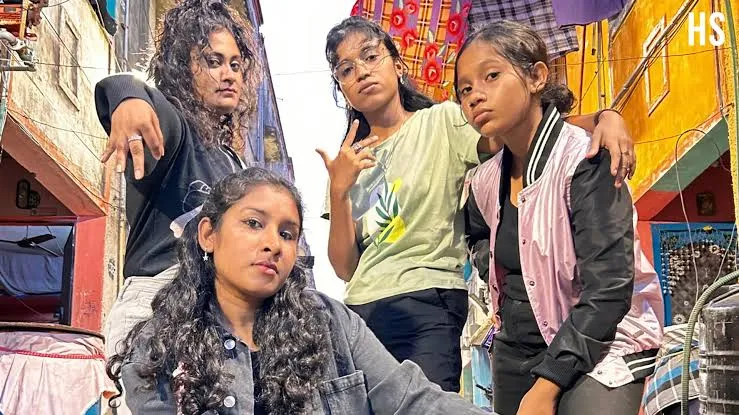
The first song began with a camera. Abisha, a young woman from Chennai, was filming residents being evicted from their homes in RA Puram, one of the city's upscale neighbourhoods, where working-class families had lived for years. In the aftermath, one of the displaced residents died by suicide. The grief and anger of that moment became the seed of Sollisai Sistahs, an all-women rap crew that is now reshaping who gets to speak, and what gets said, in Tamil hip-hop.
The crew's story, profiled by YourStory's HerStory on 28 September 2026, is one of art as testimony. Their songs address subjects that mainstream Tamil music has often avoided or treated lightly: caste discrimination, misogyny, honour killings, menstruation taboos and the unequal burden of climate change on marginalised communities.
Four voices, one crew
Sollisai Sistahs comprises four artists, each performing under a stage name. Abisha performs as B-Sha. Kavya is Kavi Chikki. Suwathi performs as Raaga Kaatralai. The fourth member is Neya.
The group came together at Marghazhiyil Makkalisai, the annual people's music festival organised by the Neelam Cultural Centre, the arts organisation associated with filmmaker Pa. Ranjith that has championed anti-caste art and Dalit cultural expression in Tamil Nadu. The festival's name draws on the Tamil month of Margazhi, traditionally associated with Carnatic music concerts in Chennai's sabhas. Makkalisai, meaning "people's music", deliberately reclaims that season for forms of music born in working-class and marginalised communities.
That context matters. Neelam has already helped launch acts such as The Casteless Collective, the band that blended gaana, rap and rock to bring anti-caste politics to large audiences. Sollisai Sistahs extends that lineage with a distinctly feminist voice.
Parai beats and street rap
Musically, the crew fuses traditional and contemporary forms. Their performances combine the parai, a frame drum historically played by Dalit communities and long stigmatised because of that association, with the rhythms and verbal dexterity of street rap. Reclaiming the parai is itself a political statement. An instrument once linked with caste-based labour becomes a source of pride and power on stage.
Their catalogue reflects the breadth of their concerns. "Highya Highya" is a song about sisterhood and misogyny. "Kaadhal Pannaa" explores contemporary love through an inclusive lens. "Veppa Marathadiyila" is a Tamil-Kannada folk-rap fusion that addresses climate issues. The crew's fifth single was part of a Climate Emergency Mixtape produced by the youth media platform Youth Ki Awaaz.
The climate work has drawn attention in its own right. The Hindu reported earlier this month that the crew was putting marginalised people at the centre of the climate debate. That framing reflects a reality often missing from policy discussions: those who contribute least to emissions, including informal workers, fishing communities and urban poor families living in flood-prone settlements, are often the first to bear the consequences of heatwaves, floods and displacement.
Breaking into a male-dominated scene
Tamil hip-hop has grown rapidly over the past decade, carried by independent labels, streaming platforms and a generation of artists writing in their own language about their own streets. Tracks such as "Enjoy Enjaami" by Dhee and Arivu showed that Tamil-language independent music with a political undercurrent could reach enormous global audiences.
Yet the scene, like hip-hop in most parts of the world, has been dominated by men. Women artists have faced barriers ranging from limited access to studios and stages to harassment and a lack of role models. The News Minute has described Sollisai Sistahs as creating ripples in a male-dominated Tamil rap scene.
Abisha has described the effect that even one woman's presence can have on young audiences:
"If one woman being present could create that kind of impact on a teenage boy, more women in the room would create a bigger impact."
The remark captures the crew's theory of change. Representation is not only about the performers themselves. It shapes how audiences, particularly young men, understand women's voices, anger and creativity. A teenage boy who hears women rapping about harassment and caste pride may carry that experience into how he treats the women around him.
The subjects others avoid
Sollisai Sistahs' willingness to address menstruation and honour killings is notable. Menstrual stigma remains widespread in parts of India, influencing everything from girls' school attendance to restrictions on women's movement and participation in religious life. Honour killings, murders of young people, often women, by family members for marrying across caste lines, continue to be reported in Tamil Nadu and other states.
Putting these subjects into rap verses makes them harder to ignore. Hip-hop has long served as a vehicle for communities to narrate injustice in their own words, from the South Bronx to the banlieues of Paris. Sollisai Sistahs brings that tradition into Tamil, rooted in local rhythms and local struggles.
From local stages to global ambitions
The crew's stated goals go beyond their own careers. They want to expand space for female and queer artists in the music scene, perform internationally and address the representation gaps that marginalised women face in the music industry.
Those ambitions come with practical hurdles. Independent artists in India depend heavily on streaming revenue, brand collaborations and live performance fees, all of which favour artists with large followings and industry connections. Access to funding for music videos, production and touring can be difficult to secure, particularly for artists whose politics may make some sponsors cautious.
At the same time, the environment has rarely been more open. Streaming platforms have lowered the cost of distribution, social media allows artists to build audiences directly, and cultural organisations such as Neelam provide stages and networks. Global audiences have also shown growing interest in music from India that reflects local languages and realities rather than imitating Western templates.
Why this story matters beyond music
For readers of The Impactful Global Icon, Sollisai Sistahs is a reminder that impact is not only created in boardrooms or laboratories. Cultural work changes the stories societies tell about themselves, and those stories shape which injustices are tolerated and which are challenged.
The four women behind Sollisai Sistahs are building something that resembles a start-up in many ways: a distinctive product, a clear mission, a loyal early audience and the ambition to scale. Their capital is their voices, and their market is anyone willing to listen to a perspective that Tamil music has rarely amplified.
What began with a phone camera at an eviction site in Chennai has become a platform for women who refuse to stay silent. In a scene still learning to make room for them, Sollisai Sistahs is not waiting to be invited.