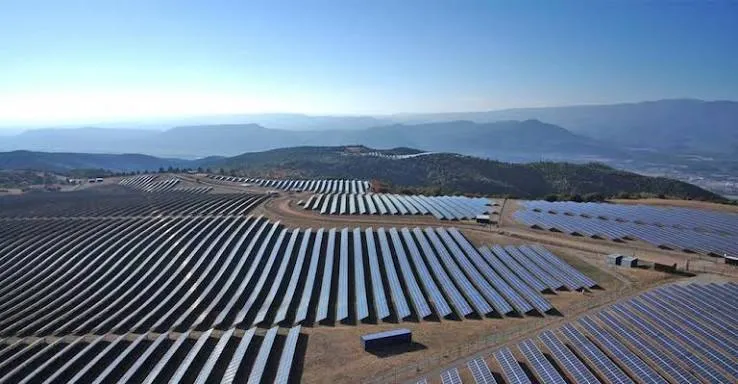
Sonnedix, a global independent renewable energy producer, has secured $1.3 billion in financing to refinance a gigawatt-scale portfolio of solar and wind assets in Chile and to fund additional battery storage capacity, according to renewable-energy sector reporting confirmed on September 11. The package supports Sonnedix's existing generation assets in the country while providing new capital specifically earmarked for storage infrastructure designed to improve dispatchability and allow the company to capture higher-value electricity pricing periods.
The financing arrives at a pivotal moment for Chile's renewable energy sector, which has developed one of the highest concentrations of utility-scale solar generation in Latin America thanks to the exceptional solar irradiance found across the country's northern Atacama Desert region. That abundance of low-cost solar generation has, paradoxically, created its own commercial challenge: periods of oversupply during peak sunlight hours have at times driven wholesale electricity prices toward zero or even negative territory, making battery storage an increasingly essential complement to solar generation rather than an optional add-on, since storage allows generators to shift electricity sales into higher-priced evening and night-time periods.
Sonnedix's decision to combine refinancing of existing generation assets with new capital directed specifically at storage reflects a broader pattern now visible across mature renewable energy markets globally. As solar and wind penetration rates climb in grids from California to Australia to Chile, the marginal value of additional standalone generation capacity has in many cases declined relative to the value of dispatchable, storage-backed capacity that can be deployed flexibly to match demand patterns rather than simply generating whenever weather conditions allow.

The scale of the $1.3 billion package places it among the larger renewable energy financing transactions completed in Latin America this year, at a time when the International Energy Agency has projected global energy investment will reach a record $3.4 trillion in 2026, of which approximately $2.2 trillion is expected to flow toward clean-energy technologies and infrastructure. Within that broader context, battery-storage spending specifically is projected to exceed $100 billion globally in 2026, reflecting the sector's rapid transition from a niche complement to solar and wind toward a core pillar of renewable energy infrastructure investment in its own right.
For Sonnedix, refinancing an existing gigawatt-scale portfolio rather than raising fresh project-level debt for new development reflects a capital-recycling strategy increasingly common among independent power producers operating mature renewable assets. By refinancing operating assets at favourable terms, companies can extract capital for redeployment into new projects or, as in this case, retrofit existing sites with additional storage capacity, without needing to secure entirely new project financing structures from scratch — a process that is typically more time-consuming and carries higher execution risk than refinancing cash-generating operating assets.
Chile's position as a proving ground for large-scale battery storage integration alongside solar and wind generation has drawn increasing attention from renewable energy investors and developers operating in other high-solar-irradiance markets, including parts of the Middle East, Australia and India, all of which face similar challenges around managing periods of renewable oversupply as solar penetration increases. Lessons learned from Chile's experience integrating storage at scale are likely to inform how developers in those other markets structure their own storage investment strategies in the coming years.
Sonnedix has not disclosed the specific breakdown of the $1.3 billion package between refinancing of existing assets and new capital allocated to storage development, nor detailed the total planned battery storage capacity to be added to the Chilean portfolio. The transaction nonetheless stands as one of the more significant markers this year of how central battery storage has become to the economics of renewable energy investment in markets with high renewable penetration — a trend likely to accelerate further as more grids worldwide approach the point where additional standalone solar and wind capacity delivers diminishing commercial returns without storage to match.