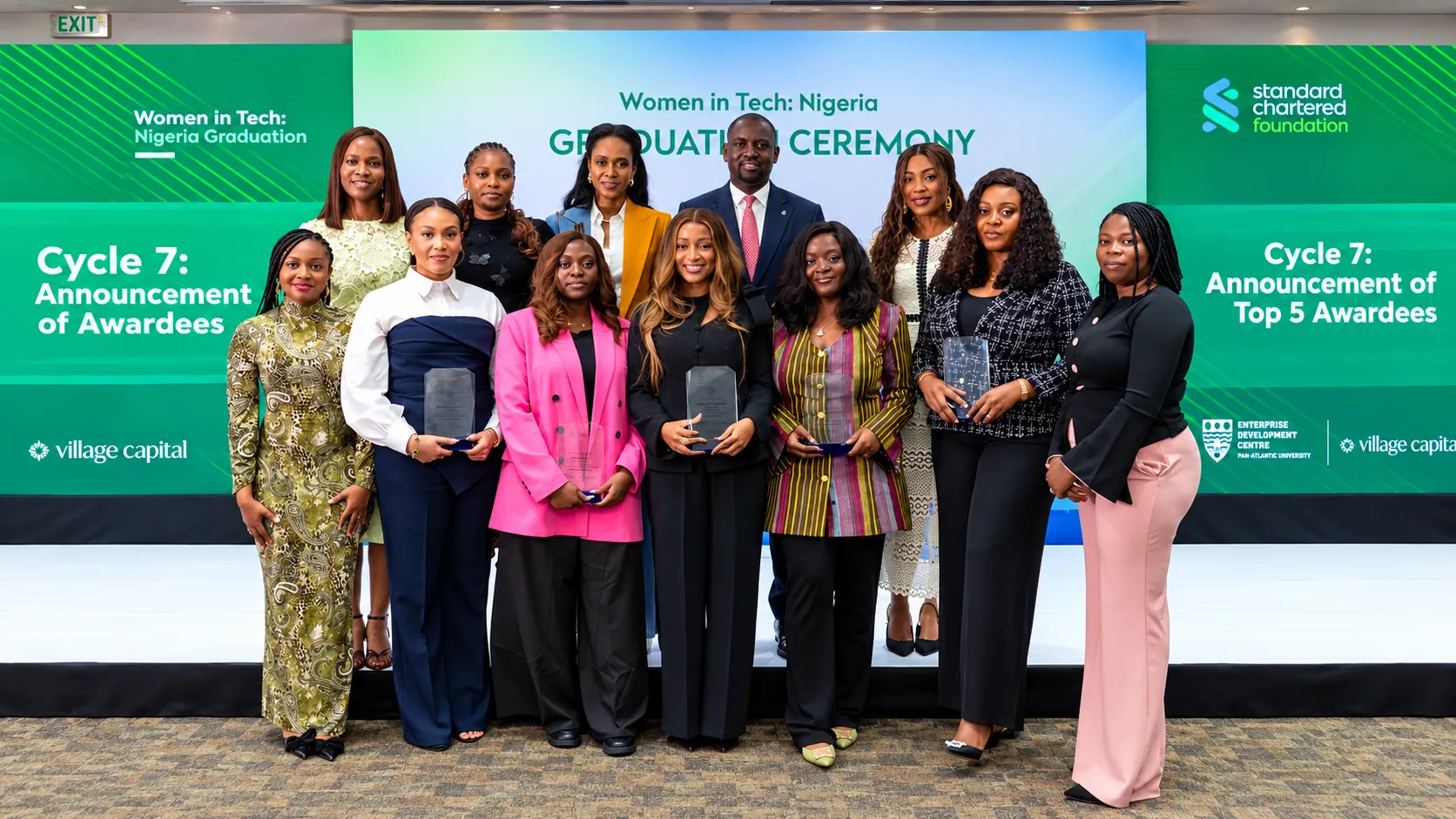
Five women-led technology businesses in Nigeria have won grant funding from the Standard Chartered Foundation's Women in Tech Accelerator, in a cohort that reflects how African founders are applying artificial intelligence and digital tools to everyday problems in health, education, trade and accessibility.
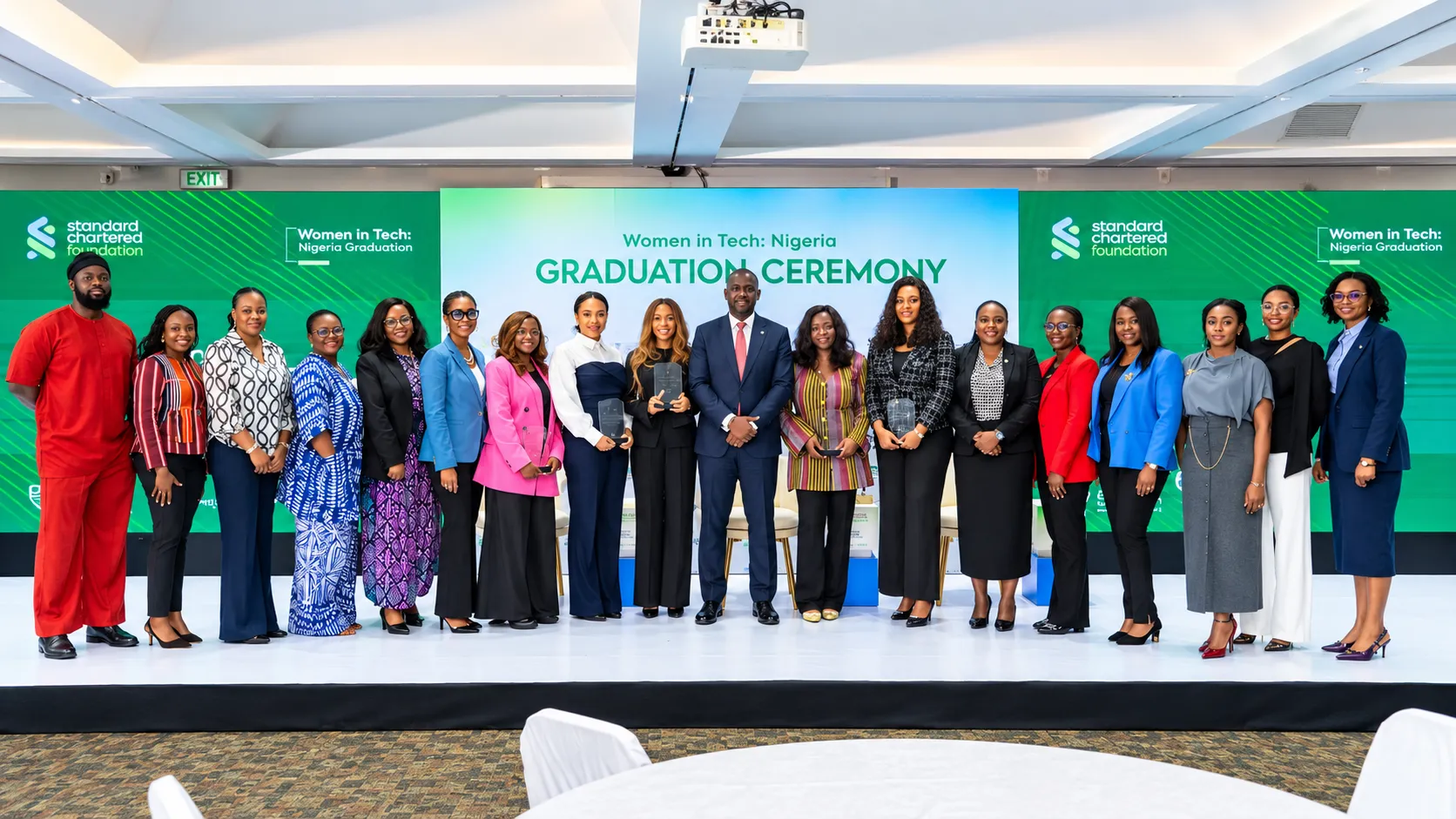
The winners, announced on 2 October, will each receive $10,000, for a total of $50,000, BellaNaija reported. They were selected from 11 ventures that took part in the seventh cycle of the programme in Nigeria, which is delivered with Village Capital and the Enterprise Development Centre (EDC) of Pan-Atlantic University in Lagos.
The grants are modest by venture capital standards. But for early-stage founders, particularly women who face persistent barriers to raising capital, non-dilutive funding combined with training and mentoring can be the difference between a promising idea and a business that survives.
"Empowering women entrepreneurs drives inclusive economic growth," said Joke Adu of Standard Chartered. She said the programme had directly trained more than 70 women and funded 35 women-led businesses in Nigeria.
The five winners
Jennifer Esiaba, founder and chief executive of Mariam Grey Pharmacy, runs an AI-powered telepharmacy service. It provides medication, pharmacist consultations and chronic care support through smartphones and USSD, the text-based mobile technology that works on basic phones without internet access. That second channel matters in Nigeria, where many people in rural and low-income areas do not own smartphones or have reliable data connections.
Christine Imoukhuede, founder and chief executive of Ahavaplan, has built an AI-powered customer relationship management platform for event planners. It helps them manage clients, events, communications and operations, serving a large and fragmented industry that has traditionally relied on spreadsheets and messaging apps.
Toyosi Badejo-Okusanya, founder and chief executive of Adaptive Atelier, leads an accessibility technology company. It creates inclusive digital experiences through AI-driven accessibility audits and runs a marketplace connecting businesses with disabled professionals, addressing both digital exclusion and employment barriers faced by people with disabilities.
Fara Popoola, founder and chief executive of Proc360, operates a platform that helps African small and medium-sized enterprises trade with confidence. It offers supplier verification, quality control and secure payments, tackling the trust problems that make cross-border and business-to-business trade risky for smaller firms.
Adejoke Haastrup, founder and chief executive of Kidsthatcode, runs an edtech platform that teaches African children coding and digital skills through classes, mentorship and hackathons, aiming to prepare the next generation for a technology-driven economy.
Why the programme matters
The Women in Tech Accelerator launched in Nigeria in 2020 and is active in 14 of Standard Chartered's markets, according to the foundation. It has supported more than 4,000 entrepreneurs globally. The programme forms part of Futuremakers by Standard Chartered, the bank's global initiative focused on economic inclusion for young people, particularly girls and those with visual impairments.
Nneka Okekearu of the EDC said that through the programme, women "strengthened their businesses, deepened technology use, and built valuable connections".
The emphasis on technology is deliberate. Many women-owned businesses in Nigeria operate informally and at small scale. Digital tools can help them reach more customers, manage operations more efficiently and build the records needed to access finance. AI, in particular, is lowering the cost of services that once required large teams, from customer support to compliance checks.
A funding gap that persists
Women founders across Africa face a stark financing gap. Startups led solely by women receive only a small fraction of the venture capital invested on the continent each year, a pattern that mirrors, and in some respects exceeds, the gap in other regions. Barriers include limited access to investor networks, biases in how investors assess risk and the concentration of women-led businesses in sectors that venture funds are less likely to target.
Accelerators such as Standard Chartered's are one response. By combining grants, training and introductions to investors, they aim to help women-led companies reach a stage where they can attract larger rounds. Grants also allow founders to test and refine their businesses without giving up equity early, which can be especially valuable when valuations for women-led startups tend to be lower.
Nigeria's startup ecosystem is one of the largest in Africa, centred on Lagos, and has produced fintech companies with continental reach. But founders have faced a difficult environment in recent years, including currency volatility, high inflation and a slowdown in venture funding across African markets. In that context, support for very early-stage businesses has become more important. The diversity of the winning ventures is also notable. They span regulated sectors such as pharmacy, consumer services such as event planning, social impact areas such as disability inclusion and education, and business infrastructure such as trade verification. That range suggests that women founders in Nigeria are not confined to a narrow set of industries but are building technology businesses across the economy. It also shows how AI tools have become accessible enough for early-stage companies to embed them in products from the outset, rather than treating them as a future upgrade.
Parallels with India
The challenges Nigerian women founders face will be familiar to their counterparts in India. Women-led startups in India have raised over $8 billion in total and produced several unicorns, yet capital thins out sharply at the Series A stage and beyond, according to recent industry analyses. Tech startups co-founded by women in India raised about $1 billion in 2025, according to data from Tracxn, a small share of total startup funding.
Both countries have large informal economies where women play a central role, and both have seen technology create new routes into entrepreneurship. Lessons from programmes that combine capital with capability-building, and that prioritise businesses solving real problems in health, education and trade, can travel between the two ecosystems. Indian and African founders increasingly share models too, from mobile money to USSD-based services designed for basic phones.
Beyond the grants
The most lasting value of programmes like this often lies in networks rather than money. Founders gain mentors, peers and visibility with investors and corporate partners. For the five winners, the $10,000 grants are a starting point; their challenge now is to turn the momentum into customers, revenue and follow-on funding.
Their businesses address needs that will only grow: access to medicine, inclusion for people with disabilities, trust in trade, digital skills for children and tools for small businesses. If they succeed, they will not only build companies. They will also add to the evidence that investing in women founders is among the most practical ways to build inclusive economies.