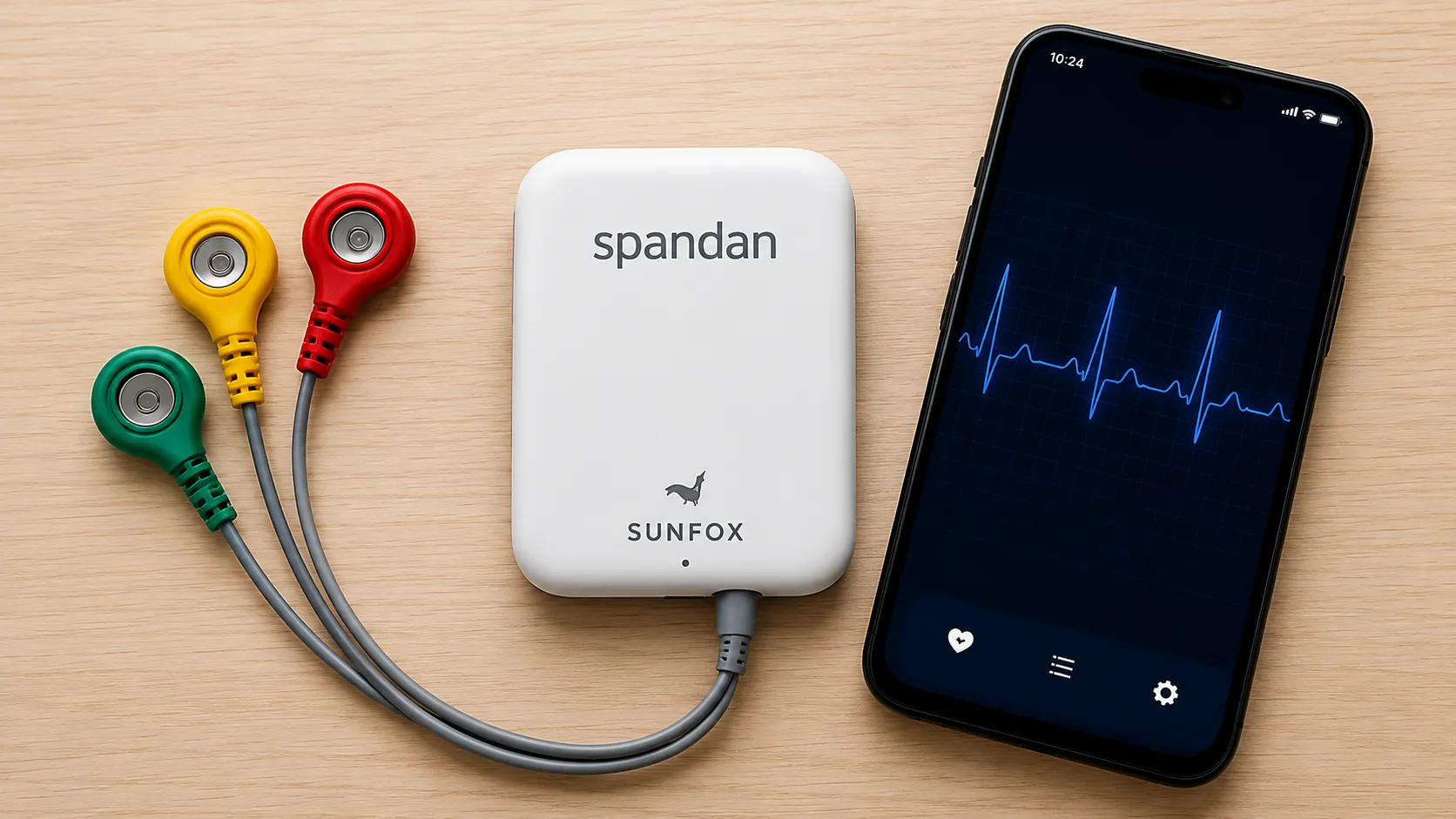
Sunfox Technologies, a Dehradun-based medical technology company that makes the Spandan range of portable electrocardiogram (ECG) devices, has raised $7 million (about ₹67 crore) in a Series A round to expand across India and build the commercial machinery it needs to sell abroad.
The round, announced on 7 October, was backed by investor Ashish Kacholia, Lashit Sanghvi, Alchemy Capital and 3one4 Capital, according to YourStory and Inc42. Tech Observer and Indian Startup Times described it as the largest fundraise in the company's ten-year history.
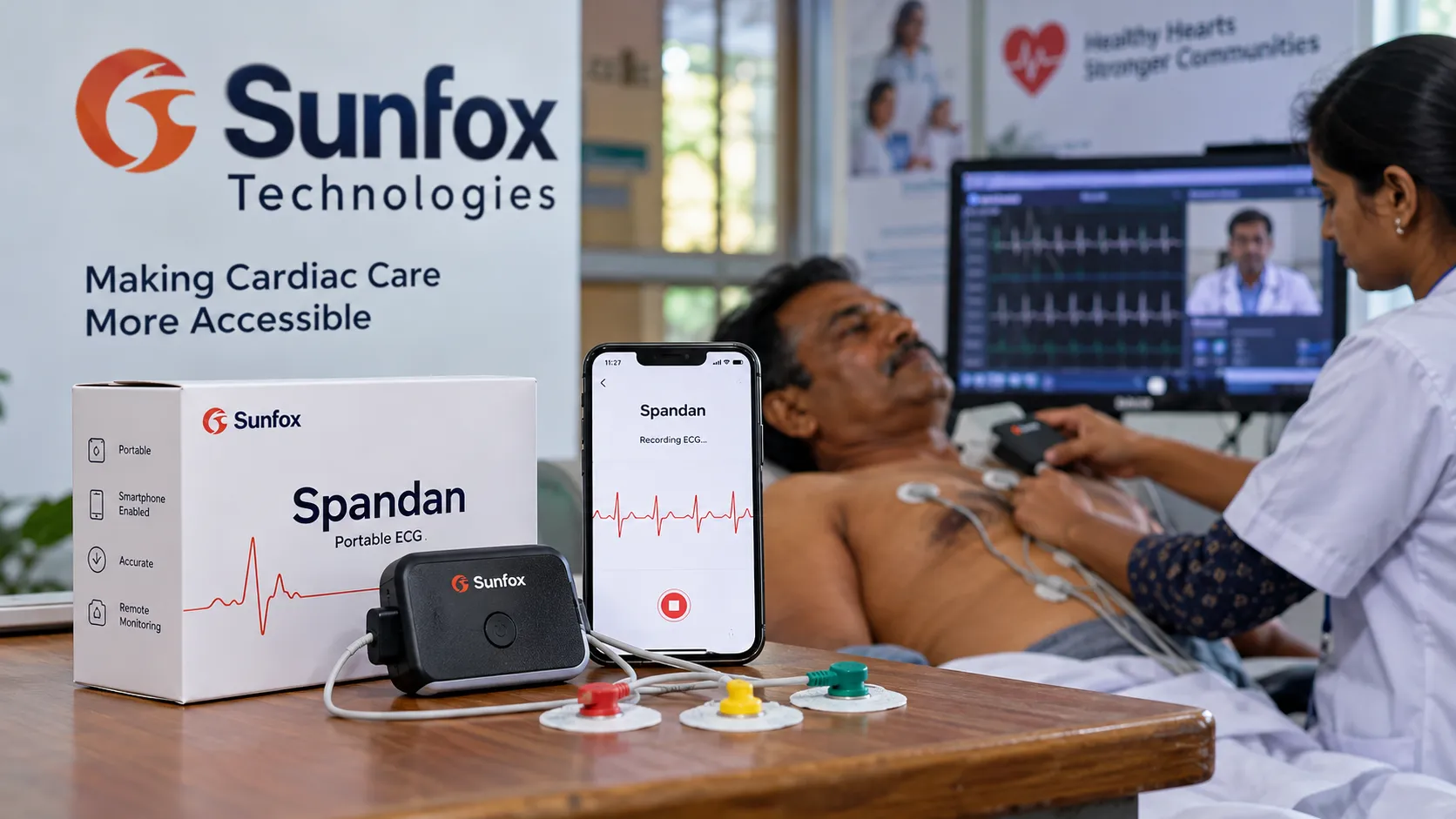
Spandan lets a health worker, a doctor or a patient record an ECG through a smartphone and send it to a clinician for remote interpretation. The company said the new capital will go into research and development, clinical evidence, engineering and new cardiac technologies, as well as regulatory, distribution and commercial teams for priority markets in the United States, Europe and Africa.
A heart test that travels to the patient
An ECG records the electrical activity of the heart and is one of the first tests doctors use to identify a heart attack. In large Indian hospitals it is routine. In villages and small towns, where the nearest cardiologist may be hours away, getting a reliable reading quickly and into the hands of someone who can act on it has been far harder.
Sunfox's approach is to separate the recording from the reading. In the public health model the company describes, a nurse at a primary or community health centre takes an ECG with a Spandan device and transmits it to doctors or cardiologists sitting at a district hub. The platform flags patterns that may need urgent attention, and suspected cases are escalated for treatment, with doctors available to review results around the clock.
That coordination layer is sold as Spandan One, a digital service for remote ECG review, case management and running tele-ECG networks. The company says Spandan One is used to screen around 5 million patients a year. Its product line also covers personal use at home and clinical and institutional use in hospitals, clinics and telemedicine networks.
The company claims about 60,000 Spandan devices have been deployed across India, reaching more than 20,000 villages in states and union territories. Tech Observer reported that its products reach healthcare providers in more than 1,800 PIN codes and that it is present in more than 15 countries. These are the company's own figures, and it did not disclose revenue.
Cardiovascular disease is widely reported to be the leading cause of death in India, and the window for effective treatment after a heart attack is measured in hours. Any tool that shortens the time between first symptoms and a confirmed diagnosis therefore has obvious value for a public health system that is thin on specialists outside the cities.
That is also why public programmes matter to the company's model. Primary and community health centres are the front door of India's government health system for most rural families, and equipping them with a device that a trained nurse can operate, rather than one that needs a technician, is a practical way to extend cardiac screening without adding cardiologists.
From a college tragedy to Shark Tank
Sunfox was founded in 2016 by Rajat Jain, Arpit Jain, Sabit Rawat, Nitin Chandola and Saurabh Badola, and began as a research and development venture in Uttarakhand. According to YourStory, the founders started the company after the death of a friend from college, which pushed them to look at how technology could close gaps in timely cardiac assessment.
The company gained national visibility on the first season of Shark Tank India, where all five investors on the panel backed it. In 2024 it raised ₹15 crore (about $1.8 million), in a round led by Venture Catalysts, Inc42 reported. The new Series A is several times that size and brings in public-market investors with long holding periods.
Rajat Jain, the founder and chief executive, framed the raise as a step up in ambition. “This round gives us the resources to take what we have built in Dehradun to a much larger stage,” he said, adding that the company would invest deeply in R&D while expanding across India.
Lashit Sanghvi, co-founder of Alchemy Capital Management, pointed to the company's potential to scale from India into global markets. “We believe its focus on innovation, accessibility and long-term value creation makes this an exciting next phase of growth,” he said. Kacholia, according to Tech Observer, described the investment as backing a company that is making quality healthcare more accessible at the grassroots level.
3one4 Capital, the Bengaluru venture firm founded by Pranav Pai and Siddarth Pai, invests across consumer, enterprise, fintech, healthcare and deep technology. Its presence alongside Kacholia and Alchemy gives Sunfox a mix of institutional venture money and investors better known for their public-market portfolios.
Regulators, rivals and the road abroad
Sunfox holds regulatory approvals in India, Ghana, Kenya, Tanzania and South Africa, and is pursuing clearances in the United States and the European Union. Those two markets are the hardest to enter for any medical device maker: clearance demands clinical evidence, quality systems and documentation that can take years and significant capital to assemble, which helps explain why the company has earmarked part of the round for clinical work.
Africa is a more natural extension of the model it has built at home. Many countries there face the same mismatch between a large rural population and a small number of cardiologists, and a device that turns a community health worker into the first point of cardiac screening fits that setting.
Competition in India is real. Inc42 named Agatsa, which makes SanketLife devices, and Cardiotrack, which offers handheld ECG devices with remote interpretation, as rivals. Larger global medical technology companies also sell portable and consumer ECG products, and smartwatches have made single-lead heart rhythm checks familiar to many urban users.
Sunfox's advantage, if it holds, lies in its installed base and its role inside public health programmes, where procurement is slow but contracts can be large and sticky. The next test is whether a company built in Dehradun can turn that domestic footprint into approvals and distribution in the world's most demanding device markets, while keeping the tele-ECG network that makes the hardware useful running at scale.
For investors, the measures to watch over the next two years will be straightforward: whether US and EU clearances arrive, how many new public health contracts the company signs at home and in Africa, and whether the 5 million annual screenings it reports turn into a growing, recurring service business rather than one-off device sales.