
WomenEntrepreneurship5 MIN READ

Alli Schaper's SuperMush Raises $3 Million Series A Led by India's NDude Labs as Functional Wellness Goes Mainstream

SuperMush, the functional wellness brand co-founded by Alli Schaper, has raised a $3 million Series A led by Indian healthcare investor NDude Labs after expanding into more than 2,000 US stores including Target and Sprouts.

By Prathista Lazar · Author7 October 2026New
Alli Schaper's SuperMush Raises $3 Million Series A Led by India's NDude Labs as Functional Wellness Goes Mainstream

SuperMush, a US functional wellness brand co-founded by entrepreneur Alli Schaper, has raised $3 million in a Series A round led by NDude Labs, an Indian healthcare and wellness investment firm, as products built on mushrooms, adaptogens and nootropics move from niche health stores into mainstream retail.

The funding, announced on 6 October, will support product expansion, the development of high-efficacy formulations, team building and infrastructure, the company said.

The round is notable on two counts. It backs a woman-led consumer brand at a time when female founders continue to receive a small share of venture funding, and it represents a cross-border bet by an Indian investor on a brand whose market is almost entirely in the United States.

From mouth sprays to Target shelves

SuperMush grew out of an earlier venture. In 2020, Schaper and co-founder Brian Friedman built Multiverse, a curated online marketplace for mushroom-based products, designed to help consumers navigate a confusing and loosely regulated category. Reviewing thousands of brands for that marketplace convinced the pair that there was room for an accessible, entry-level product.

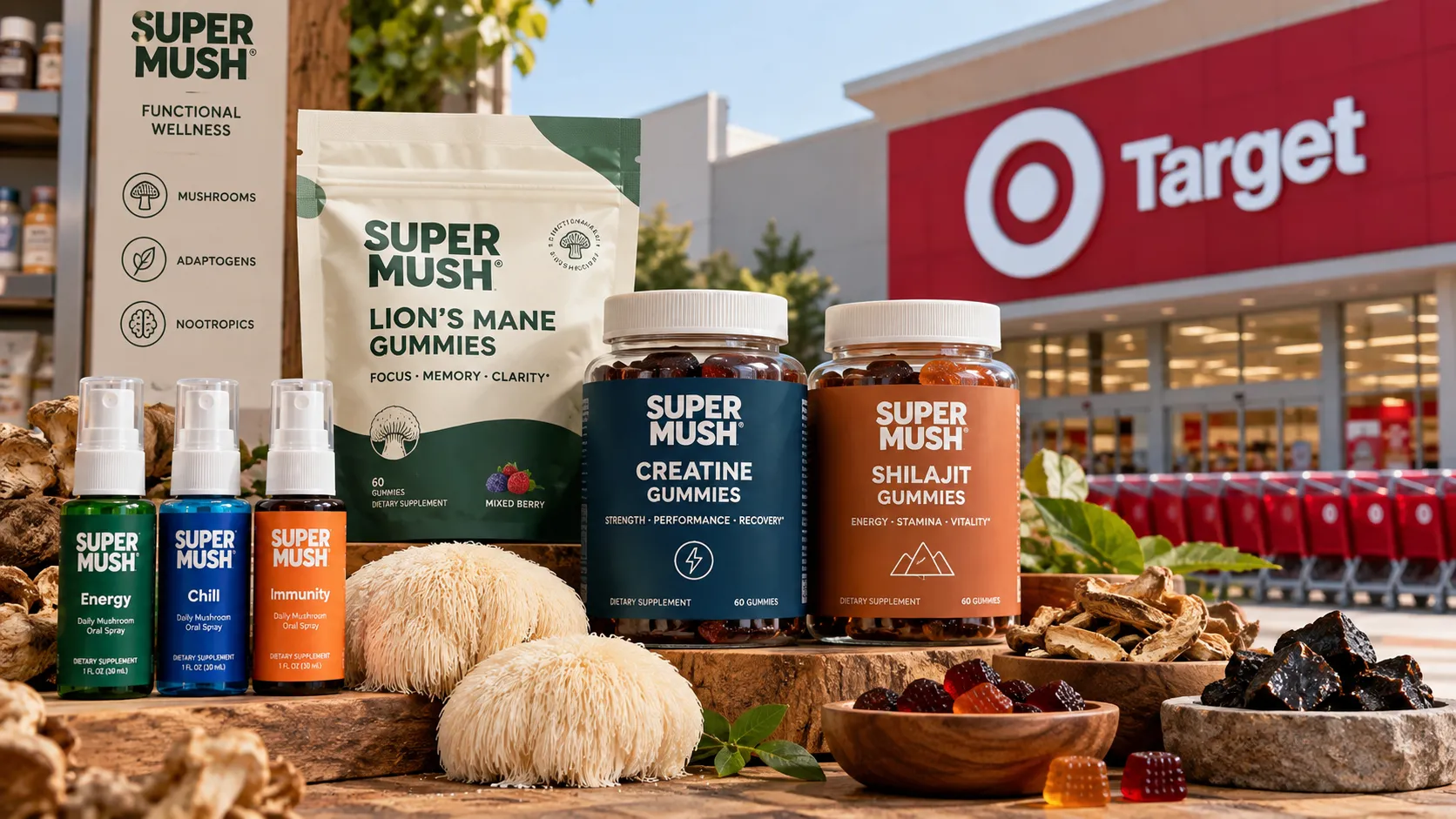
The result was SuperMush, which launched in November 2021 with three mushroom-based mouth sprays: Energy, Chill and Immunity. In an earlier interview with consumer-brand publication Thingtesting, the founders said developing the first line took nine months and about $200,000, funded in part by a $1.5 million seed round.

Schaper chose the spray format deliberately. "It's the most fun way to take supplements. It's the easiest and most effective, and it's more mobile," she told Thingtesting. The founders have described their ambition as building something like "a Thrive Market for mushrooms", an approachable brand that combines education with rigorous product vetting.

The range has since broadened. SuperMush has launched Shilajit, Creatine and Lion's Mane gummies, formats that sit closer to the mainstream supplement aisle and appeal to consumers who might be wary of a mouth spray.

Its retail growth has been rapid. Over the past year, SuperMush has expanded into more than 1,000 Target stores and now has a retail footprint of more than 2,000 stores across the United States, including Target and natural-foods chain Sprouts Farmers Market.
247eef17-5ea7-4cdf-b5e6-59cde4a85811.png

Why an Indian investor is backing an American brand

NDude Labs, which describes itself as an Indian healthcare and wellness investment firm, is an unusual lead investor for a US consumer brand at this stage. Cross-border investment flows between India and the United States have traditionally run in the other direction, with American funds backing Indian start-ups.

The deal reflects how Indian capital is becoming more global in outlook. Indian investors, family offices and corporate groups have increasingly looked abroad for exposure to categories and markets where they see growth, and wellness is one of the most dynamic. Many of the ingredients central to the functional wellness trend, from ashwagandha to shilajit, have deep roots in Ayurveda and traditional Indian medicine, giving Indian investors familiarity with the category and, in some cases, access to supply chains.

SuperMush plans to strengthen its presence across retail, direct-to-consumer and online marketplaces, aiming to establish itself as a leading functional wellness brand. Its range now spans nootropics, which are marketed for cognitive support, adaptogens, which are said to help the body manage stress, and functional mushrooms such as lion's mane, which have become popular in products ranging from coffee alternatives to snacks.


“There's not a single problem that the world is facing that mushrooms cannot help solve.”
— Alli Schaper, Co-founder, SuperMush (in an earlier interview with Thingtesting)

The category has attracted both enthusiasm and scepticism. Demand has grown rapidly, driven by younger consumers looking for alternatives to caffeine, sugar-heavy energy drinks and conventional supplements. But scientific evidence for many claimed benefits remains limited, and regulators in the United States have warned supplement makers against unsupported health claims. Brands that invest in formulation quality, testing and transparent labelling are likely to fare best as the market matures and retailers become more selective.

Gummies have become one of the fastest-growing supplement formats because they are easy to take and feel closer to a snack than a pill. They also bring technical challenges, from keeping active ingredients stable to limiting sugar content, which is one reason formulation quality has become a point of competition. SuperMush's move into gummies featuring creatine and shilajit places it alongside ingredients that have crossed over from sports nutrition and traditional medicine into everyday wellness routines.

SuperMush's emphasis on "high-efficacy formulations" and "research-backed ingredients" in its funding announcement suggests it recognises that pressure. Retail buyers at chains such as Target increasingly expect evidence of quality and consistent sell-through before granting more shelf space.

A woman-led brand in a hard funding market

Schaper's success in raising a Series A comes against a difficult backdrop for female founders. PitchBook data for 2025 showed all-female founding teams in the United States raising about $3.2 billion across 794 deals, compared with more than $191 billion for all-male teams, even as companies with at least one female founder captured a record share of total deal value, inflated by a handful of very large AI rounds.

Consumer packaged goods has been one of the categories where women founders have built some of their most visible companies, often by identifying needs that incumbent brands overlooked. It has also been a tough sector for venture funding in recent years, as investors have become wary of brands that spend heavily on marketing without a clear path to profitability.

Schaper and Friedman's path, from marketplace operators to brand owners, is also instructive. Running Multiverse gave them a buyer's view of thousands of products and of what confused or disappointed consumers, insight that shaped the positioning, format and education behind SuperMush.

SuperMush's expansion into thousands of physical stores offers a measure of validation that pure online brands often lack. Retail distribution at Target scale demands reliable manufacturing, logistics and trade marketing, and buyers review performance closely. Brands that fail to sell through risk losing shelf space quickly.

Schaper has long spoken about mushrooms with evangelical enthusiasm. "Mushrooms are so misunderstood," she told Thingtesting, describing the misconceptions consumers hold about functional mushrooms compared with psychedelic varieties. With fresh capital and a growing retail footprint, SuperMush now has the means to test whether that enthusiasm can be turned into a durable mainstream brand.

For women entrepreneurs in India and across the diaspora, the deal is also a reminder that capital is increasingly flowing across borders in both directions, and that Indian investors are prepared to back founders well beyond their home market.

TagsSuperMushAlli SchaperWomen FoundersFunctional MushroomsWellnessSeries ANDude LabsTargetConsumer BrandsCross-Border InvestmentWomen Entrepreneurship

Reader reviews

Sign in to rate and review this article.
Loading reviews…
