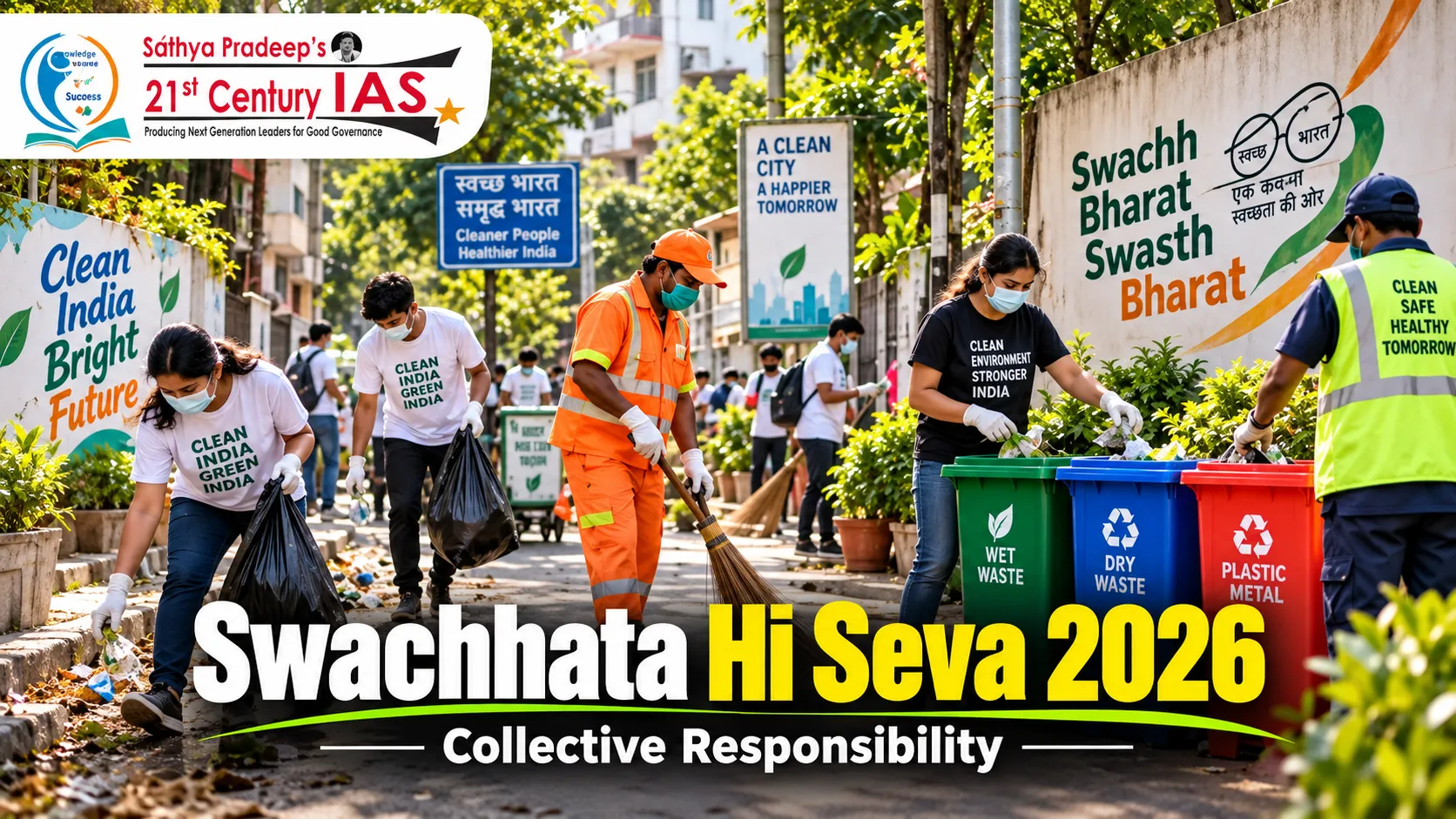
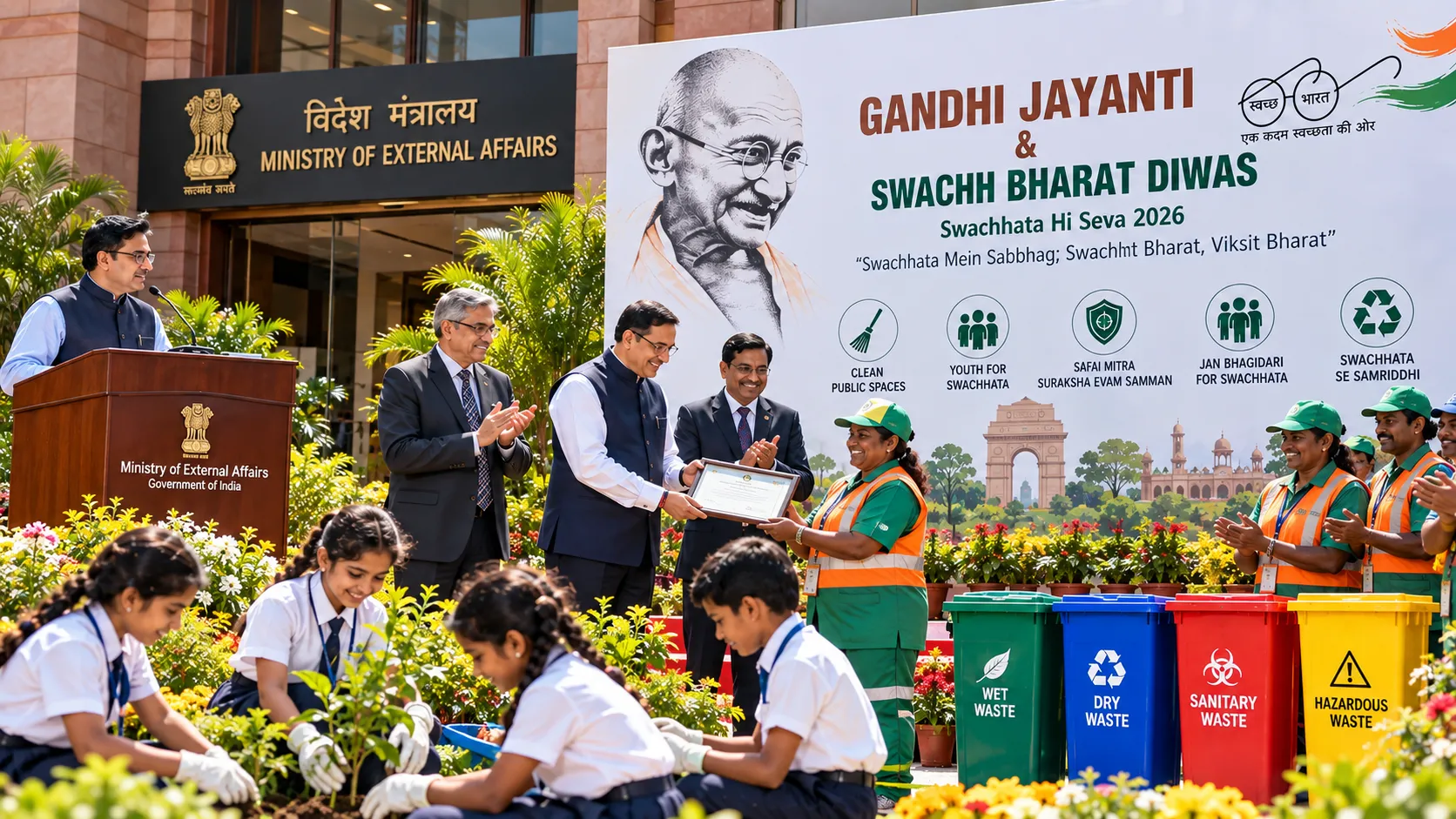
India's Ministry of External Affairs marked Gandhi Jayanti and Swachh Bharat Diwas on 2 October by honouring the sanitation workers who keep its offices running, in an event that also brought the ministry's participation in this year's national cleanliness campaign to a close.
MEA spokesperson Randhir Jaiswal said in a post on X that the ministry celebrated the day with an event that "culminated the 'Swachhata Hi Seva 2026' campaign". Senior officials, the Secretary (Establishment) and the Additional Secretary (Administration), felicitated the ministry's SafaiMitras, as sanitation workers are officially known, along with winners of competitions held during the campaign. The ministry said young children also took part enthusiastically, reflecting the spirit of "Yuva for Swachhata".
The ceremony was one of thousands held across government departments, schools and local bodies on the day. It is a reminder that Swachh Bharat, launched 12 years ago, has become an annual civic ritual. But the campaign's content is changing. This year's edition places far more emphasis on what happens to waste after it is collected, and on the dignity and safety of the workers who handle it.
From toilets to systems
The Swachh Bharat Mission was launched by Prime Minister Narendra Modi on 2 October 2014, with the aim of eliminating open defecation by Gandhi's 150th birth anniversary in 2019. Its first phase focused heavily on building household toilets. Under the rural component alone, 12.22 crore household toilets have been constructed, according to government figures shared on Gandhi Jayanti this year.
The second phase, launched in 2021, shifted the focus to sustaining those gains and managing solid and liquid waste. More than 5.25 lakh villages, about 89.6% of the total, have now declared themselves Open Defecation Free Plus (Model), a status that requires arrangements for waste management, not just toilets.
Swachhata Hi Seva, the annual campaign that runs in the weeks around Gandhi Jayanti, is designed to mobilise public participation. The 2026 edition began on 17 September and carries the theme "Swachhata Mein Sahbhag; Swachh Bharat, Viksit Bharat", which translates roughly as "participation in cleanliness; a clean India, a developed India".
Five pillars
This year's campaign is organised around five pillars. The first is the transformation of so-called Cleanliness Target Units, persistently dirty or neglected spots, along with the cleaning of public places. The second, Swachh Paathshala – Yuva for Swachhata, engages students and young people. The third, Safai Mitra Suraksha Evam Samman Shivir, focuses on the safety and dignity of sanitation workers, including health camps and access to welfare schemes. The fourth, Jan Bhagidari for Swachhata, aims to draw in communities and civil society. The fifth, Swachhata Se Samriddhi, links cleanliness to prosperity through waste-to-wealth and the circular economy.
A nationwide shramdaan, or voluntary labour drive, titled "Ek Din, Ek Ghanta, Ek Saath" (one day, one hour, together), was held on 1 October from 8am to 9am, with citizens, officials and organisations cleaning public spaces simultaneously.
The workers at the centre
The emphasis on SafaiMitras is significant. India's sanitation workforce has historically been among its most marginalised, drawn disproportionately from communities subjected to caste discrimination, often employed through contractors with little job security and exposed to serious health risks. Deaths during the cleaning of sewers and septic tanks continue to be reported despite legal prohibitions on manual scavenging and hazardous cleaning without protective equipment.