ImpactFuture Tech5 MIN READ

Switch Mobility Wins Order for 840 Electric Buses for Delhi in One of the Largest Deals Under PM E-Drive

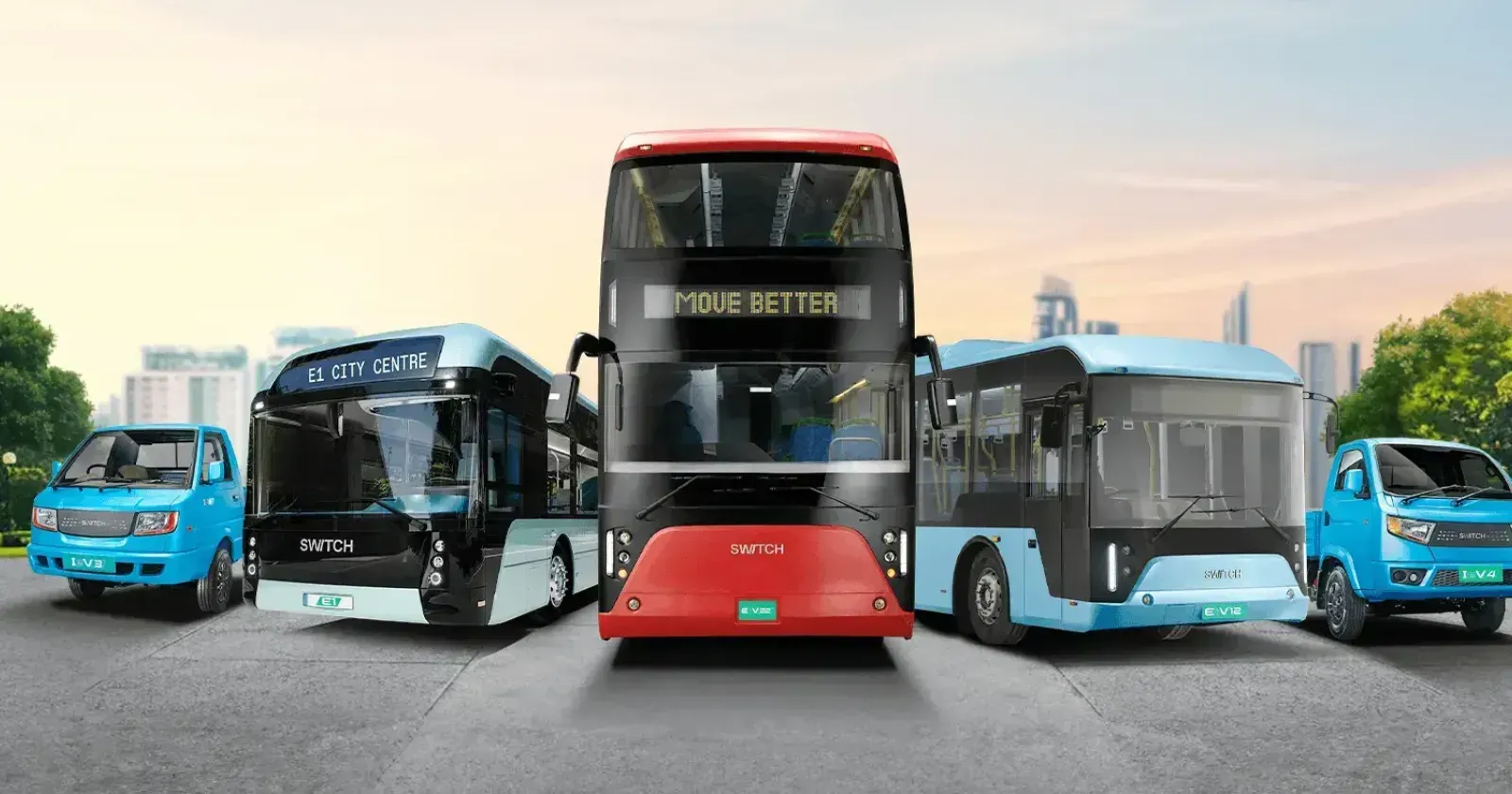
Hinduja Group-owned Switch Mobility will supply 840 air-conditioned electric buses to operator Antony Road Transport Solutions for deployment in Delhi under the first phase of the PM E-Drive scheme.

By Shaym Kumar · Author29 September 2026New
Switch Mobility Wins Order for 840 Electric Buses for Delhi in One of the Largest Deals Under PM E-Drive

Switch Mobility, the electric bus maker owned by the Hinduja Group, has secured an order for 840 electric buses to be deployed in Delhi under the first phase of the central government's PM E-Drive scheme. The order, announced on 28 September 2026, was placed by Antony Road Transport Solutions, the operator selected through a tender run by Convergence Energy Services Ltd (CESL).

The fleet will be split evenly between 420 nine-metre and 420 twelve-metre air-conditioned buses. They will be deployed for the Delhi Transport Corporation (DTC) and the Transport Department of the Government of Delhi. The companies did not disclose the contract value or a delivery schedule.

The deal is among the largest single electric bus orders placed in India, and it lands in a city where public transport electrification is as much a public health project as a climate one.

Why this order matters for Delhi

Delhi has one of the largest electric bus fleets of any city in India, and it continues to add vehicles as older compressed natural gas (CNG) buses are retired. The mix of vehicle sizes in the new order reflects a deliberate operational choice. Twelve-metre buses serve high-demand trunk routes, while nine-metre buses can navigate narrower roads and feed passengers into the metro and main bus corridors.

For commuters, the most visible difference will be air-conditioned, low-emission buses on routes that have been under-served. For the city, every diesel or CNG vehicle replaced by an electric one reduces tailpipe emissions in an airshed that regularly records some of the worst air quality among the world's major cities during winter.

Inside the PM E-Drive framework

PM E-Drive, approved by the Union Cabinet in 2024 with an outlay of about ₹10,900 crore, is the government's main instrument for supporting electric vehicle adoption across two-wheelers, three-wheelers, trucks, ambulances and buses. The bus component aims to put more than 14,000 electric buses on the roads of major cities.

Rather than buying buses directly, most cities procure them under operating contracts, in which a private operator owns and runs the fleet and the transport authority pays for the service delivered. This model shifts the high upfront cost of electric buses away from cash-strapped transport undertakings, while central support helps close the gap between operating costs and what cities can afford.

CESL, a subsidiary of state-owned Energy Efficiency Services Ltd, has acted as an aggregator for these tenders, pooling demand across cities to secure better prices. In January 2026, CESL floated a tender for 6,230 buses, including 3,330 for Delhi and 2,900 for other cities. The Antony order is one of the first large pieces of that programme to convert into vehicle orders.

The companies involved

Switch Mobility is part of the Hinduja Group and sits alongside Ashok Leyland, one of India's largest commercial vehicle makers. That relationship proved decisive for the buyer.

"Our long-term relationship with Ashok Leyland and the trust we have in the Hinduja Group have led us to place this order," said Jimmy John, director of Antony Road Transport Solutions. Antony is an established bus operator that has run large fleets for public transport authorities, and it is now among the private operators scaling up electric fleets under government-backed contracts.

“This order is a strong testament to the growing confidence in electric mobility solutions for large-scale public transportation.”
— Ganesh Mani, CEO, Switch Mobility

Ganesh Mani, chief executive of Switch Mobility, described the order as a signal of the direction of the market.

"This order is a strong testament to the growing confidence in electric mobility solutions for large-scale public transportation," he said.

image.png

A market growing quickly

Electric bus adoption in India has accelerated. According to Sustainable Bus, 2,944 electric buses were registered in India in the first half of 2026, an increase of about 40 per cent on a year earlier. Switch recorded 830 registrations in that period, giving it a 28.2 per cent share of the market.

The company is building a substantial order book. It had previously won an order for 650 nine-metre buses for Mumbai and Pune, and the Delhi contract significantly expands its presence in the national capital.

Its EiV9 nine-metre model offers modular battery configurations, a permanent-magnet motor delivering up to 213 kW of peak power, and dual-gun CCS2 fast charging. That charging standard matters because depot time is a major constraint for electric fleets. The faster a bus can recharge between shifts, the fewer spare vehicles an operator needs.

The challenges behind the headline number

Large orders are only the start of the work. Delivering 840 buses requires production capacity, a reliable supply of battery packs and components, and, critically, charging infrastructure at depots. In several Indian cities, delays in upgrading electricity connections and building depot chargers have held up the deployment of buses that were already manufactured.

Payment security is the other persistent risk. Private operators depend on timely payments from city transport undertakings, many of which run at a loss. Recent schemes have introduced mechanisms to protect operators against delayed payments, and the durability of those protections will influence how aggressively operators bid for future contracts.

Heat is also a practical consideration. Delhi's summer temperatures place a heavy load on air-conditioning systems, which draw on the same battery that powers the vehicle. Operators must plan routes and charging windows around the real-world range of buses in extreme conditions, not just the figures on a specification sheet.

What it means for India's clean-transport push

The order is a reminder that India's electric vehicle transition is not only about private cars and scooters. Buses carry far more people per vehicle, operate for long hours on predictable routes and return to depots every night. That makes them one of the most efficient places to deploy electrification, both for emissions and for the economics of charging.

For the Hinduja Group, the Delhi contract strengthens Switch's position as one of the two or three leading domestic suppliers in a market that global manufacturers are also watching. For Delhi, it is another step towards a bus fleet that is cleaner, quieter and more comfortable for millions of daily riders.

The next milestones to watch are the delivery timetable, the readiness of depot charging and the pace at which the buses enter revenue service. Those details will determine how quickly the benefits of the order reach the streets.

TagsSwitch MobilityElectric BusesPM E-DriveDelhi Transport CorporationAntony Road Transport SolutionsAshok LeylandHinduja GroupCESLPublic TransportClean MobilityAir PollutionEVSustainabilityDelhi

Reader reviews

Sign in to rate and review this article.
Loading reviews…