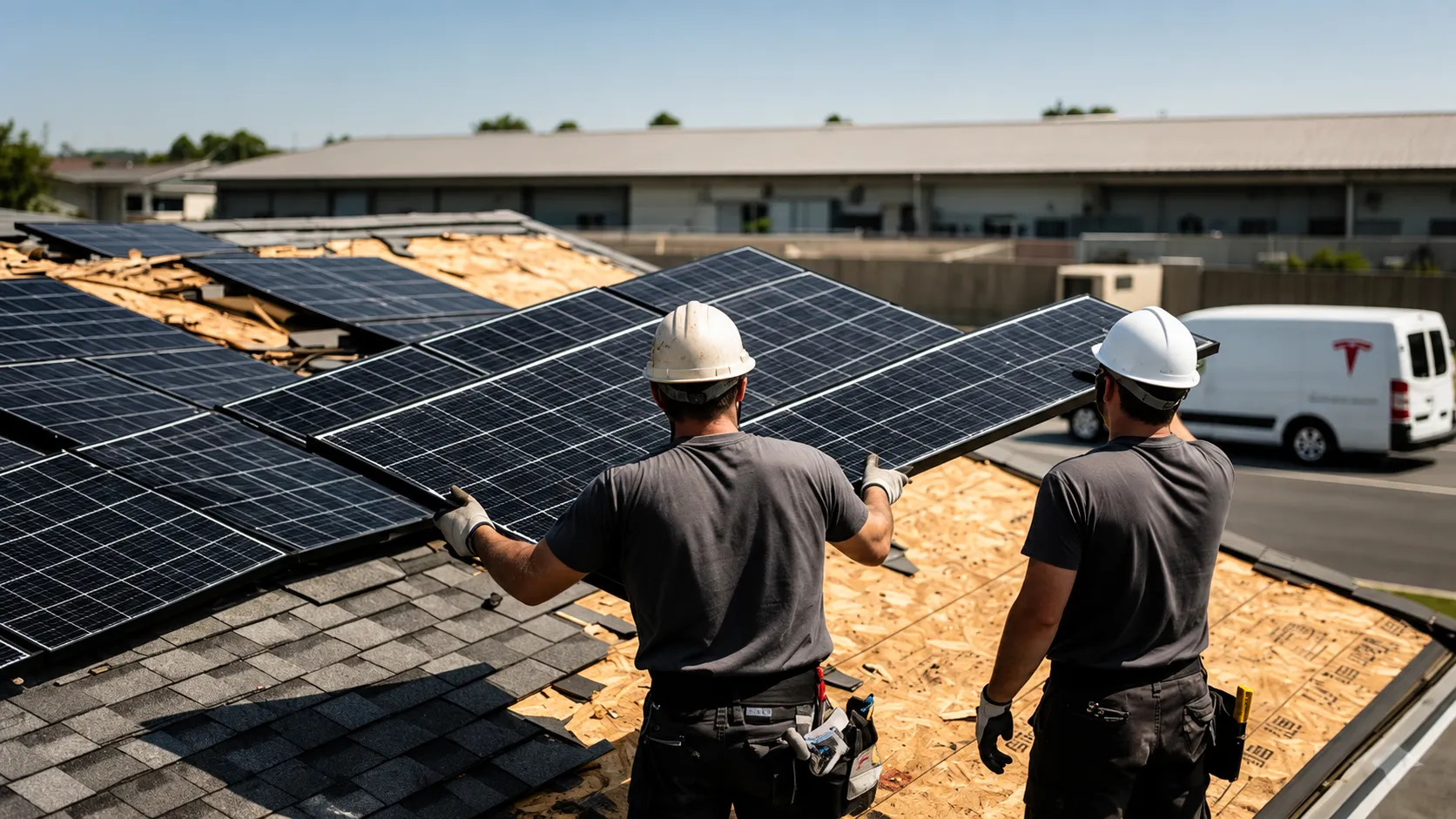
Tesla appears to have quietly wound down its long-running ambition to make integrated solar roof tiles a mainstream product, according to recent reporting on the company's energy business, marking a low-key end to a project that Elon Musk once described as capable of turning every house in America into a solar house. The move stands in sharp contrast to the fanfare that greeted the product's original unveiling nearly a decade ago, and underscores just how difficult it has proven to make fully integrated solar roofing commercially viable at scale.
Tesla first unveiled its solar roof concept in October 2016, shortly after acquiring solar installer SolarCity in a deal worth roughly $2.1 billion. The pitch was straightforward and, at the time, genuinely novel: rather than mounting conventional solar panels on top of an existing roof, homeowners could replace their roof entirely with glass tiles that looked indistinguishable from ordinary roofing materials from the street, while quietly generating electricity and feeding it into a home battery system. Musk described the tiles as tough as steel, with what he called a quasi-infinite lifetime, and framed the product as central to Tesla's broader vision of a fully electrified, solar-powered home ecosystem.
In practice, the solar roof struggled for years to move from ambitious demonstration to genuine mass-market product. Early versions faced criticism over installation complexity, with the company at various points citing manufacturing bottlenecks at its Buffalo, New York production facility, a shortage of trained installation crews, and pricing that, for many homeowners, made a full roof replacement a far larger financial commitment than simply adding conventional solar panels to an existing roof. Tesla iterated through multiple product generations over the years — including a third version the company described in earlier earnings calls as finally ready for the big time — without ever achieving the kind of installation volumes that would justify the manufacturing investment behind the product.
The broader history of integrated solar roofing as a product category has not been kind to any of the companies that have attempted it. Dow Chemical shut down its own solar shingle project years earlier, while Solyndra, a solar company that received significant U.S. government backing, went bankrupt in 2011 — a pattern that industry engineers have long attributed to the inherent difficulty of balancing cost, aesthetics, safety and energy performance in a single integrated roofing product, as opposed to treating roofing and solar generation as separate, more easily optimised systems.
For Tesla, the apparent winding-down of the solar roof programme comes as the company's broader energy business has increasingly shifted focus toward grid-scale battery storage and more conventional solar panel retrofits — product lines that have proven considerably easier to scale profitably than the integrated roofing concept. Tesla's Megapack grid-battery business, in particular, has emerged as a significant and fast-growing part of the company's energy segment, suggesting that the company's clean-energy ambitions have not diminished so much as consolidated around the parts of its energy portfolio that have demonstrated the clearest path to commercial scale.
The development also carries broader implications for the residential solar industry as a whole, which has continued to favour simpler, panel-based retrofit installations over fully integrated roofing products, even as manufacturers across the sector have continued to experiment with aesthetics-focused alternatives aimed at homeowners reluctant to have visible panels mounted on their roofs. Whether any future entrant succeeds where Tesla, Dow and others have struggled will likely depend on solving the same fundamental tension that has defined the category since its inception: making an integrated solar roof cost-competitive with the simple combination of a conventional roof plus separately mounted panels.
For now, Tesla has not issued a formal statement confirming the scale or permanence of the wind-down, and existing customers with active solar roof installations are expected to continue receiving service and warranty support. But the shift in the company's public and product focus toward battery storage and conventional solar retrofits suggests that, for Tesla at least, the dream of turning every American roof into a seamless solar panel has, for now, given way to more pragmatic priorities.