
WomenEntrepreneurship5 MIN READ

Woman-Led TimBuckDo Raises Bridge Round at ₹150 Crore Valuation as India’s Student-Powered ‘Pink Collar Economy’ Scales

Bengaluru’s TimBuckDo, co-founded by Mythri Kumar, has raised a bridge round at a reported ₹150 crore post-money valuation from Trasa Ventures and Adarsh Narahari as it prepares for a Series A.

By Aravind Kumar · Author24 September 2026New
Woman-Led TimBuckDo Raises Bridge Round at ₹150 Crore Valuation as India’s Student-Powered ‘Pink Collar Economy’ Scales

TimBuckDo, the Bengaluru-based on-demand convenience platform co-founded by entrepreneur Mythri Kumar, has closed a bridge funding round at a post-money valuation of ₹150 crore, according to a report by Entrackr published on Wednesday, September 23. The size of the round was not disclosed.

The capital comes from Srinath Setty, co-founder and chief executive of managed-farmland company Hosachiguru, who invested through his family office Trasa Ventures, and from Adarsh Narahari, founder and managing director of Primus Senior Living. The company announced the investors on September 22 and said the funds would carry it through its next phase of expansion as it prepares to raise a Series A round in the coming months.

For a young consumer-services business, the round is modest in absolute terms. What makes it notable is the model behind it. TimBuckDo does not employ a conventional gig workforce. Instead, it has built a marketplace of verified college students — known on the platform as “Doers” — who take on flexible, short-duration tasks for households and small businesses while they continue their studies.

A marketplace built on students, not shift workers

Founded in 2022 by Mythri Kumar and Apoorv Sharma Prasad, TimBuckDo connects families and organisations with students for a range of everyday needs. According to the company, these include elder companionship, pet care, child support and assistance for home-based businesses. The company describes its broader ambition as building India’s “Pink Collar Economy” — an organised layer of educated, verified, part-time workers serving the care and convenience needs of urban households.

The positioning is deliberate. India’s urban households have long relied on informal domestic help, and a series of well-funded platforms now compete to formalise home services such as cleaning, cooking and repairs. TimBuckDo is targeting a different slice of that demand: tasks that call for trust, communication and some level of education, but not necessarily a trained professional or a full-time hire.

The company’s Companion Doer vertical illustrates the approach. It allows elderly customers to book verified student Doers for companionship, errands and hospital escort support. The service is designed for seniors who want to remain independent in their own homes, a need that is growing as more Indian families live in nuclear households or have children working in other cities and countries.

That context helps explain the choice of investors. Narahari’s Primus Senior Living operates in senior living and elder care, which gives his investment a direct strategic link to the Companion Doer business. Setty brings experience of scaling a large-format business in the managed-farmland and real-estate ecosystem through Hosachiguru.

From seed to bridge

The bridge round builds on a seed round of about ₹6.6 crore that TimBuckDo raised last year. Backers in that round included Nandkishore Kalambi, Morton Meyerson, Arjun Vaidya, Anupam Bansal, Sandesh Sharda, Rukam Capital, IDEABAAZ, TurboStart and the company’s own founders, according to Entrackr.

Market-intelligence platform Tracxn lists TimBuckDo as having raised about $840,000 across four rounds before this transaction, from ten investors. A separate industry report said the company plans to seek around $5 million in its upcoming Series A, although TimBuckDo has not formally confirmed the size of that round.
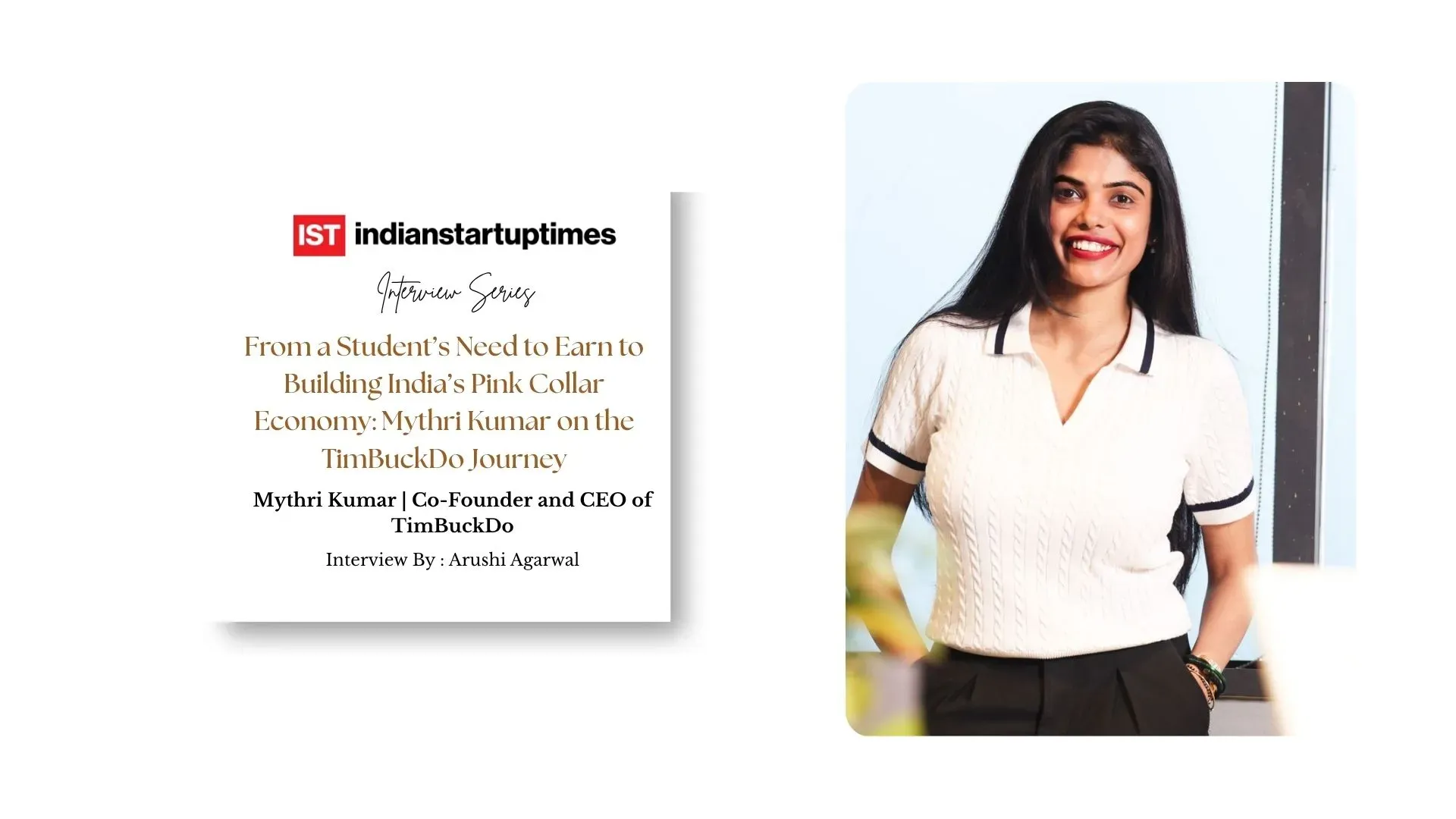

TimBuckDo is betting that India’s college campuses can become a trusted, on-demand workforce for households that need help but not a full-time hire.
TIGI Editorial

Bridge rounds of this kind are common among Indian consumer startups that have found early traction but want to reach specific operating milestones before approaching institutional investors for a larger priced round. Raising from strategic angels and family offices, rather than from a lead venture fund, allows a company to extend its runway without resetting its valuation in a crowded fundraising market.

image.png

Ambitious targets

TimBuckDo has set itself demanding goals. The company says it is targeting around ₹400 crore in gross revenue and more than 10,000 household orders per day across India over the next three years.

Reaching that scale will test the model on several fronts. Student availability is seasonal and tied to academic calendars, which makes supply harder to plan than in platforms built on full-time workers. Trust and safety are critical in services involving children, pets and elderly people, which puts pressure on verification, training and incident management. And repeat usage — the metric that ultimately determines whether a convenience marketplace can sustain itself — depends on consistent quality across a highly distributed, part-time workforce.

The company’s bet is that these challenges are manageable and that the benefits are significant for both sides of the marketplace. For households, a vetted student may be a more comfortable choice than an unknown freelancer for tasks such as accompanying a parent to a hospital appointment. For students, the platform offers flexible earnings that can be fitted around classes, along with work experience that may be more meaningful than many conventional part-time jobs.

A competitive but growing category

TimBuckDo is entering a category that has attracted meaningful investor interest in 2026. Household-help platform Pronto raised $25 million in a Series B round in March to expand its operations, Entrackr noted, and several other startups are testing different models for on-demand domestic and concierge services.

Unlike many of those players, TimBuckDo is positioning its workforce as a feature rather than simply a cost line. By focusing on verified college students, it is trying to differentiate on trust and quality while creating a pathway into paid work for young people — including young women — in cities where flexible, safe and respectable part-time jobs can be hard to find.

Why it matters for women-led startups

TimBuckDo is also one of a relatively small number of Indian consumer startups with a woman co-founder that have secured fresh capital this month. Data compiled by investors and industry trackers consistently show that women-led companies receive a small share of venture funding in India and globally, even as the number of such companies continues to rise.

Rounds such as this one, backed by operators who understand the underlying market, can help women founders build the operating track record that larger institutional investors look for at Series A. For TimBuckDo, the next few months will be about demonstrating that its student-led model can deliver the order volumes, retention and unit economics needed to turn a promising niche into a scaled national business.

If it succeeds, the company could offer a template for how India’s large student population might be integrated into the formal services economy — flexibly, safely and on terms that work for both students and the families they serve.

TagsTimBuckDoMythri KumarWomen FoundersBridge RoundBengaluru StartupsGig EconomyElder CareSeries ATrasa VenturesSrinath SettyPrimus Senior LivingOn-Demand ServicesStudent WorkforceIndia Startups

Reader reviews

Sign in to rate and review this article.
Loading reviews…

