ImpactSustainability5 MIN READ

Climate Finance Startup Two Point O Raises $10 Million to Fund Solar, Batteries and Water Treatment for Indian Industry

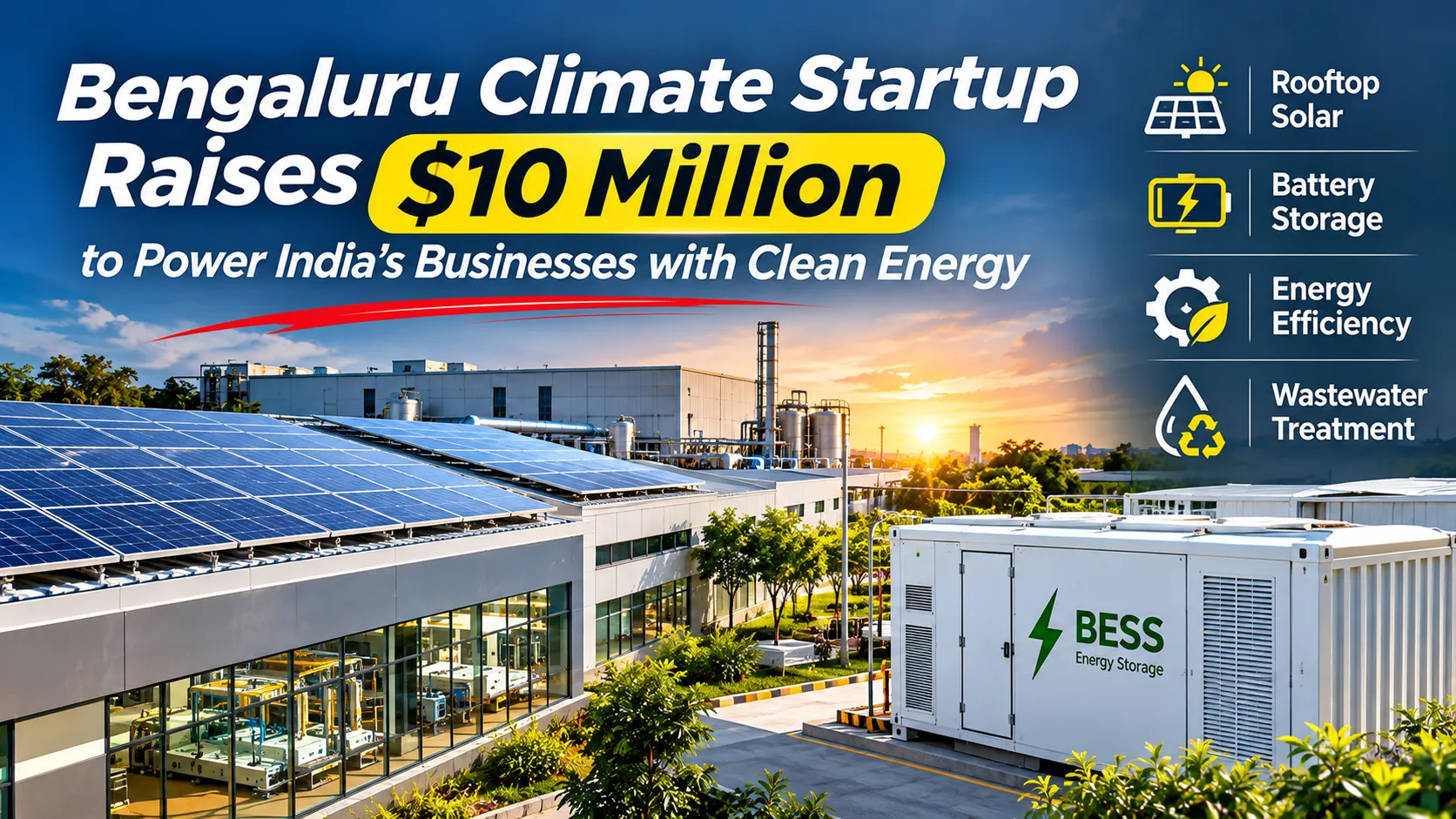
Bengaluru-based Two Point O Capital has raised $10 million in a Series A round led by Transition Venture Capital, with existing investor Omnivore, to finance and deploy clean energy and water assets for commercial and industrial businesses. The startup, announced on November 2, plans to enter battery storage and target $75 million to $100 million in assets under management.

By Prathista Lazar · Author3 November 2026New
Climate Finance Startup Two Point O Raises $10 Million to Fund Solar, Batteries and Water Treatment for Indian Industry

A Bengaluru climate finance startup has raised $10 million to help Indian factories, warehouses and commercial buildings switch to clean energy without paying for the equipment upfront, betting that the next wave of India's energy transition will happen behind the meter rather than in giant solar parks.

Two Point O Capital, which operates under the brand TW.O, raised the Series A round led by Transition Venture Capital (TVC), with participation from existing investor Omnivore and angel investors Chiranjeev Singh Saluja and Sudhir M Reddy, according to Indian Startup News, which reported the deal on Monday, November 2.

The funding follows a $6.3 million seed round in September 2024 led by Omnivore, with Multiply Ventures, RTP Global, GrowX, Spectrum Impact and angel investors.

What Two Point O does

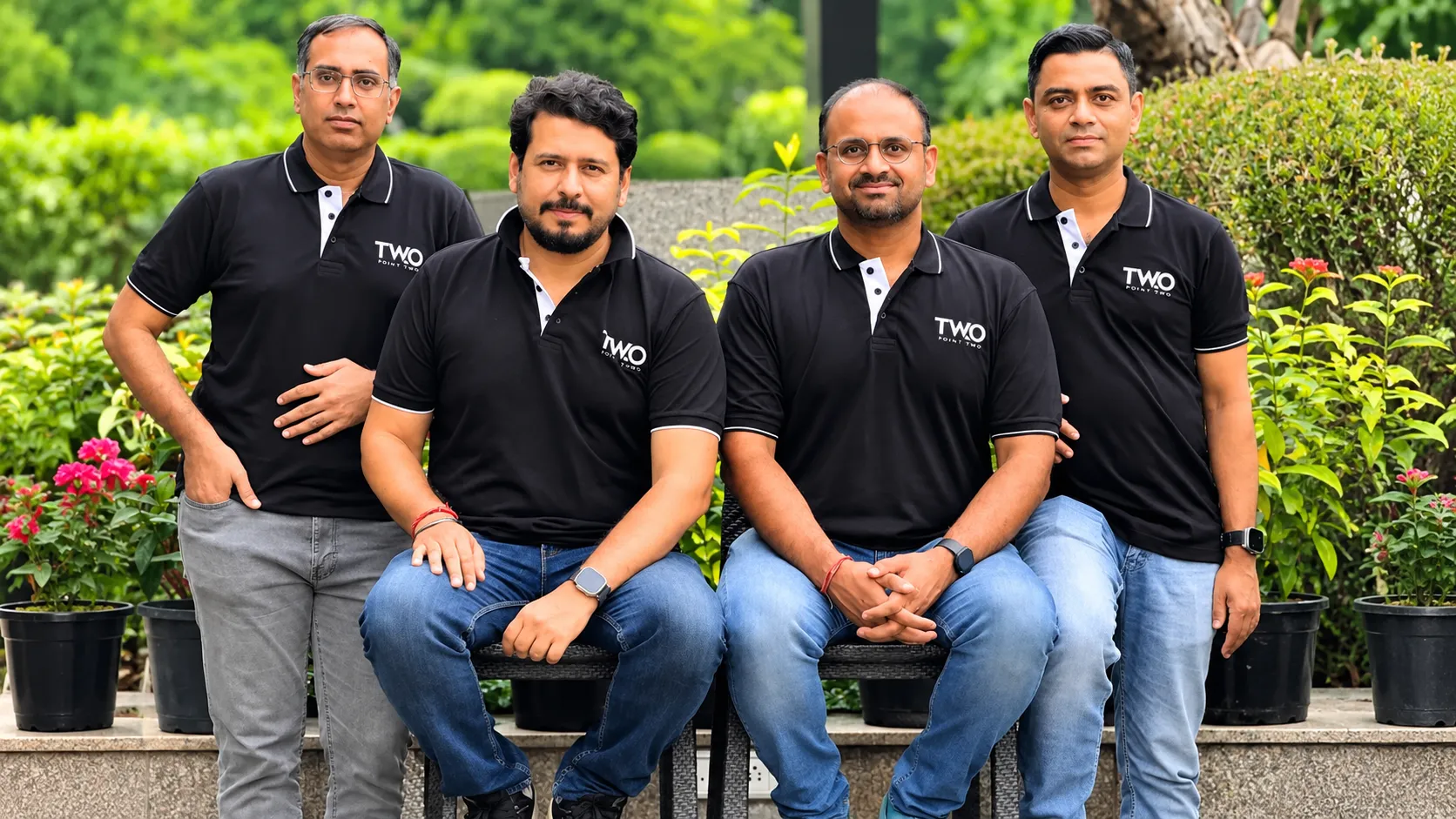
Founded in 2024 by Archit Mehrotra, Karan Bhutani, Manya Ranjan and Shashidhar Reddy, Two Point O finances and deploys clean energy assets for commercial and industrial (C&I) businesses. It offers financing, turnkey solutions and equipment leasing across four areas: rooftop solar, battery energy storage systems (BESS), energy efficiency upgrades for heating, cooling and compressed air systems, and wastewater treatment.

The company operates a wholly owned non-banking financial company (NBFC) subsidiary for loans and a separate entity for leases and services. It does not install or maintain equipment itself; instead, it works with equipment manufacturers and engineering, procurement and construction (EPC) firms, overseeing them through technology and contracts.

Its AI and machine learning platform handles solution design, underwriting and monitoring, and its assets are connected through internet-of-things sensors, allowing performance to be tracked in real time. The company says it can send techno-commercial proposals to clients within 24 to 48 hours.

The funding gap

Two Point O's founders argue that India's clean energy financing has been heavily concentrated on large projects. "There was a lot of capital that was getting pumped into utility-scale, grid-scale projects," Bhutani, the company's chief executive, told Indian Startup News.

Commercial and industrial businesses, by contrast, often struggle to finance clean energy investments. Rooftop solar, batteries and efficiency upgrades can deliver significant savings over time, but require upfront capital that many businesses prefer to spend on their core operations. Banks may be reluctant to lend against such assets, particularly to small and medium-sized companies.

Two Point O estimates the annual opportunity in capital and asset solutions for C&I businesses at $100 billion to $150 billion.

Customers and growth

The company has around 25 to 30 large customers, including Premier Energies, Godrej, JK Tyre, Morepen Pharma, Wipro and Phoenix Mills, according to Indian Startup News. Bhutani said its existing customer base could generate ₹400 crore to ₹500 crore in transactions over the next two to three years.

Two Point O's assets under management have grown 1.5 times each quarter over the past three quarters, roughly 3.4 times on a compounded basis, although the company did not disclose the absolute figure. It is targeting $75 million to $100 million in assets under management over the next couple of years, along with entry into the small and medium-sized enterprise (SME) segment.

Use of funds

Two Point O plans to use the new capital to enter new asset classes, starting with battery energy storage, and to expand its existing solar, energy efficiency and wastewater businesses. It also plans to target energy- and water-intensive sectors such as data centres, automotive, pharmaceuticals, manufacturing and healthcare.

“The recent West Asia crisis has further underscored the importance of energy independence and resilience.”
— Karan Bhutani, Co-founder and CEO, Two Point O Capital

Battery storage is becoming increasingly important for businesses as they seek to store solar power for use when the sun is not shining, reduce peak electricity charges and protect against grid outages.

Energy security

Bhutani linked the company's growth to recent geopolitical events. "The recent West Asia crisis has further underscored the importance of energy independence and resilience," he said.

Disruptions to oil and gas supplies through the Strait of Hormuz have pushed up energy prices this year, raising costs for Indian businesses and highlighting the risks of dependence on imported fuels. On-site solar and battery storage can reduce businesses' exposure to fuel price volatility and grid disruptions.

e1481f7f-22c8-456b-89ad-597391dbd7f4.png

The investor's view

Yashodhara Bakliwal, vice-president of investment at Transition Venture Capital, said the company's model simplifies clean energy adoption. "By taking end-to-end ownership of execution, Two Point O enables customers to focus on their core business," she said, according to Indian Startup News.

She also highlighted the platform's value for TVC's portfolio. "Our hardware companies can deploy faster through TW.O's platform," she said. Transition VC invests in climate technology companies, and many of its portfolio companies make equipment such as batteries, motors and efficiency technologies that businesses could adopt through Two Point O's financing.

Water as well as energy

Two Point O's inclusion of wastewater treatment reflects growing pressure on Indian industry to manage water more responsibly. Many Indian regions face water stress, and regulators are tightening rules on industrial effluent discharge. Treating and reusing wastewater can reduce costs and regulatory risks for water-intensive industries such as textiles, pharmaceuticals, food processing and data centres.

The bigger picture

India has set a target of 500 gigawatts of non-fossil fuel electricity capacity by 2030 and net-zero emissions by 2070. While much of the attention has focused on large solar and wind farms, distributed energy, including rooftop solar on commercial and industrial buildings, will play an important role in meeting these goals.

Climate finance startups such as Two Point O aim to address one of the main barriers to the energy transition: access to affordable capital. By combining financing with technology and execution oversight, they seek to make clean energy adoption easier for businesses that lack the expertise or capital to manage projects themselves.

The model also faces risks, including credit risk if customers fail to make payments, technology risk if equipment underperforms, and competition from banks, NBFCs and equipment suppliers offering their own financing.

What comes next

With fresh capital, Two Point O will expand into battery storage, deepen its relationships with large corporate customers and begin to target smaller businesses. Its progress will offer a test of whether specialised climate lenders can unlock the large untapped market for clean energy in Indian industry, at a time when energy security and decarbonisation are rising up the corporate agenda.

For India's growing climate tech ecosystem, the round is also a sign that investors see opportunity not only in building clean energy hardware, but in the financial infrastructure needed to deploy it at scale.

TagsTwo Point O Capitalclimate financeclean energyrooftop solarbattery energy storageBESSenergy efficiencywastewater treatmentTransition Venture CapitalOmnivoreKaran Bhutanicommercial and industrialC&INBFCequipment leasingsustainabilityclimate techIndian startupsenergy securityinvestors

Reader reviews

Sign in to rate and review this article.
Loading reviews…

