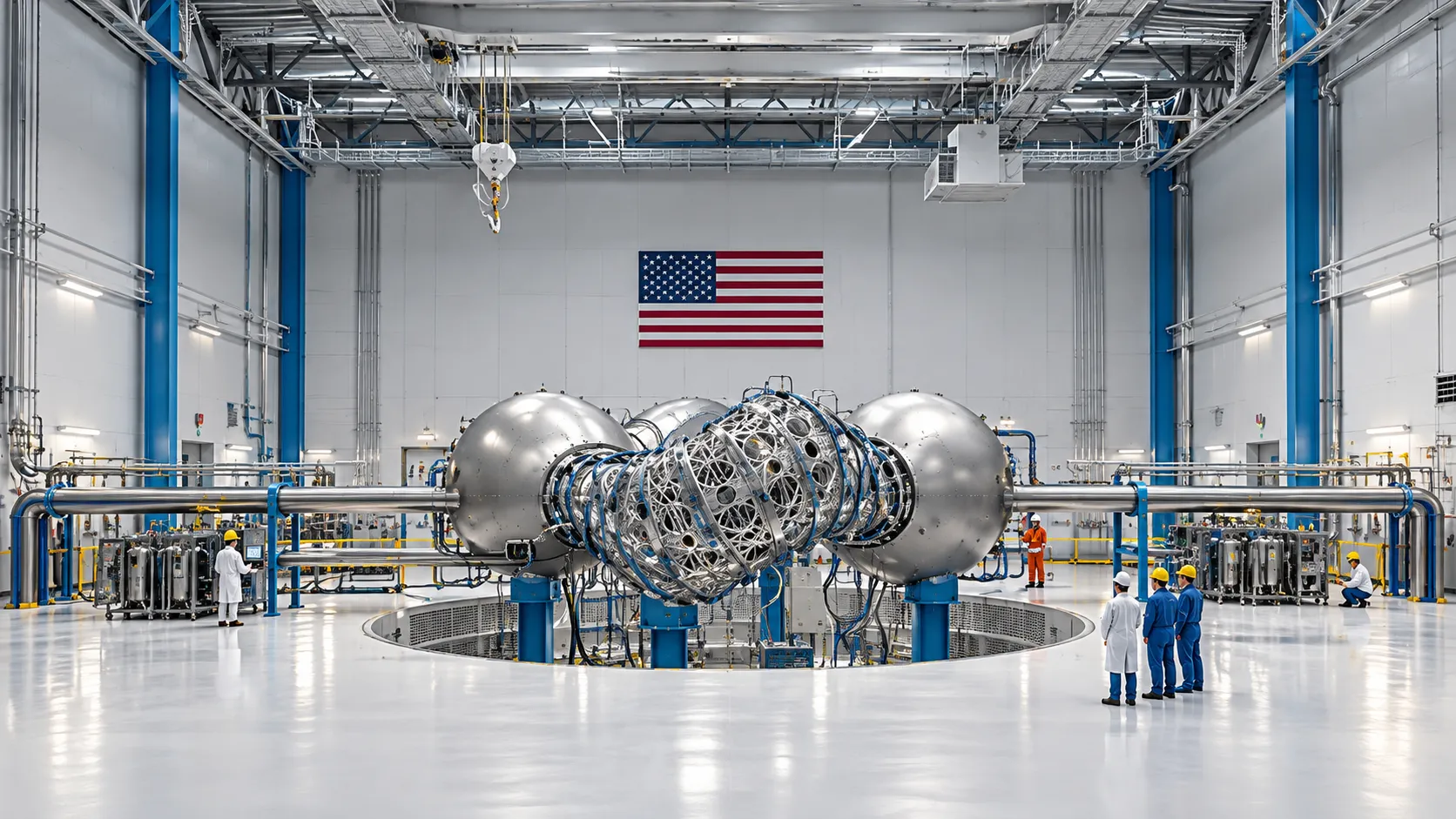
Type One Energy, a fusion power start-up based in Knoxville, Tennessee, has raised $200 million to advance its plan to build a commercial fusion power plant that can feed electricity into the grid by 2034.
The Series B round, announced on 6 October, was led by repeat investor Breakthrough Energy Ventures, the climate fund backed by Bill Gates, and Clutterbuck Capital. Lowercarbon Capital, Siemens Energy Ventures and SiteGround Capital also took part. The company had previously raised at least $82.5 million.
Chief executive Christofer Mowry told TechCrunch that the new capital should get the company about halfway to paying for its first 400-megawatt power plant. If Type One meets its 2034 target, he argued, it could complete that plant using less capital than many of its competitors will need, even after further fundraising.
An integrator, not a factory
Type One's central bet is on its business model rather than on any single breakthrough in physics. Founded in 2019, the company intends to design its power plant and many of its components, then rely on a bespoke network of suppliers chosen for the project to build them.
Most fusion start-ups depend on outside suppliers for some parts. Type One plans to go much further, positioning itself as an integrator, a company that assembles a finished product from components made by others, much as aircraft manufacturers rely on networks of suppliers for engines, fuselage sections and avionics.
"The amount of capital that we need to raise to commercialize fusion at Type One is just a different order of magnitude than if you were going to be vertically integrated," Mowry said, referring to rivals that make most of their own parts in-house. "Why would I want to spend on bricks and mortar? I used to run a big nuclear manufacturing company. That's expensive."
The approach lets Type One tap specialist expertise it could never build internally. Infrastructure consultancy AECOM is working on engineering for Infinity Two, the company's planned commercial power plant. "They have 10,000 people, most of them are engineers of one kind. We're never going to have 10,000 people," Mowry said.
The company has also licensed high-temperature superconducting magnet technology from Commonwealth Fusion Systems, one of the best-funded companies in the sector and, in other respects, a competitor. Those magnets will form the backbone of Type One's reactor design. The arrangement illustrates how parts of the fusion industry are beginning to specialise, with some companies selling components and know-how to others.
The stellarator bet
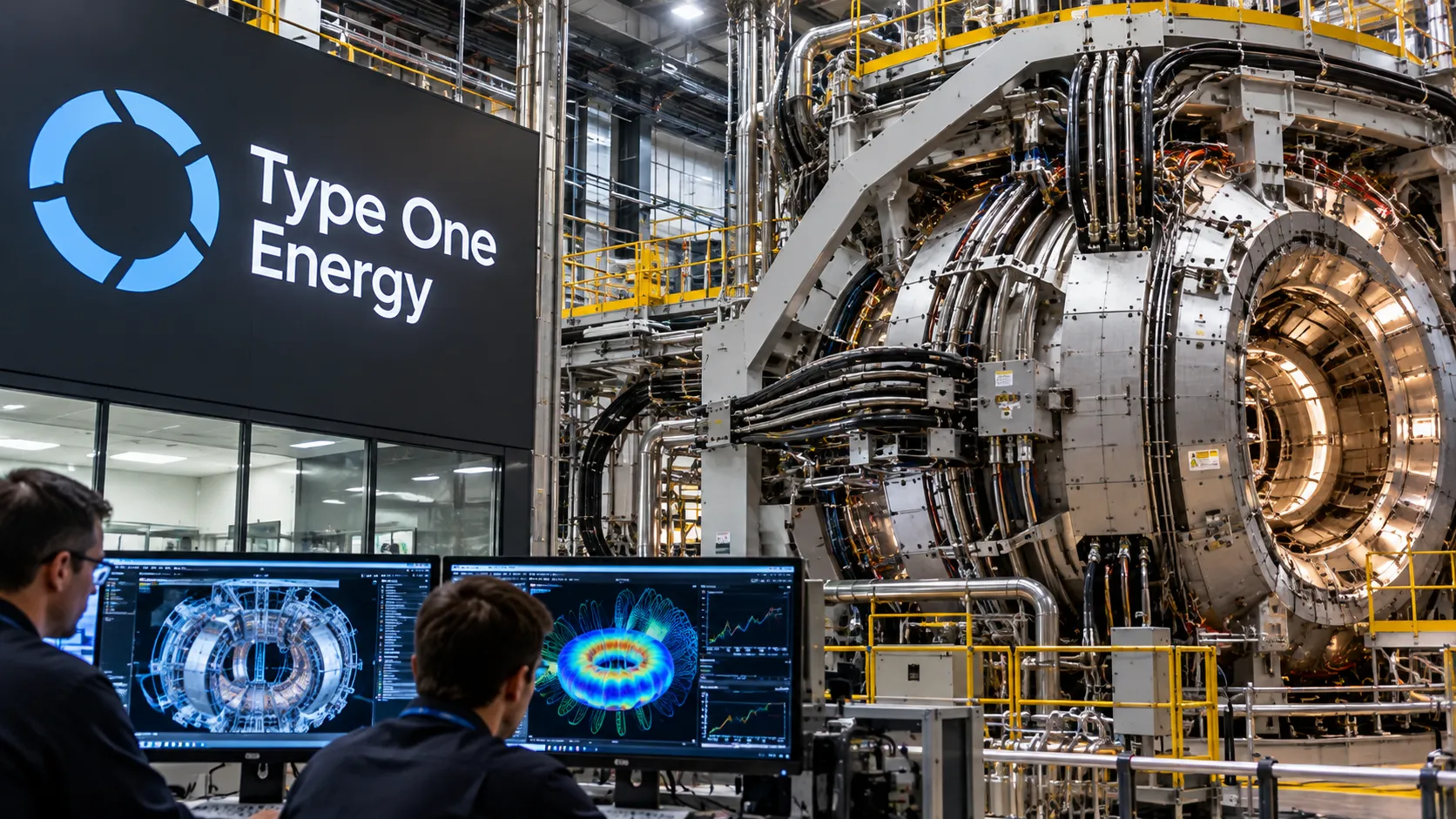
Type One is developing a stellarator, a type of fusion device that confines super-heated plasma using a set of intricately twisted magnetic coils. Stellarators are less widely pursued than tokamaks, the doughnut-shaped machines favoured by many government programmes and by Commonwealth Fusion Systems, but they have attracted renewed interest because they can, in principle, operate continuously and are less prone to the sudden plasma disruptions that can damage tokamaks.
The trade-off has historically been complexity. Stellarator coils have demanding, three-dimensional shapes that are difficult to design and build. Advances in computational optimisation, and results from large research machines such as Germany's Wendelstein 7-X, have helped revive the concept, and Type One is among a handful of companies trying to turn it into a commercial product.